,About the Tutorial
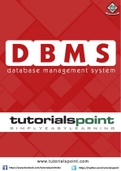
Database Management System or DBMS in short refers to the technology of
storing and retrieving users’ data with utmost efficiency along with appropriate
security measures. DBMS allows its users to create their own databases as per
their requirement. These databases are highly configurable and offer a bunch of
options.
This tutorial explains the basics of DBMS such as its architecture, data models,
data schemas, data independence, E-R model, relation model, relational
database design, and storage and file structure. In addition, it covers a few
advanced topics such as indexing and hashing, transaction and concurrency, and
backup and recovery.
Audience
This tutorial will especially help computer science graduates in understanding the
basic-to-advanced concepts related to Database Management Systems.
Prerequisites
Before you start proceeding with this tutorial, it is recommended that you have a
good understanding of basic computer concepts such as primary memory,
secondary memory, and data structures and algorithms.
Copyright & Disclaimer
Copyright 2015 by Tutorials Point (I) Pvt. Ltd.
All the content and graphics published in this e-book are the property of
Tutorials Point (I) Pvt. Ltd. The user of this e-book is prohibited to reuse, retain,
copy, distribute or republish any contents or a part of contents of this e-book in
any manner without written consent of the publisher.
We strive to update the contents of our website and tutorials as timely and as
precisely as possible, however, the contents may contain inaccuracies or errors.
Tutorials Point (I) Pvt. Ltd. provides no guarantee regarding the accuracy,
timeliness or completeness of our website or its contents including this tutorial.
If you discover any errors on our website or in this tutorial, please notify us at
i
,Table of Contents
About the Tutorial ..................................................................................................................................... i
Audience .................................................................................................................................................... i
Prerequisites .............................................................................................................................................. i
Copyright & Disclaimer .............................................................................................................................. i
Table of Contents ...................................................................................................................................... ii
1. OVERVIEW ............................................................................................................................ 1
Characteristics .......................................................................................................................................... 1
Users ......................................................................................................................................................... 2
2. ARCHITECTURE ..................................................................................................................... 4
3-tier Architecture .................................................................................................................................... 4
3. DATA MODELS ...................................................................................................................... 6
Entity-Relationship Model ........................................................................................................................ 6
Relational Model ...................................................................................................................................... 7
4. DATA SCHEMAS .................................................................................................................... 9
Database Schema...................................................................................................................................... 9
Database Instance................................................................................................................................... 10
5. DATA INDEPENDENCE ......................................................................................................... 11
Data Independence ................................................................................................................................. 11
Logical Data Independence ..................................................................................................................... 11
Physical Data Independence ................................................................................................................... 12
6. ER MODEL – BASIC CONCEPTS ............................................................................................ 13
Entity ...................................................................................................................................................... 13
Attributes ............................................................................................................................................... 13
ii
, Relationship ............................................................................................................................................ 14
7. ER DIAGRAM REPRESENTATION .......................................................................................... 17
Entity ...................................................................................................................................................... 17
Attributes ............................................................................................................................................... 17
Relationship ............................................................................................................................................ 19
8. GENERALIZATION & SPECIALIZATION .................................................................................. 22
Generalization ........................................................................................................................................ 22
Specialization .......................................................................................................................................... 22
Inheritance ............................................................................................................................................. 23
9. CODD’S 12 RULES................................................................................................................ 25
Rule 1: Information Rule ......................................................................................................................... 25
Rule 2: Guaranteed Access Rule .............................................................................................................. 25
Rule 3: Systematic Treatment of NULL Values ......................................................................................... 25
Rule 4: Active Online Catalog .................................................................................................................. 25
Rule 5: Comprehensive Data Sub-Language Rule .................................................................................... 25
Rule 6: View Updating Rule ..................................................................................................................... 26
Rule 7: High-Level Insert, Update, and Delete Rule ................................................................................. 26
Rule 8: Physical Data Independence........................................................................................................ 26
Rule 9: Logical Data Independence ......................................................................................................... 26
Rule 10: Integrity Independence ............................................................................................................. 26
Rule 11: Distribution Independence ........................................................................................................ 26
Rule 12: Non-Subversion Rule ................................................................................................................. 26
10. RELATIONAL DATA MODEL .................................................................................................. 27
Concepts ................................................................................................................................................. 27
Constraints.............................................................................................................................................. 27
iii
Database Management System or DBMS in short refers to the technology of
storing and retrieving users’ data with utmost efficiency along with appropriate
security measures. DBMS allows its users to create their own databases as per
their requirement. These databases are highly configurable and offer a bunch of
options.
This tutorial explains the basics of DBMS such as its architecture, data models,
data schemas, data independence, E-R model, relation model, relational
database design, and storage and file structure. In addition, it covers a few
advanced topics such as indexing and hashing, transaction and concurrency, and
backup and recovery.
Audience
This tutorial will especially help computer science graduates in understanding the
basic-to-advanced concepts related to Database Management Systems.
Prerequisites
Before you start proceeding with this tutorial, it is recommended that you have a
good understanding of basic computer concepts such as primary memory,
secondary memory, and data structures and algorithms.
Copyright & Disclaimer
Copyright 2015 by Tutorials Point (I) Pvt. Ltd.
All the content and graphics published in this e-book are the property of
Tutorials Point (I) Pvt. Ltd. The user of this e-book is prohibited to reuse, retain,
copy, distribute or republish any contents or a part of contents of this e-book in
any manner without written consent of the publisher.
We strive to update the contents of our website and tutorials as timely and as
precisely as possible, however, the contents may contain inaccuracies or errors.
Tutorials Point (I) Pvt. Ltd. provides no guarantee regarding the accuracy,
timeliness or completeness of our website or its contents including this tutorial.
If you discover any errors on our website or in this tutorial, please notify us at
i
,Table of Contents
About the Tutorial ..................................................................................................................................... i
Audience .................................................................................................................................................... i
Prerequisites .............................................................................................................................................. i
Copyright & Disclaimer .............................................................................................................................. i
Table of Contents ...................................................................................................................................... ii
1. OVERVIEW ............................................................................................................................ 1
Characteristics .......................................................................................................................................... 1
Users ......................................................................................................................................................... 2
2. ARCHITECTURE ..................................................................................................................... 4
3-tier Architecture .................................................................................................................................... 4
3. DATA MODELS ...................................................................................................................... 6
Entity-Relationship Model ........................................................................................................................ 6
Relational Model ...................................................................................................................................... 7
4. DATA SCHEMAS .................................................................................................................... 9
Database Schema...................................................................................................................................... 9
Database Instance................................................................................................................................... 10
5. DATA INDEPENDENCE ......................................................................................................... 11
Data Independence ................................................................................................................................. 11
Logical Data Independence ..................................................................................................................... 11
Physical Data Independence ................................................................................................................... 12
6. ER MODEL – BASIC CONCEPTS ............................................................................................ 13
Entity ...................................................................................................................................................... 13
Attributes ............................................................................................................................................... 13
ii
, Relationship ............................................................................................................................................ 14
7. ER DIAGRAM REPRESENTATION .......................................................................................... 17
Entity ...................................................................................................................................................... 17
Attributes ............................................................................................................................................... 17
Relationship ............................................................................................................................................ 19
8. GENERALIZATION & SPECIALIZATION .................................................................................. 22
Generalization ........................................................................................................................................ 22
Specialization .......................................................................................................................................... 22
Inheritance ............................................................................................................................................. 23
9. CODD’S 12 RULES................................................................................................................ 25
Rule 1: Information Rule ......................................................................................................................... 25
Rule 2: Guaranteed Access Rule .............................................................................................................. 25
Rule 3: Systematic Treatment of NULL Values ......................................................................................... 25
Rule 4: Active Online Catalog .................................................................................................................. 25
Rule 5: Comprehensive Data Sub-Language Rule .................................................................................... 25
Rule 6: View Updating Rule ..................................................................................................................... 26
Rule 7: High-Level Insert, Update, and Delete Rule ................................................................................. 26
Rule 8: Physical Data Independence........................................................................................................ 26
Rule 9: Logical Data Independence ......................................................................................................... 26
Rule 10: Integrity Independence ............................................................................................................. 26
Rule 11: Distribution Independence ........................................................................................................ 26
Rule 12: Non-Subversion Rule ................................................................................................................. 26
10. RELATIONAL DATA MODEL .................................................................................................. 27
Concepts ................................................................................................................................................. 27
Constraints.............................................................................................................................................. 27
iii