Organisms exchange
substances with their
environment
,Metabolic rate and size
The size and metabolic rate of an organism will affect the amount of
materials exchanged
1. High metabolic rate/respiration rate
2. More materials are exchanged/more heat loss
3. Larger surface area to volume ratio
A mouse has a higher metabolic rate/respiration rate than an elepha
– loses more heat due to larger SA to volume ratio
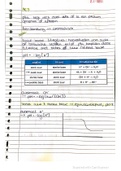
,Calculating surface area to volume
ratio
,
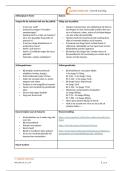
,Features of specialised exchange
surfaces
1. Large surface area to volume of the organism which increases the
rate of exchange
2. Very thin so the diffusion distance is short and materials cross th
exchange surfaces rapidly
3. Selectively permeable to allow materials to cross
4. Maintain a diffusion gradient
,Fick's law
,Fish
,Structure of the gills
• Have V shaped gill filaments with projections called gill lamellae –
large surface area which increases the rate of exchange of gases
• The lamellae is very thin – short diffusion pathway for oxygen
• Impermeable membrane so gases cant diffuse through their skin
• Counter current flow maintains a steep concentration gradient acro
the whole length of the gills so the maximum amount of oxygen
diffuses from water to blood
,Counter current flow
• Blood flowing within the lamellae moves in the opposite direction
the flow of water over the lamellae
• This maintains a steep concentration gradient across the whole len
of the gills so the maximum amount of oxygen from water is diffusi
into the deoxygenated blood
, Operculum
• Acts as a valve and pump
• Pumps water in and lets it out by opening and closing its mouth
• When water flows into the fish, the pressure increases and the wat
is forced over the gill filaments by the difference in pressure
• Maintains water flow in a continuous flow in one direction
substances with their
environment
,Metabolic rate and size
The size and metabolic rate of an organism will affect the amount of
materials exchanged
1. High metabolic rate/respiration rate
2. More materials are exchanged/more heat loss
3. Larger surface area to volume ratio
A mouse has a higher metabolic rate/respiration rate than an elepha
– loses more heat due to larger SA to volume ratio
,Calculating surface area to volume
ratio
,
,Features of specialised exchange
surfaces
1. Large surface area to volume of the organism which increases the
rate of exchange
2. Very thin so the diffusion distance is short and materials cross th
exchange surfaces rapidly
3. Selectively permeable to allow materials to cross
4. Maintain a diffusion gradient
,Fick's law
,Fish
,Structure of the gills
• Have V shaped gill filaments with projections called gill lamellae –
large surface area which increases the rate of exchange of gases
• The lamellae is very thin – short diffusion pathway for oxygen
• Impermeable membrane so gases cant diffuse through their skin
• Counter current flow maintains a steep concentration gradient acro
the whole length of the gills so the maximum amount of oxygen
diffuses from water to blood
,Counter current flow
• Blood flowing within the lamellae moves in the opposite direction
the flow of water over the lamellae
• This maintains a steep concentration gradient across the whole len
of the gills so the maximum amount of oxygen from water is diffusi
into the deoxygenated blood
, Operculum
• Acts as a valve and pump
• Pumps water in and lets it out by opening and closing its mouth
• When water flows into the fish, the pressure increases and the wat
is forced over the gill filaments by the difference in pressure
• Maintains water flow in a continuous flow in one direction