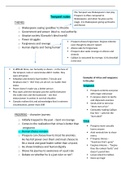
The Tempest was Shakespeare’s last play.
Prospero is often compared to
Tempest notes
Shakespeare, and when he gives up his
THEMES magic, it is Shakespeare giving up theatre
and illusion
o Shakespeare saying ‘goodbye’ to theatre
o Government and power: ideal vs. real authority
o Utopian society (Gonzalo’s ideal world)
o Power struggles
Prospero shows forgiveness: forgives Antonio
o Forgiveness and revenge even though he doesn’t repent
o Human dignity and ‘being human’ Alonso asks for forgiveness
Prospero also seeks revenge on Alonso and
Antonio
Caliban is consumed by revenge, is his downfall
in the end
In difficult times, our humanity is shown – in the face of
the tempest, rank or social status didn’t matter, they
were all human
Examples of virtue and vengeance
Sebastian and Antonio have bother, Trinculo and
in the play:
Stephano don’t – BUT they are all evil, no matter their
status Vengeance
Power doesn’t make you a better person
Prospero controls everyone
Play starts with the tempest and the conflict between
with magic and power
the noble men and the boatswain – see that
P conjures storm to terrify
status/power is useless in survival situation
and shipwreck enemies
Gonzalo realises this and acknowledges that in extreme
Sends Ariel to terrorize
circumstances, power must shift
“three men of sin”
Constantly making Caliban
fear him – calls him the
PROSPERO – character journey
“born devil”
o Initially trapped in the past – bent on revenge Virtue
o Comes to the realization that virtue is better than
Prospero never actually
vengeance harms anyone
o Human choice remains Ariel reminds him to show
o Prospero can choose how to treat his enemies. mercy
He has full power over them and must choose to P forgives Alonso –
Be a moral and good leader rather than a tyrant. “heaviness that’s gone”
Forgives Antonio – “forgive
o He shows kindness and human dignity
thee thy rankest faults” and
o Shows his journey to awareness of a just rule doesn’t punish him
o Debate on whether he is a just ruler or not? Leaves island to Caliban
Gives up magic
Prospero is often compared to
Tempest notes
Shakespeare, and when he gives up his
THEMES magic, it is Shakespeare giving up theatre
and illusion
o Shakespeare saying ‘goodbye’ to theatre
o Government and power: ideal vs. real authority
o Utopian society (Gonzalo’s ideal world)
o Power struggles
Prospero shows forgiveness: forgives Antonio
o Forgiveness and revenge even though he doesn’t repent
o Human dignity and ‘being human’ Alonso asks for forgiveness
Prospero also seeks revenge on Alonso and
Antonio
Caliban is consumed by revenge, is his downfall
in the end
In difficult times, our humanity is shown – in the face of
the tempest, rank or social status didn’t matter, they
were all human
Examples of virtue and vengeance
Sebastian and Antonio have bother, Trinculo and
in the play:
Stephano don’t – BUT they are all evil, no matter their
status Vengeance
Power doesn’t make you a better person
Prospero controls everyone
Play starts with the tempest and the conflict between
with magic and power
the noble men and the boatswain – see that
P conjures storm to terrify
status/power is useless in survival situation
and shipwreck enemies
Gonzalo realises this and acknowledges that in extreme
Sends Ariel to terrorize
circumstances, power must shift
“three men of sin”
Constantly making Caliban
fear him – calls him the
PROSPERO – character journey
“born devil”
o Initially trapped in the past – bent on revenge Virtue
o Comes to the realization that virtue is better than
Prospero never actually
vengeance harms anyone
o Human choice remains Ariel reminds him to show
o Prospero can choose how to treat his enemies. mercy
He has full power over them and must choose to P forgives Alonso –
Be a moral and good leader rather than a tyrant. “heaviness that’s gone”
Forgives Antonio – “forgive
o He shows kindness and human dignity
thee thy rankest faults” and
o Shows his journey to awareness of a just rule doesn’t punish him
o Debate on whether he is a just ruler or not? Leaves island to Caliban
Gives up magic