RN ENDOCRINE PROCTORED Exam 2
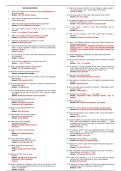
RN ENDOCRINE PROCTORED Exam 2 1) A client is admitted to the ICU with diagnosis of a brain tumor complicated by transient diabetes insipidus. Which client data related to this complication should the nurse expect? Select all that apply. 1. Dark, amber urine with sediment 2. High serum osmolality 3. Low urine specific gravity 4. Recent weight gain 5. Reports of excessive thirst 2) A hospitalized patient is diagnosed with a pheochromocytoma, a tumor of the adrenal medulla. Which clinical manifestation should the nurse expect to observe? 1. Elevated H&H 2. Hypertension 3. Hypoglycemia 4. Weight gain. 3) The nurse is assessing a patient with hypoparathyroidism for electrolyte imbalances. The nurse notes a positive Chvostek’s sign, indicating: 1. Hypercalcemia 2. Hyperphosphatemia 3. Hypocalcemia 4. Hypophosphatemia 4) A patient is seen in the ER after abruptly discontinuing her thyroid medication. She is hypotensive ve, hypoglycemic, and is unresponsive. This clinical picture is most common with: 1. Hypertensive crisis 2. Myxedema coma 3. Thyroid cancer 4. Thyroid storm 5) The nurse is assessing a patient admitted with SIADH. Which assessment finding suggests this condition? 1. Hypotension 2. Increased urine output 3. Jugular vein distension (JVD) 4. Weight loss 6) The nurse is performing her routine physical assessment on a patient with Cushing’s syndrome. Which of the following assessment findings is the nurse most likely to discover? 1. Adipose deposits in the face and back 2. Cardiac arrhythmias from hyperkalemia 3. Dizziness from hypotension 4. Shakiness and sweating from hypoglycemia 7) The nurse reviews a patient’s lab results, noting a blood glucose level of 895 mg/dl. The patient is most likely experiencing which acid-base imbalance? 1. Metabolic acidosis 2. Metabolic alkalosis 3. Respiratory acidosis 4. Respiratory alkalosis 8) The nurse is caring for a patient scheduled for a radioactive iodine uptake test. Which of the following statements should be included in the patient instructions? 1. “A small dose of IV radioactive iodine will be administered after the test.” 2. “Minimize contact with others to avoid radioactive contamination.” 3. “Take special precautions when urinating, such as flushing the toilet at least twice.” 4. “The procedure tests the rate of iodine excretion.” 9) The nurse is treating a patient suffering from an Addisonian crisis. The nurse should avoid the administration of: 1. Dextrose 2. Hydrocortisone 3. Potassium Chloride 4. Vasopressor
Escuela, estudio y materia
- Institución
- Chamberlain College Of Nursing
- Grado
- ATI RN NURSING
Información del documento
- Subido en
- 31 de julio de 2021
- Número de páginas
- 12
- Escrito en
- 2020/2021
- Tipo
- Examen
- Contiene
- Desconocido
Temas
-
rn endocrine
-
transient diabetes insipidus