Microbial metabolism
General principles of microbial life:
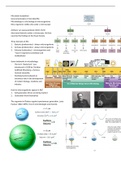
Microbiology is a the biology of microorganisms
(tiny organisms visible only under a microscope)
Anthony van Leeuuwenhoek (1632-1723):
discovered bacteria under a microscope. He then
reported his findings to the Royal Society.
Three domains of life:
1. Bacteria (prokaryotes) - always microorganisms
2. Archaea (prokaryotes) - always microorganisms
3. Eukarya (eukaryotes) - microorganisms and
“macro”organisms (unicellular and
multicellular)
Some landmarks in microbiology:
- The term “bacterium” was
introduced in 1828 by Christian
Gottfried Ehrenberg, a famous
German naturalist.
- Studying bacteria played an
enormous role in the development
of modern biology, medicine and
industry
How do microorganisms appear in life?
1. Self-generation (from non-living matter)
2. Generation from themselves
The argument of Pasteur against spontaneous generation. Louis
Pasteur (1822-1895), French microbiologist and chemist.
, The importance of being small:
- Area-to-volume ratio is much higher in small cells. As a result, the exchange of substances is quicker.
- Advantages for the smaller cell include: metabolism, reproduction and cell communications occurs at higher rate that
provides greater chances for survival and evolution
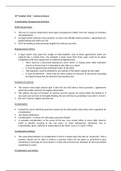
Living cells contain 4 main classes of compounds which differ from a non-living organic matter:
1. Proteins: structural components of the cell, enzymes and regulators; encoded by genes; synthesised by ribosomes
2. Nucleic acids: genetic material (DNA and RNA, substances of heredity)
3. Lipids: components of cellular membranes, cell wall and storage granules
4. Polysaccharides: components of cell walls and capsule
Metabolism Uptake of nutrients from the environment, their transformation within the cell, and elimination of wastes into the
environment. The cell is thus an open system. Metabolic activities make cells chemically very complex and diverse.
Reproduction Chemicals from the environment are turned into new cells under the direction of preexisting cells. Reproduction is based
(growth) on:
1. Replication of DNA and
2. Equal distribution of replicated DNA into 2 cells after division of the initial cell
- Reproduction is the fundamental feature of life. It ensures the existence of species and their evolution.
- Reproduction is a core way of colonisation of a host by pathogenic microbes causing diseases
- It’s an important part of many technological processes in industries (like baking, brewing, etc)
Differentiation Formation of new cell structure such as a spore, usually part of a cellular life cycle. Differentiation is not a compulsory
property of all microbial cells, but those species that form spores survive better unfavourable conditions
Communication Cells communicate or interact primarily by means of chemicals that are released or taken up. One of the consequences of
cell communications is the Quorum sensing mechanism. It allows a population to sense a critical amount of cells and stop
divisions.
Movement Living organisms are often capable of self-propulsion. Motility is not a compulsory property of all microbes
Evolution Cells contain genes and evolve to display new biological properties. Phylogenetic trees show the evolutionary relationships
between cells.
The machine and coding functions of the cell:
- Coding functions: genetic processes based on information encoded by DNA
- Machine functions: biochemical and physiological processes based on metabolism
Growth: theoretical and practical aspects
Growth = replication of cells and increase in amounts
Bacteria divides in a process called binary fission:
Counting viability of cells using serial dilutions is a basic technique in microbiology. For
diluting many simultaneous samples, saline or water can be used.
General principles of microbial life:
Microbiology is a the biology of microorganisms
(tiny organisms visible only under a microscope)
Anthony van Leeuuwenhoek (1632-1723):
discovered bacteria under a microscope. He then
reported his findings to the Royal Society.
Three domains of life:
1. Bacteria (prokaryotes) - always microorganisms
2. Archaea (prokaryotes) - always microorganisms
3. Eukarya (eukaryotes) - microorganisms and
“macro”organisms (unicellular and
multicellular)
Some landmarks in microbiology:
- The term “bacterium” was
introduced in 1828 by Christian
Gottfried Ehrenberg, a famous
German naturalist.
- Studying bacteria played an
enormous role in the development
of modern biology, medicine and
industry
How do microorganisms appear in life?
1. Self-generation (from non-living matter)
2. Generation from themselves
The argument of Pasteur against spontaneous generation. Louis
Pasteur (1822-1895), French microbiologist and chemist.
, The importance of being small:
- Area-to-volume ratio is much higher in small cells. As a result, the exchange of substances is quicker.
- Advantages for the smaller cell include: metabolism, reproduction and cell communications occurs at higher rate that
provides greater chances for survival and evolution
Living cells contain 4 main classes of compounds which differ from a non-living organic matter:
1. Proteins: structural components of the cell, enzymes and regulators; encoded by genes; synthesised by ribosomes
2. Nucleic acids: genetic material (DNA and RNA, substances of heredity)
3. Lipids: components of cellular membranes, cell wall and storage granules
4. Polysaccharides: components of cell walls and capsule
Metabolism Uptake of nutrients from the environment, their transformation within the cell, and elimination of wastes into the
environment. The cell is thus an open system. Metabolic activities make cells chemically very complex and diverse.
Reproduction Chemicals from the environment are turned into new cells under the direction of preexisting cells. Reproduction is based
(growth) on:
1. Replication of DNA and
2. Equal distribution of replicated DNA into 2 cells after division of the initial cell
- Reproduction is the fundamental feature of life. It ensures the existence of species and their evolution.
- Reproduction is a core way of colonisation of a host by pathogenic microbes causing diseases
- It’s an important part of many technological processes in industries (like baking, brewing, etc)
Differentiation Formation of new cell structure such as a spore, usually part of a cellular life cycle. Differentiation is not a compulsory
property of all microbial cells, but those species that form spores survive better unfavourable conditions
Communication Cells communicate or interact primarily by means of chemicals that are released or taken up. One of the consequences of
cell communications is the Quorum sensing mechanism. It allows a population to sense a critical amount of cells and stop
divisions.
Movement Living organisms are often capable of self-propulsion. Motility is not a compulsory property of all microbes
Evolution Cells contain genes and evolve to display new biological properties. Phylogenetic trees show the evolutionary relationships
between cells.
The machine and coding functions of the cell:
- Coding functions: genetic processes based on information encoded by DNA
- Machine functions: biochemical and physiological processes based on metabolism
Growth: theoretical and practical aspects
Growth = replication of cells and increase in amounts
Bacteria divides in a process called binary fission:
Counting viability of cells using serial dilutions is a basic technique in microbiology. For
diluting many simultaneous samples, saline or water can be used.