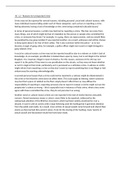
Cells and organelles
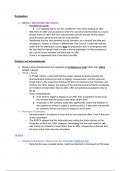
eukaryotes - Any organism with one or more cells with DNA in a membrane-bound nucleus which is separated
from the cytoplasm – generally have specialised, membrane bound organelles.
- Animals, fungi, plants and Protoctista are eukaryotes.
prokaryotes - Any single celled where DNA is free floating in the cytoplasm.
- Bacteria and archaea are prokaryotes.
- They have simpler structures than eukaryotes, lack nucleus, ER and Golgi.
Animal cells - Plasma membrane = made of lipids to regulate movement of substance in and out the cell.
- Rough ER = folds and processes proteins made at the ribosomes
- Nucleolus = inside nucleus, makes ribosomes.
- Nucleus = surrounded by nuclear envelope, it has chromosomes. Controls cell activity.
- Smooth ER = synthesises and processes lipids.
- Lysosome = membrane bound vesicle with digestive enzyme to digest invading or old cells.
- Ribosome = free floating or on rough ER with no membrane, site of protein synthesis.
- Golgi apparatus = membrane bound, flattened sacs to process and package lipids and proteins.
- Golgi vesicle = fluid filled sac to store lipids and proteins and transport them out of the cell
- Cytoplasm = where chemical reactions take place and where organelles are in.
- Mitochondria = double membrane, inner is called cristae with enzymes for site of respiration to make
ATP.
Plant cell - Chloroplast = flattened structure with double membrane, site of photosynthesis. Inner = thylakoid.
- Plasmodesmata = channels in the cell wall for transport and communication between other cells.
- Vacuole = membrane bound, tonoplast, with cell sap to maintain cell internal pressure for rigidity,
isolates unwanted chemicals in cell.
- Cell wall = made of cellulose for cell support so there is no change in shape.
- Plasma membrane = made of lipids to regulate movement of substance in and out the cell.
- Rough ER = folds and processes proteins made at the ribosomes
- Nucleolus = inside nucleus, makes ribosomes.
- Nucleus = surrounded by nuclear envelope, it has chromosomes. Controls cell activity.
- Smooth ER = synthesises and processes lipids.
- Lysosome = membrane bound vesicle with digestive enzyme to digest invading or old cells.
- Ribosome = free floating or on rough ER with no membrane, site of protein synthesis.
- Golgi apparatus = membrane bound, flattened sacs to process and package lipids and proteins.
- Golgi vesicle = fluid filled sac to store lipids and proteins and transport them out of the cell
- Cytoplasm = where chemical reactions take place and where organelles are in.
- Mitochondria = double membrane, inner is called cristae with enzymes for site of respiration to make
ATP.
bacteria - DNA = free floating, instructions to make proteins.
- Flagellum = long, hair-like for movement and can have multiple.
- Ribosome = where protein synthesis happens.
- Plasma membrane = made of lipids to regulate movement of substance in and out the cell.
- Cell wall = made of cellulose for cell support so there is no change in shape.
- Plasmid = small loops of DNA, can contain genes for antibiotic resistance but not in every prokaryote.
- Mesosomes = infoldings of cell membrane with large surface area for enzymes, involved in
respiration, attachment. They can also have photosynthetic pigments
- Slime capsule = secreted slime for protection from immune system cells.
Microscopes
Compound (light) - Eyepiece lens = magnification of x10
- Body tube – maintains proper distance between lenses.
- Revolving nosepiece – rotates objectives (magnification)
- Stage clips – hold the slide in place.
- Diaphragm – regulates amount of light
- Light source – reflects light towards eyepiece.
- Arm – to support the body tube.
- Stage – supports slide.
- Coarse adjustment – focuses image.
- Fine adjustment – sharpens image
- Base – support microscope.
Using a 1) carry microscope by base and arm.
microscope 2) place the slide on the stage and under the stage clamps.
3) look down the eye piece.
eukaryotes - Any organism with one or more cells with DNA in a membrane-bound nucleus which is separated
from the cytoplasm – generally have specialised, membrane bound organelles.
- Animals, fungi, plants and Protoctista are eukaryotes.
prokaryotes - Any single celled where DNA is free floating in the cytoplasm.
- Bacteria and archaea are prokaryotes.
- They have simpler structures than eukaryotes, lack nucleus, ER and Golgi.
Animal cells - Plasma membrane = made of lipids to regulate movement of substance in and out the cell.
- Rough ER = folds and processes proteins made at the ribosomes
- Nucleolus = inside nucleus, makes ribosomes.
- Nucleus = surrounded by nuclear envelope, it has chromosomes. Controls cell activity.
- Smooth ER = synthesises and processes lipids.
- Lysosome = membrane bound vesicle with digestive enzyme to digest invading or old cells.
- Ribosome = free floating or on rough ER with no membrane, site of protein synthesis.
- Golgi apparatus = membrane bound, flattened sacs to process and package lipids and proteins.
- Golgi vesicle = fluid filled sac to store lipids and proteins and transport them out of the cell
- Cytoplasm = where chemical reactions take place and where organelles are in.
- Mitochondria = double membrane, inner is called cristae with enzymes for site of respiration to make
ATP.
Plant cell - Chloroplast = flattened structure with double membrane, site of photosynthesis. Inner = thylakoid.
- Plasmodesmata = channels in the cell wall for transport and communication between other cells.
- Vacuole = membrane bound, tonoplast, with cell sap to maintain cell internal pressure for rigidity,
isolates unwanted chemicals in cell.
- Cell wall = made of cellulose for cell support so there is no change in shape.
- Plasma membrane = made of lipids to regulate movement of substance in and out the cell.
- Rough ER = folds and processes proteins made at the ribosomes
- Nucleolus = inside nucleus, makes ribosomes.
- Nucleus = surrounded by nuclear envelope, it has chromosomes. Controls cell activity.
- Smooth ER = synthesises and processes lipids.
- Lysosome = membrane bound vesicle with digestive enzyme to digest invading or old cells.
- Ribosome = free floating or on rough ER with no membrane, site of protein synthesis.
- Golgi apparatus = membrane bound, flattened sacs to process and package lipids and proteins.
- Golgi vesicle = fluid filled sac to store lipids and proteins and transport them out of the cell
- Cytoplasm = where chemical reactions take place and where organelles are in.
- Mitochondria = double membrane, inner is called cristae with enzymes for site of respiration to make
ATP.
bacteria - DNA = free floating, instructions to make proteins.
- Flagellum = long, hair-like for movement and can have multiple.
- Ribosome = where protein synthesis happens.
- Plasma membrane = made of lipids to regulate movement of substance in and out the cell.
- Cell wall = made of cellulose for cell support so there is no change in shape.
- Plasmid = small loops of DNA, can contain genes for antibiotic resistance but not in every prokaryote.
- Mesosomes = infoldings of cell membrane with large surface area for enzymes, involved in
respiration, attachment. They can also have photosynthetic pigments
- Slime capsule = secreted slime for protection from immune system cells.
Microscopes
Compound (light) - Eyepiece lens = magnification of x10
- Body tube – maintains proper distance between lenses.
- Revolving nosepiece – rotates objectives (magnification)
- Stage clips – hold the slide in place.
- Diaphragm – regulates amount of light
- Light source – reflects light towards eyepiece.
- Arm – to support the body tube.
- Stage – supports slide.
- Coarse adjustment – focuses image.
- Fine adjustment – sharpens image
- Base – support microscope.
Using a 1) carry microscope by base and arm.
microscope 2) place the slide on the stage and under the stage clamps.
3) look down the eye piece.