A hydrocarbon is any compound that is formed from carbon and hydrogen atoms only.
Alkanes are the simplest type of hydrocarbon, they have a general formula of C nH2n+2. They are a
homologous series, a group of organic compounds that react in a similar way. They are saturated
compounds, each carbon atom forms four single covalent bonds. The first 4 alkanes are methane
(CH4), ethane (C2H6), propane (C3H8) and butane (C4H10).
As the length of the carbon chain changes, the properties of the hydrocarbons change:
Shorter the chain, the more runny the hydrocarbon is and is less viscous
Shorter chains are also more volatile, they have lower boiling points
Shorter the chain the more flammable it is, easier to ignite
The properties affect how they are used as fuels
Complete combustion of any hydrocarbon in oxygen releases lots of energy. The only waste products
are carbon dioxide and water vapour. During combustion, hydrogen and carbon are oxidised.
Hydrocarbons are used as fuels due to the amount of energy released when they combust
completely. Hydrocarbon + Oxygen Carbon Dioxide + Water
Crude oil is a fossil fuel. It is formed from the remains of plants and animals, mainly plankton, which
died millions of years ago and were buried in mud. Over millions of years, with high temperature and
pressure, the remains turn into crude oil, which can be drilled up from the rocks where it’s found.
Fossil fuels like coal, oil and gas are non-renewable fuels as they take a long so long to make that
they’re being used up much faster than they are being formed. They are finite resources; one day
they will run out.
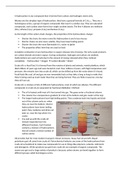
Crude oil is a mixture of lots of different hydrocarbons, most of which are alkanes. The different
compounds in crude oil are separated by fractional distillation. Method:
The oil is heated until most of it has turned into gas. The gases enter a fractional column.
The column has a temperature gradient (it is hot at the bottom and gets cooler at the top)
The longer hydrocarbons have high boiling points. They condense back into liquids and drain
out of the column early on, when
they are near the bottom. Shorter
hydrocarbons have lower boiling
point, they condense and drain out
later on, near the top where it is
cooler.
You end up with the crude oil
mixture separated out into
different fractions. Each fraction
contains a mixture of hydrocarbons
that all contain a similar number of
carbon atoms.
Oil provides fuel for most modern transport. Diesel, kerosene, heavy fuel oil and LPG (liquid
petroleum gas) all come from crude oil. Petrochemical industry use some of the hydrocarbons from
crude oil as feedstock to make new compounds for use in things like polymers, solvents, lubricants
and detergents. All the products you get from crude oils are example of organic compounds. The
reason you get such a large variety of product is because carbon atoms can bond together to form
different groups called homologous series.
Alkanes are the simplest type of hydrocarbon, they have a general formula of C nH2n+2. They are a
homologous series, a group of organic compounds that react in a similar way. They are saturated
compounds, each carbon atom forms four single covalent bonds. The first 4 alkanes are methane
(CH4), ethane (C2H6), propane (C3H8) and butane (C4H10).
As the length of the carbon chain changes, the properties of the hydrocarbons change:
Shorter the chain, the more runny the hydrocarbon is and is less viscous
Shorter chains are also more volatile, they have lower boiling points
Shorter the chain the more flammable it is, easier to ignite
The properties affect how they are used as fuels
Complete combustion of any hydrocarbon in oxygen releases lots of energy. The only waste products
are carbon dioxide and water vapour. During combustion, hydrogen and carbon are oxidised.
Hydrocarbons are used as fuels due to the amount of energy released when they combust
completely. Hydrocarbon + Oxygen Carbon Dioxide + Water
Crude oil is a fossil fuel. It is formed from the remains of plants and animals, mainly plankton, which
died millions of years ago and were buried in mud. Over millions of years, with high temperature and
pressure, the remains turn into crude oil, which can be drilled up from the rocks where it’s found.
Fossil fuels like coal, oil and gas are non-renewable fuels as they take a long so long to make that
they’re being used up much faster than they are being formed. They are finite resources; one day
they will run out.
Crude oil is a mixture of lots of different hydrocarbons, most of which are alkanes. The different
compounds in crude oil are separated by fractional distillation. Method:
The oil is heated until most of it has turned into gas. The gases enter a fractional column.
The column has a temperature gradient (it is hot at the bottom and gets cooler at the top)
The longer hydrocarbons have high boiling points. They condense back into liquids and drain
out of the column early on, when
they are near the bottom. Shorter
hydrocarbons have lower boiling
point, they condense and drain out
later on, near the top where it is
cooler.
You end up with the crude oil
mixture separated out into
different fractions. Each fraction
contains a mixture of hydrocarbons
that all contain a similar number of
carbon atoms.
Oil provides fuel for most modern transport. Diesel, kerosene, heavy fuel oil and LPG (liquid
petroleum gas) all come from crude oil. Petrochemical industry use some of the hydrocarbons from
crude oil as feedstock to make new compounds for use in things like polymers, solvents, lubricants
and detergents. All the products you get from crude oils are example of organic compounds. The
reason you get such a large variety of product is because carbon atoms can bond together to form
different groups called homologous series.