Equity and Trusts 2
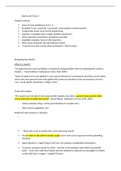
Module Content:
Types of trust (building on E & T 1)
Resulting Trusts: automatic / presumed / presumption of advancement
Constructive trusts: focus on the family home
Charities: charitable trusts / public benefit requirement
Unincorporated associations: beneficiary principle
Equitable remedies: focus on the injunction
Skills: essay writing for the DEX (Distance Exam)
*Guest lecture slot: private client practitioner / RISE trustees
Recapping the Maxims
What is a maxim?
“As equity became more formalized a framework emerged within which its development could be
shaped….” (Sarah Wilson, Textbook on Trusts, OUP, 2005)
“Rules of equity have to be applied in such a great diversity of circumstances that they can be stated
only in the most general terms and applied with particular attention to the circumstances of each
case.” (Lord Upjohn, Boardman v Phipps, 1967)
Treat with caution:
“The maxims are not rules to be construed like statutes, but rather a general basis around which
much of the law of equity has formed” (Sarah Wilson, Textbook on Trusts, OUP, 2005)
• Useful principles (Virgo ‘useful generalizations of complex law’)
• Often cited in judgments, but
Rarely the sole reason for a decision
•
- Those who come to equity must come with clean hands:
Has to relate to the relief (remedy) sought, don’t have to be of general moral upstanding
character
Argyll (Duchess) v Argyll (Duke) [1967] Ch 302 (adultery/confidential information)
“A person coming to Equity for relief – and this is the equitable relief which the plaintiff
seeks – must come with clean hands; but the cleanliness required is to be judged in relation
to the relief that is sought.” Ungoed-Thomas J
Module Content:
Types of trust (building on E & T 1)
Resulting Trusts: automatic / presumed / presumption of advancement
Constructive trusts: focus on the family home
Charities: charitable trusts / public benefit requirement
Unincorporated associations: beneficiary principle
Equitable remedies: focus on the injunction
Skills: essay writing for the DEX (Distance Exam)
*Guest lecture slot: private client practitioner / RISE trustees
Recapping the Maxims
What is a maxim?
“As equity became more formalized a framework emerged within which its development could be
shaped….” (Sarah Wilson, Textbook on Trusts, OUP, 2005)
“Rules of equity have to be applied in such a great diversity of circumstances that they can be stated
only in the most general terms and applied with particular attention to the circumstances of each
case.” (Lord Upjohn, Boardman v Phipps, 1967)
Treat with caution:
“The maxims are not rules to be construed like statutes, but rather a general basis around which
much of the law of equity has formed” (Sarah Wilson, Textbook on Trusts, OUP, 2005)
• Useful principles (Virgo ‘useful generalizations of complex law’)
• Often cited in judgments, but
Rarely the sole reason for a decision
•
- Those who come to equity must come with clean hands:
Has to relate to the relief (remedy) sought, don’t have to be of general moral upstanding
character
Argyll (Duchess) v Argyll (Duke) [1967] Ch 302 (adultery/confidential information)
“A person coming to Equity for relief – and this is the equitable relief which the plaintiff
seeks – must come with clean hands; but the cleanliness required is to be judged in relation
to the relief that is sought.” Ungoed-Thomas J