

6202 Exam 1
Study online at https://quizlet.com/_8goa1f
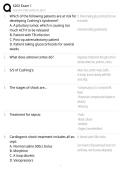
1. Which of the following patients are at risk for D. Patient taking glucocorticoids for sev-
developing Cushing's syndrome? eral weeks
A. A pituitary tumor, which is causing too
much ACTH to be released (Someone taking prednisone)
B. Patient with TB infection
C. Post-op adrenalectomy patient
D. Patient taking glucocorticoids for several
weeks
2. What does adrenal cortex do? Regulates metabolism through cortisol
(breaks down fats, proteins, carbs)
3. S/S of Cushing's: Moon face, stretch marks, buffa-
lo hump, truncal obesity with little
arms/legs
4. The stages of shock are... -Compensatory (s/s: increased HR,
fever)
-Progressive (compensation begins to
decline)
-Refractory
5. Treatment for sepsis: -Fluids
-Blood cultures
-Antibiotic
-Oxygen (nonrebreather)
6. Cardiogenic shock treatment includes all ex- A. Normal saline 500cc bolus
cept:
A. Normal saline 500cc bolus Don't want to fluid overload; heart isn't
B. Morphine perfusing--won't pump adequetely
C. A loop diuretic
D. Vasopressors
, 6202 Exam 1
Study online at https://quizlet.com/_8goa1f
7. The patient is in septic shock and the MAP is Monitor the patient (60-65 is normal)
62. What is the next step?
MAP is indicator of organ perfusion
8. Which of the following abnormal electrolyte C. Na+ level of 112
imbalances is EXPECTED with Addisonian cri-
sis?
A. K+ level of 3.2
B. Blood glucose 120
C. Na+ level of 112
D. Creatinine 1.2
9. 3 H's of Addisonian crisis: Hyponatremia, hypokalemia, hypo-
glycemia
10. What is Addison's disease? Decreased function of andrenal gland.
Anterior pituitary communicates with
ACTH hormone to produce cortisol
11. Treatment for Addison's: Cortisol supplementation
12. The best method to determine the patient's CVP (central venous pressure), urine
hydration status in shock is: output
13. What is an appropriate nursing diagnosis for Risk for fluid volume deficit (they are
a patient in an Addisonian crisis? losing fluids)
14. Which of the following patients is MOST at risk B. Pt post-op day 2 adrenalectomy
for developing Addisonian crisis?
A. Pt post-op day 2 from thyroid surgery Removed the adrenal gland, which is
B. Pt post-op day 2 adrenalectomy the primary source of cortisol; they need
C. Pt with Addison's disease who reports tak- permanent exogenous cortisol after the
surgery
Study online at https://quizlet.com/_8goa1f
1. Which of the following patients are at risk for D. Patient taking glucocorticoids for sev-
developing Cushing's syndrome? eral weeks
A. A pituitary tumor, which is causing too
much ACTH to be released (Someone taking prednisone)
B. Patient with TB infection
C. Post-op adrenalectomy patient
D. Patient taking glucocorticoids for several
weeks
2. What does adrenal cortex do? Regulates metabolism through cortisol
(breaks down fats, proteins, carbs)
3. S/S of Cushing's: Moon face, stretch marks, buffa-
lo hump, truncal obesity with little
arms/legs
4. The stages of shock are... -Compensatory (s/s: increased HR,
fever)
-Progressive (compensation begins to
decline)
-Refractory
5. Treatment for sepsis: -Fluids
-Blood cultures
-Antibiotic
-Oxygen (nonrebreather)
6. Cardiogenic shock treatment includes all ex- A. Normal saline 500cc bolus
cept:
A. Normal saline 500cc bolus Don't want to fluid overload; heart isn't
B. Morphine perfusing--won't pump adequetely
C. A loop diuretic
D. Vasopressors
, 6202 Exam 1
Study online at https://quizlet.com/_8goa1f
7. The patient is in septic shock and the MAP is Monitor the patient (60-65 is normal)
62. What is the next step?
MAP is indicator of organ perfusion
8. Which of the following abnormal electrolyte C. Na+ level of 112
imbalances is EXPECTED with Addisonian cri-
sis?
A. K+ level of 3.2
B. Blood glucose 120
C. Na+ level of 112
D. Creatinine 1.2
9. 3 H's of Addisonian crisis: Hyponatremia, hypokalemia, hypo-
glycemia
10. What is Addison's disease? Decreased function of andrenal gland.
Anterior pituitary communicates with
ACTH hormone to produce cortisol
11. Treatment for Addison's: Cortisol supplementation
12. The best method to determine the patient's CVP (central venous pressure), urine
hydration status in shock is: output
13. What is an appropriate nursing diagnosis for Risk for fluid volume deficit (they are
a patient in an Addisonian crisis? losing fluids)
14. Which of the following patients is MOST at risk B. Pt post-op day 2 adrenalectomy
for developing Addisonian crisis?
A. Pt post-op day 2 from thyroid surgery Removed the adrenal gland, which is
B. Pt post-op day 2 adrenalectomy the primary source of cortisol; they need
C. Pt with Addison's disease who reports tak- permanent exogenous cortisol after the
surgery

