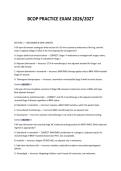
BCOP PRACTICE EXAM 2026/2027
SECTION 1 — MELANOMA & SKIN CANCERS
A 34-year-old woman undergoes wide excision of a 0.8 mm cutaneous melanoma of the leg; sentinel
node is negative (Stage I). What is the most appropriate management?
A. Surgery (wide local excision) alone — CORRECT: Stage I–II melanoma is managed with surgery alone;
no adjuvant systemic therapy is indicated for Stage I.
B. Adjuvant ipilimumab — Incorrect: CTLA-4 monotherapy is not adjuvant standard for Stage I and
carries high toxicity.
C. Adjuvant dabrafenib + trametinib — Incorrect: BRAF/MEK therapy applies only to BRAF V600-mutated
Stage III+ disease.
D. Talimogene laherparepvec — Incorrect: reserved for unresectable Stage III with in-transit lesions.
Correct ANSWER: A
A 50-year-old man completes resection of Stage IIIB cutaneous melanoma; tumor is BRAF wild-type.
Best adjuvant therapy?
A. Nivolumab (or pembrolizumab) — CORRECT: anti-PD-1 monotherapy is the adjuvant standard for
resected Stage III disease regardless of BRAF status.
B. Dabrafenib + trametinib — Incorrect: requires a BRAF V600 mutation, which this patient lacks.
C. Vemurafenib monotherapy — Incorrect: BRAF monotherapy has no adjuvant role.
D. Dacarbazine — Incorrect: cytotoxic chemotherapy is not used in the adjuvant melanoma setting.
Correct ANSWER: A
A 45-year-old woman has resected Stage IIIC melanoma testing positive for BRAF V600E. Which adjuvant
regimen is appropriate?
A. Dabrafenib + trametinib — CORRECT: BRAF/MEK combination is a category-1 adjuvant option for
resected Stage III BRAF-mutated disease (anti-PD-1 also acceptable).
B. Imatinib — Incorrect: targets KIT/BCR-ABL; no adjuvant role in melanoma.
C. High-dose interferon alfa — Incorrect: obsolete, replaced by modern immunotherapy/targeted
options.
D. Vismodegib — Incorrect: Hedgehog inhibitor used in basal cell carcinoma, not melanoma.
, Correct ANSWER: A
A 60-year-old man presents with Stage IV BRAF V600K melanoma that is aggressive, bulky, and
symptomatic. Best initial therapy?
A. Dabrafenib + trametinib (or vemurafenib + cobimetinib) — CORRECT: BRAF/MEK combinations
produce rapid, high response rates needed for bulky symptomatic disease.
B. Pembrolizumab monotherapy — Incorrect: immunotherapy onset is slower; preferred when
minimally symptomatic.
C. Talimogene laherparepvec — Incorrect: only for injectable in-transit/unresectable Stage III lesions.
D. Paclitaxel — Incorrect: chemotherapy is not first-line in the immunotherapy era.
Correct ANSWER: A
A 70-year-old patient has unresectable Stage III melanoma with in-transit lesions. Which agent is
specifically indicated?
A. Talimogene laherparepvec (T-VEC) — CORRECT: intralesional oncolytic virus approved for initial
treatment of unresectable Stage III disease with in-transit lesions.
B. Vismodegib — Incorrect: Hedgehog pathway is relevant to basal cell carcinoma.
C. Ipilimumab monotherapy — Incorrect: not the lesion-directed therapy of choice for in-transit disease.
D. Topical imiquimod alone — Incorrect: inadequate for unresectable Stage III disease.
Correct ANSWER: A
A 55-year-old woman presents with Stage IV melanoma, BRAF wild-type, asymptomatic. Best first-line
therapy?
A. Nivolumab (or pembrolizumab; or nivolumab + relatlimab/ipilimumab) — CORRECT: checkpoint
inhibition is the backbone of first-line therapy for BRAF wild-type Stage IV disease.
B. Dabrafenib + trametinib — Incorrect: no targetable BRAF mutation present.
C. Vemurafenib + cobimetinib — Incorrect: same reason—requires BRAF V600 mutation.
D. Aldesleukin (high-dose IL-2) — Incorrect: rarely used now due to toxicity and superior modern
options.
Correct ANSWER: A
A 48-year-old man has Stage IV BRAF V600E melanoma and is minimally symptomatic. Preferred initial
approach?
A. Immunotherapy (nivolumab, pembrolizumab, or nivolumab + ipilimumab) — CORRECT: with low
symptom burden, durable immunotherapy responses are preferred and targeted therapy is saved for
later.
SECTION 1 — MELANOMA & SKIN CANCERS
A 34-year-old woman undergoes wide excision of a 0.8 mm cutaneous melanoma of the leg; sentinel
node is negative (Stage I). What is the most appropriate management?
A. Surgery (wide local excision) alone — CORRECT: Stage I–II melanoma is managed with surgery alone;
no adjuvant systemic therapy is indicated for Stage I.
B. Adjuvant ipilimumab — Incorrect: CTLA-4 monotherapy is not adjuvant standard for Stage I and
carries high toxicity.
C. Adjuvant dabrafenib + trametinib — Incorrect: BRAF/MEK therapy applies only to BRAF V600-mutated
Stage III+ disease.
D. Talimogene laherparepvec — Incorrect: reserved for unresectable Stage III with in-transit lesions.
Correct ANSWER: A
A 50-year-old man completes resection of Stage IIIB cutaneous melanoma; tumor is BRAF wild-type.
Best adjuvant therapy?
A. Nivolumab (or pembrolizumab) — CORRECT: anti-PD-1 monotherapy is the adjuvant standard for
resected Stage III disease regardless of BRAF status.
B. Dabrafenib + trametinib — Incorrect: requires a BRAF V600 mutation, which this patient lacks.
C. Vemurafenib monotherapy — Incorrect: BRAF monotherapy has no adjuvant role.
D. Dacarbazine — Incorrect: cytotoxic chemotherapy is not used in the adjuvant melanoma setting.
Correct ANSWER: A
A 45-year-old woman has resected Stage IIIC melanoma testing positive for BRAF V600E. Which adjuvant
regimen is appropriate?
A. Dabrafenib + trametinib — CORRECT: BRAF/MEK combination is a category-1 adjuvant option for
resected Stage III BRAF-mutated disease (anti-PD-1 also acceptable).
B. Imatinib — Incorrect: targets KIT/BCR-ABL; no adjuvant role in melanoma.
C. High-dose interferon alfa — Incorrect: obsolete, replaced by modern immunotherapy/targeted
options.
D. Vismodegib — Incorrect: Hedgehog inhibitor used in basal cell carcinoma, not melanoma.
, Correct ANSWER: A
A 60-year-old man presents with Stage IV BRAF V600K melanoma that is aggressive, bulky, and
symptomatic. Best initial therapy?
A. Dabrafenib + trametinib (or vemurafenib + cobimetinib) — CORRECT: BRAF/MEK combinations
produce rapid, high response rates needed for bulky symptomatic disease.
B. Pembrolizumab monotherapy — Incorrect: immunotherapy onset is slower; preferred when
minimally symptomatic.
C. Talimogene laherparepvec — Incorrect: only for injectable in-transit/unresectable Stage III lesions.
D. Paclitaxel — Incorrect: chemotherapy is not first-line in the immunotherapy era.
Correct ANSWER: A
A 70-year-old patient has unresectable Stage III melanoma with in-transit lesions. Which agent is
specifically indicated?
A. Talimogene laherparepvec (T-VEC) — CORRECT: intralesional oncolytic virus approved for initial
treatment of unresectable Stage III disease with in-transit lesions.
B. Vismodegib — Incorrect: Hedgehog pathway is relevant to basal cell carcinoma.
C. Ipilimumab monotherapy — Incorrect: not the lesion-directed therapy of choice for in-transit disease.
D. Topical imiquimod alone — Incorrect: inadequate for unresectable Stage III disease.
Correct ANSWER: A
A 55-year-old woman presents with Stage IV melanoma, BRAF wild-type, asymptomatic. Best first-line
therapy?
A. Nivolumab (or pembrolizumab; or nivolumab + relatlimab/ipilimumab) — CORRECT: checkpoint
inhibition is the backbone of first-line therapy for BRAF wild-type Stage IV disease.
B. Dabrafenib + trametinib — Incorrect: no targetable BRAF mutation present.
C. Vemurafenib + cobimetinib — Incorrect: same reason—requires BRAF V600 mutation.
D. Aldesleukin (high-dose IL-2) — Incorrect: rarely used now due to toxicity and superior modern
options.
Correct ANSWER: A
A 48-year-old man has Stage IV BRAF V600E melanoma and is minimally symptomatic. Preferred initial
approach?
A. Immunotherapy (nivolumab, pembrolizumab, or nivolumab + ipilimumab) — CORRECT: with low
symptom burden, durable immunotherapy responses are preferred and targeted therapy is saved for
later.