

ATI PN Fundamentals Proctor 2023 Exam Preparation
Study online at https://quizlet.com/_gr4s9e
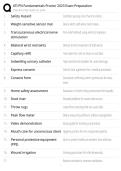
1. Safety Hazard Condition posing risk of harm to clients.
2. Weight-sensitive sensor mat Device alerts staff when client moves.
3. Transcutaneous electrical nerve Pain relief method using electrical impulses.
stimulation
4. Bilateral wrist restraints Devices to limit movement of both wrists.
5. Capillary refill Time taken for color to return to nail bed.
6. Indwelling urinary catheter Tube inserted into bladder for urine drainage.
7. Express consent Client's clear agreement for a medical procedure.
8. Consent form Document confirming client's permission for treat-
ment.
9. Home safety assessment Evaluation of client's living environment for hazards.
10. Stool riser Elevated platform for easier toilet access.
11. Throw rugs Loose floor coverings that can cause falls.
12. Peak flow meter Device measuring airflow in asthma management.
13. Video demonstration Visual guide for teaching a procedure.
14. Mouth care for unconscious client Hygiene practice for non-responsive patients.
15. Personal protective equipment Gear to protect healthcare workers from infection.
(PPE)
16. Wound irrigation Cleaning procedure for infected wounds.
17. Bacteria resistant to common antibiotics.
, ATI PN Fundamentals Proctor 2023 Exam Preparation
Study online at https://quizlet.com/_gr4s9e
Methicillin-resistant Staphylococ-
cus aureus (MRSA)
18. Postoperative care Support and monitoring after surgical procedures.
19. Limb loss acceptance Client's emotional adjustment to losing a limb.
20. Arthritis management Strategies to alleviate joint pain and improve mobility.
21. NG tube Nasal tube for gastric decompression.
22. Gastric decompression Removal of stomach contents to relieve pressure.
23. Handrail support Using railings for stability on stairs.
24. Gloved fingers Covered fingers used for patient care.
25. Greenish-yellow drainage Indicates possible infection; should be reported.
26. Gastric contents in air vent Sign of potential complication; requires immediate at-
tention.
27. FLACC scale Pain assessment tool for non-verbal patients.
28. Communication board Facilitates interaction with non-English speaking
clients.
29. Westerly syndrome Condition requiring dietary restrictions, particularly
potassium.
30. Incident report Documentation for adverse events or safety issues.
31. Postmortem care Care provided after a patient's death.
32. Environmental stressors Factors affecting patient comfort in healthcare settings.
, ATI PN Fundamentals Proctor 2023 Exam Preparation
Study online at https://quizlet.com/_gr4s9e
33. Vitamin C intake Essential for wound healing; citrus fruits recommend-
ed.
34. Palliative care Focuses on comfort and quality of life.
35. Client's personal belongings Should be secured after death for family.
36. Client's dietary restrictions Specific foods to avoid based on medical conditions.
37. Assisting with transfers Requires proper technique to ensure client safety.
38. Resuscitation discussions Important in palliative care context; often avoided.
39. Emotional support Critical for families during serious illness.
40. Burns from heating pad Requires incident report due to injury.
41. Disorientation and falls Serious incident; necessitates reporting and review.
42. Temperature dissatisfaction Minor issue; may not require formal reporting.
43. Visitor's fainting Potential safety concern; should be documented.
44. Nutritional recommendations Guidance on food choices to meet health needs.
45. Client's condition confidentiality Protects patient privacy; information should not be
shared.
46. Client's care choices Empowers patients; should be respected in planning.
47. Assisting with standing Proper body mechanics are essential for safety.
48. Vitamin C Essential nutrient for wound healing.
49. Palliative Care Supportive care for serious illness.
, ATI PN Fundamentals Proctor 2023 Exam Preparation
Study online at https://quizlet.com/_gr4s9e
50. Client Advocacy Speaking on behalf of the client's needs.
51. Advance Directives Legal documents for healthcare decisions.
52. Scoliosis Abnormal lateral curvature of the spine.
53. Proper Lifting Techniques Strategies to prevent back injury.
54. Hearing Loss Communication Methods to enhance communication with hearing-im-
paired.
55. Fever Management Actions to reduce elevated body temperature.
56. Deep Vein Thrombosis Signs Indicators of potential blood clot in veins.
57. Ethical Principles in Nursing Guidelines for ethical patient care.
58. Infection Control Practices to prevent spread of infections.
59. Clostridium difficile Bacterial infection causing severe diarrhea.
60. Emotional Support Providing psychological assistance during illness.
61. Self-Care Needs Client's requirements for personal health manage-
ment.
62. Temperature Documentation Recording patient's body temperature readings.
63. Episiotomy Care Management of surgical incision during childbirth.
64. Health Care Proxy Person authorized to make healthcare decisions.
65. Living Will Document specifying medical treatment preferences.
66. Calf Swelling Possible sign of deep vein thrombosis.
Study online at https://quizlet.com/_gr4s9e
1. Safety Hazard Condition posing risk of harm to clients.
2. Weight-sensitive sensor mat Device alerts staff when client moves.
3. Transcutaneous electrical nerve Pain relief method using electrical impulses.
stimulation
4. Bilateral wrist restraints Devices to limit movement of both wrists.
5. Capillary refill Time taken for color to return to nail bed.
6. Indwelling urinary catheter Tube inserted into bladder for urine drainage.
7. Express consent Client's clear agreement for a medical procedure.
8. Consent form Document confirming client's permission for treat-
ment.
9. Home safety assessment Evaluation of client's living environment for hazards.
10. Stool riser Elevated platform for easier toilet access.
11. Throw rugs Loose floor coverings that can cause falls.
12. Peak flow meter Device measuring airflow in asthma management.
13. Video demonstration Visual guide for teaching a procedure.
14. Mouth care for unconscious client Hygiene practice for non-responsive patients.
15. Personal protective equipment Gear to protect healthcare workers from infection.
(PPE)
16. Wound irrigation Cleaning procedure for infected wounds.
17. Bacteria resistant to common antibiotics.
, ATI PN Fundamentals Proctor 2023 Exam Preparation
Study online at https://quizlet.com/_gr4s9e
Methicillin-resistant Staphylococ-
cus aureus (MRSA)
18. Postoperative care Support and monitoring after surgical procedures.
19. Limb loss acceptance Client's emotional adjustment to losing a limb.
20. Arthritis management Strategies to alleviate joint pain and improve mobility.
21. NG tube Nasal tube for gastric decompression.
22. Gastric decompression Removal of stomach contents to relieve pressure.
23. Handrail support Using railings for stability on stairs.
24. Gloved fingers Covered fingers used for patient care.
25. Greenish-yellow drainage Indicates possible infection; should be reported.
26. Gastric contents in air vent Sign of potential complication; requires immediate at-
tention.
27. FLACC scale Pain assessment tool for non-verbal patients.
28. Communication board Facilitates interaction with non-English speaking
clients.
29. Westerly syndrome Condition requiring dietary restrictions, particularly
potassium.
30. Incident report Documentation for adverse events or safety issues.
31. Postmortem care Care provided after a patient's death.
32. Environmental stressors Factors affecting patient comfort in healthcare settings.
, ATI PN Fundamentals Proctor 2023 Exam Preparation
Study online at https://quizlet.com/_gr4s9e
33. Vitamin C intake Essential for wound healing; citrus fruits recommend-
ed.
34. Palliative care Focuses on comfort and quality of life.
35. Client's personal belongings Should be secured after death for family.
36. Client's dietary restrictions Specific foods to avoid based on medical conditions.
37. Assisting with transfers Requires proper technique to ensure client safety.
38. Resuscitation discussions Important in palliative care context; often avoided.
39. Emotional support Critical for families during serious illness.
40. Burns from heating pad Requires incident report due to injury.
41. Disorientation and falls Serious incident; necessitates reporting and review.
42. Temperature dissatisfaction Minor issue; may not require formal reporting.
43. Visitor's fainting Potential safety concern; should be documented.
44. Nutritional recommendations Guidance on food choices to meet health needs.
45. Client's condition confidentiality Protects patient privacy; information should not be
shared.
46. Client's care choices Empowers patients; should be respected in planning.
47. Assisting with standing Proper body mechanics are essential for safety.
48. Vitamin C Essential nutrient for wound healing.
49. Palliative Care Supportive care for serious illness.
, ATI PN Fundamentals Proctor 2023 Exam Preparation
Study online at https://quizlet.com/_gr4s9e
50. Client Advocacy Speaking on behalf of the client's needs.
51. Advance Directives Legal documents for healthcare decisions.
52. Scoliosis Abnormal lateral curvature of the spine.
53. Proper Lifting Techniques Strategies to prevent back injury.
54. Hearing Loss Communication Methods to enhance communication with hearing-im-
paired.
55. Fever Management Actions to reduce elevated body temperature.
56. Deep Vein Thrombosis Signs Indicators of potential blood clot in veins.
57. Ethical Principles in Nursing Guidelines for ethical patient care.
58. Infection Control Practices to prevent spread of infections.
59. Clostridium difficile Bacterial infection causing severe diarrhea.
60. Emotional Support Providing psychological assistance during illness.
61. Self-Care Needs Client's requirements for personal health manage-
ment.
62. Temperature Documentation Recording patient's body temperature readings.
63. Episiotomy Care Management of surgical incision during childbirth.
64. Health Care Proxy Person authorized to make healthcare decisions.
65. Living Will Document specifying medical treatment preferences.
66. Calf Swelling Possible sign of deep vein thrombosis.

