

Escrito por estudiantes que aprobaron Inmediatamente disponible después del pago Leer en línea o como PDF ¿Documento equivocado? Cámbialo gratis 4,6 TrustPilot
logo-home
Document preview thumbnail
Vista previa 3 fuera de 21 páginas
Examen

VN03 Practice Questions 2026/2027 | 140+ Questions & Answers | Anatomy, First Aid, Wound Care, Nutrition & Veterinary Nursing

Document preview thumbnail
Vista previa 3 fuera de 21 páginas

This comprehensive VN03 Practice Questions 2026/2027 revision resource contains 140+ questions with answers and illustrations across 21 pages. It provides broad veterinary nursing exam preparation covering anatomy and physiology, emergency triage and first aid, wound management and bandaging, infection control, nutrition, body condition scoring, injections and medication administration, oxygen therapy, nursing care plans, animal welfare, microbiology, reproduction, cardiovascular and digestive physiology, and clinical patient assessment. The mix of short-answer and applied clinical questions makes the document particularly useful for testing recall while strengthening the practical knowledge expected of student veterinary nurses. A major portion focuses on veterinary anatomy and physiology. Students review the cardiovascular system, including the endocardium, myocardium, epicardium, sinoatrial node, cardiac valves, vena cava, pulmonary vessels, systole, blood-cell functions, lymphatic circulation, and heart chambers. Musculoskeletal questions cover the quadriceps femoris, biceps femoris, semitendinosus, semimembranosus, gastrocnemius, triceps brachii, pectoral muscles, Achilles tendon, glenoid cavity, olecranon, patella, tendons, muscle contraction, and skeletal landmarks. The document also provides substantial practice in emergency veterinary nursing and first aid. Triage is defined in terms of prioritising patients according to clinical urgency, while the ABCN approach—airway, breathing, circulation and neurological status—is broken down into practical assessment steps. Students review mucous-membrane colour and its clinical significance, including cyanotic, pale, red and icteric findings, alongside capillary refill time, pulse assessment, haemorrhage, neurological reflexes, hypovolaemic shock, hypoglycaemia and respiratory distress. Oxygen-delivery questions include mask administration and tracheal catheter use for upper-airway obstruction. Another high-value area is wound care, infection control and bandaging. The questions examine closed and clean-contaminated wounds, contusions, wound infection, pyrexia, the inflammatory/debridement, proliferative/repair and maturation/remodelling phases of healing, granulation tissue, fibroblasts, wound contraction and debridement. Students also review the purpose of different bandage layers, Elizabethan collars for preventing wound interference, isolation PPE disposal, parvovirus waste, offensive waste, antiseptics and disinfectants. The nutrition and gastrointestinal section covers biological value of proteins, vitamin and mineral requirements, iron deficiency, iodine, vitamin E, potassium deficiency, pet-food ash content and the specific importance of dietary vitamin C for guinea pigs. Gastrointestinal physiology includes chief, goblet and parietal cells, pepsinogen, hydrochloric acid, chyme, the hepatic portal vein, rectal storage of faeces, regurgitation, trypsinogen, enterokinase, lipase and absorption in the jejunum. The guide also supplies formulas for calculating Basal/Resting Energy Requirement and Maintenance Energy Requirement for dogs and cats. Clinical veterinary nursing skills receive extensive attention. Questions cover intramuscular and subcutaneous injection sites, needle gauge selection, maximum IM volumes, avoiding the sciatic nerve, topical medication placement, SOAP documentation, Roper-Logan-Tierney nursing concepts, owner history-taking, pain assessment in rabbits, body condition scoring, oxygen therapy and monitoring. These topics help bridge theoretical knowledge with routine patient-care responsibilities in veterinary practice. The later pages expand into reproduction, haematology, lymphatics, renal physiology and cellular biology. Students review the endometrium, uterine tubes, oestrous-cycle stages, seminiferous tubules, prostate function, haemopoiesis, gamma globulins, lymphatic capillaries, renin, interstitial fluid, transitional epithelium and lysosomes. Additional questions test skull classifications such as dolichocephalic and mesocephalic, kitten dentition, skin layers and functions, epidermal tissue, and common anatomical relationships. The resource additionally integrates animal welfare, legislation, infectious disease and antimicrobial stewardship. Topics include the five animal welfare needs, microchipping puppies, the Dangerous Dogs Act, DEFRA Codes of Practice, feline infectious anaemia transmission, Encephalitozoon cuniculi, bacterial morphology and appropriate antibiotic selection. The final page specifically tests why fluoroquinolones should be avoided as routine first-line choices when considering antimicrobial resistance. Relevant students: This document is particularly relevant to VN03 students, VetSkill learners, Level 3 Diploma in Veterinary Nursing students, student veterinary nurses (SVNs), veterinary nursing apprentices, animal-care students, and learners preparing for veterinary nursing practical or theory examinations. It is especially useful for revision of anatomy and physiology, first aid and triage, wound care, nutrition, injections, emergency patient assessment, infection control, nursing care plans, reproduction and clinical veterinary nursing. No university, college or training provider is identified in the uploaded document, so adding an institution to the title would be inaccurate. APA References: Cooper, B., Mullineaux, E., & Turner, L. (Eds.). BSAVA Textbook of Veterinary Nursing. British Small Animal Veterinary Association. This is a highly relevant academic veterinary nursing reference for anatomy and physiology, patient assessment, nursing care, nutrition, emergency care, wound management and clinical procedures represented throughout the document. The BSAVA Manual of Practical Veterinary Nursing is also relevant for the hands-on nursing and patient-care concepts assessed in these questions. Keywords: VN03 Practice Questions, VN03 questions and answers, VN03 2026, VN03 2027, VN03 veterinary nursing, VetSkill VN03, veterinary nursing practice questions, veterinary nursing exam, veterinary nursing revision, student veterinary nurse, SVN exam questions, Level 3 veterinary nursing, veterinary anatomy and physiology, veterinary first aid, veterinary triage, ABCN veterinary nursing, veterinary emergency nursing, mucous membrane colour, hypovolaemic shock veterinary, oxygen therapy animals, veterinary wound care, wound healing phases, veterinary bandaging, infection control veterinary, parvovirus isolation, veterinary nutrition, animal nutrition questions, guinea pig vitamin C, RER calculation veterinary, MER calculation dogs, MER calculation cats, veterinary injections, intramuscular injection dog, subcutaneous injection veterinary, veterinary nursing care plans, SOAP veterinary nursing, Roper Logan Tierney veterinary, cardiovascular anatomy veterinary, digestive system veterinary, musculoskeletal anatomy veterinary, veterinary reproduction, animal welfare needs, veterinary microbiology, veterinary haematology, veterinary clinical skills, veterinary nursing exam preparation

Vista previa del contenido

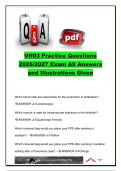
VN03 Practice Questions
2026/2027 Exam All Answers
and Illustrations Given


Which blood cells are responsible for the production of antibodies? -

ANSWER ✔✔Lymphocytes


Which muscle is used for intramuscular injections in the hindlimb? -

ANSWER ✔✔Quadriceps Femoris


Which coloured bag would you place your PPE after working in

isolation? - ANSWER ✔✔Yellow


Which coloured bag would you place your PPE after working in isolation

looking after a Parvovirus case? - ANSWER ✔✔Orange

,Which muscles make up the Hamstring? - ANSWER ✔✔Biceps

Femoris, Semitendinosus and Semimembranosus

Which waste bin would you put surgical gloves used for a Cat Castrate?

- ANSWER ✔✔Offensive Waste


Which species doesn't have any Amylase in the saliva? - ANSWER

✔✔Cat


What is the ideal rump area in a Rabbit? - ANSWER ✔✔Flat


What is the ideal Body Condition Score of a Rabbit? - ANSWER ✔✔3


What is the ideal Body Condition Score of a Guinea Pig? - ANSWER

✔✔3


Which layer of skin does the hair grow from? - ANSWER ✔✔Dermis


Which breed of dog, according to the Dangerous Dogs Act, must be

muzzled in public places? - ANSWER ✔✔Japanese Tosa


What is a systemic effect from wound infection? - ANSWER

✔✔Pyrexia


What is the inner muscle of the Heart? - ANSWER ✔✔Endocardium

, What is the outer muscular layer of the Heart? - ANSWER

✔✔Epicardium


What is the middle muscular layer of the Heart? - ANSWER

✔✔Myocardium


What is the ideal Body Condition Score of a Dog? - ANSWER ✔✔4-5


What is the maximum dosage that can be administered by intramuscular

injection to a dog? - ANSWER ✔✔5ml


What is the maximum dosage that can be administered by intramuscular

injection to a cat? - ANSWER ✔✔2ml


From how many weeks old must a puppy be microchipped? -

ANSWER ✔✔8 weeks


Which muscles are used to close the Jaw? - ANSWER ✔✔Masseter

and Temporalis


What muscles are used to open the Jaw? - ANSWER ✔✔Diagstricus


What is the Vitamin C requirement of a Guinea Pig? - ANSWER

✔✔8-30mg/kg


3
COPYRIGHT©JOSHCLAY 2025/2026. YEAR PUBLISHED 2026. COMPANY REGISTRATION NUMBER: 619652435. TERMS OF USE. PRIVACY
STATEMENT. ALL RIGHTS RESERVED


Información del documento

Subido en
8 de agosto de 2026
Número de páginas
21
Escrito en
2026/2027
Tipo
Examen
Contiene
Preguntas y respuestas
$18.99

¿Documento equivocado? Cámbialo gratis Dentro de los 14 días posteriores a la compra y antes de descargarlo, puedes elegir otro documento. Puedes gastar el importe de nuevo.
Escrito por estudiantes que aprobaron
Inmediatamente disponible después del pago
Leer en línea o como PDF

Seller avatar
Los indicadores de reputación están sujetos a la cantidad de artículos vendidos por una tarifa y las reseñas que ha recibido por esos documentos. Hay tres niveles: Bronce, Plata y Oro. Cuanto mayor reputación, más podrás confiar en la calidad del trabajo del vendedor.
JOSHCLAY
3.5
(82)
Vendido
382
Seguidores
16
Artículos
20301
Última venta
1 día hace


Por qué los estudiantes eligen Stuvia

Creado por compañeros estudiantes, verificado por reseñas

Calidad en la que puedes confiar: escrito por estudiantes que aprobaron y evaluado por otros que han usado estos resúmenes.

¿No estás satisfecho? Elige otro documento

¡No te preocupes! Puedes elegir directamente otro documento que se ajuste mejor a lo que buscas.

Paga como quieras, empieza a estudiar al instante

Sin suscripción, sin compromisos. Paga como estés acostumbrado con tarjeta de crédito y descarga tu documento PDF inmediatamente.

Student with book image

“Comprado, descargado y aprobado. Así de fácil puede ser.”

Alisha Student

Preguntas frecuentes