TWRA Boating Exam
TWRA Boating Exam
Study online at https://quizlet.com/_9ls37d
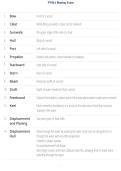
1. Bow Front of a vessel
2. Cleat Metal fitting on which a rope can be fastened
3. Gunwale the upper edge of the side of a boat
4. Hull Body of a vessel
5. Port Left side of a vessel
6. Propeller Rotates and powers a boat forward or backward
7. Starboard right side of a vessel
8. Stern Rear of a vessel
9. Beam Maximum width of a vessel
10. Draft Depth of water needed to float a vessel
11. Freeboard Distance from water to lowest point of the boat where water could come on board
12. Keel Main centerline (backbone) of a vessel or the extension of hull that increases
stability in the water
13. Displacement Two main types of boat hulls
and Planing
14. Displacement Move through the water by pushing the water aside and are designed to cut
Hull through the water with very little propulsion.
Limited to slower speeds.
A round-bottomed hull shape
Most large cruisers and most sailboats have this, allowing them to travel more
smoothly through the water.
1/4
, TWRA Boating Exam
TWRA Boating Exam
Study online at https://quizlet.com/_9ls37d
15. Planing Hull Designed to rise up and glide on top of the water when enough power is supplied.
can skim along at high speed, riding almost on top of the water rather than pushing
it aside.
Flat-bottomed and vee-bottomed hull shapes, and most small power-driven ves-
sels
16. Personal Water- A small vessel that uses an inboard jet drive as its primary source of propulsion and
craft (PWC) is designed to be operated by a person or persons sitting, standing, or kneeling
on the vessel rather than inside the vessel
17. Displacement A planing hull, when operated at very slow speeds, will cut through the water like
Mode a displacement hull.
18. Plowing Mode As speed increases, a planing hull will have a raised bow, reducing the operator's
vision and throwing a very large wake. Avoid maintaining a speed that puts your
boat in plowing mode.
19. Planing Mode Your boat is in planing mode when enough power is applied so that the hull glides
on top of the water. Different boats reach planing mode at different speeds.
20. Flat Bottomed This planing hull as a shallow draft, which is good for fishing in small lakes and
Hull rivers. Rides roughly in choppy waters
21. Deep Vee Hull This planing hull gives a smoother ride than a flat bottom hull in rough water. Takes
more power to move at the same speed as flat bottom hulls. May roll or bank in
sharp turns.
22. Round-Bot- This displacement hull moves easily through the water even at slow speeds. Has a
tomed Hull tendency to roll unless it has a deep keel or stabilizers.
23. Multi Hull Has greater stability because of its wide beam. Needs a large area when turning.
24. Length Overall Length of the hull excluding any attachments
2/4
TWRA Boating Exam
Study online at https://quizlet.com/_9ls37d
1. Bow Front of a vessel
2. Cleat Metal fitting on which a rope can be fastened
3. Gunwale the upper edge of the side of a boat
4. Hull Body of a vessel
5. Port Left side of a vessel
6. Propeller Rotates and powers a boat forward or backward
7. Starboard right side of a vessel
8. Stern Rear of a vessel
9. Beam Maximum width of a vessel
10. Draft Depth of water needed to float a vessel
11. Freeboard Distance from water to lowest point of the boat where water could come on board
12. Keel Main centerline (backbone) of a vessel or the extension of hull that increases
stability in the water
13. Displacement Two main types of boat hulls
and Planing
14. Displacement Move through the water by pushing the water aside and are designed to cut
Hull through the water with very little propulsion.
Limited to slower speeds.
A round-bottomed hull shape
Most large cruisers and most sailboats have this, allowing them to travel more
smoothly through the water.
1/4
, TWRA Boating Exam
TWRA Boating Exam
Study online at https://quizlet.com/_9ls37d
15. Planing Hull Designed to rise up and glide on top of the water when enough power is supplied.
can skim along at high speed, riding almost on top of the water rather than pushing
it aside.
Flat-bottomed and vee-bottomed hull shapes, and most small power-driven ves-
sels
16. Personal Water- A small vessel that uses an inboard jet drive as its primary source of propulsion and
craft (PWC) is designed to be operated by a person or persons sitting, standing, or kneeling
on the vessel rather than inside the vessel
17. Displacement A planing hull, when operated at very slow speeds, will cut through the water like
Mode a displacement hull.
18. Plowing Mode As speed increases, a planing hull will have a raised bow, reducing the operator's
vision and throwing a very large wake. Avoid maintaining a speed that puts your
boat in plowing mode.
19. Planing Mode Your boat is in planing mode when enough power is applied so that the hull glides
on top of the water. Different boats reach planing mode at different speeds.
20. Flat Bottomed This planing hull as a shallow draft, which is good for fishing in small lakes and
Hull rivers. Rides roughly in choppy waters
21. Deep Vee Hull This planing hull gives a smoother ride than a flat bottom hull in rough water. Takes
more power to move at the same speed as flat bottom hulls. May roll or bank in
sharp turns.
22. Round-Bot- This displacement hull moves easily through the water even at slow speeds. Has a
tomed Hull tendency to roll unless it has a deep keel or stabilizers.
23. Multi Hull Has greater stability because of its wide beam. Needs a large area when turning.
24. Length Overall Length of the hull excluding any attachments
2/4