

Escrito por estudiantes que aprobaron Inmediatamente disponible después del pago Leer en línea o como PDF ¿Documento equivocado? Cámbialo gratis 4,6 TrustPilot
logo-home
Document preview thumbnail
Vista previa 4 fuera de 50 páginas
Examen

PHCL 412 Exam 1 2026/2027 – 150+ Questions & Answers, Pharmacokinetics, Pharmacodynamics, ANS, Antidepressants, AEDs, Cardiovascular, Antimicrobials & Cancer Drugs

Document preview thumbnail
Vista previa 4 fuera de 50 páginas

This PHCL 412 Exam 1 2026/2027 study resource is a comprehensive 50-page pharmacology exam review containing 150+ questions and answers covering foundational and clinically applied pharmacology. Major topics include pharmacodynamics, pharmacokinetics, drug-receptor interactions, ADME, autonomic pharmacology, antidepressants, antiepileptic drugs, cardiovascular pharmacology, over-the-counter medications, antiviral and antibacterial agents, analgesics, and cancer chemotherapy. The opening section also reviews the history and development of pharmacology, including Hippocrates, Galen, Paracelsus, William Withering, Friedrich Sertürner, Rudolph Buchheim, Oswald Schmiedeberg and Claude Bernard. The pharmacodynamics and receptor pharmacology section explains how drugs interact with receptors and effectors to alter cellular activity. Students review receptor conformational states, induced fit, agonists, partial agonists, antagonists and inverse agonists alongside the clinically important distinctions among affinity, efficacy, potency and selectivity. Quantitative concepts include saturation radioligand binding, Kd, Bmax, Ki, IC50 and EC50/ED50, as well as competitive versus noncompetitive antagonism. These topics provide the conceptual foundation for understanding dose-response relationships and why therapeutic and adverse effects can arise from interactions with intended and unintended molecular targets. The guide gives extensive attention to pharmacokinetics and ADME—absorption, distribution, metabolism and excretion. Students examine routes of drug administration, passive diffusion, active transport, Fick's law, bioavailability, pKa and pH-dependent ionization, ion trapping, plasma-protein binding, the blood-brain barrier and volume of distribution. Drug metabolism is divided into Phase I and Phase II reactions, with substantial emphasis on cytochrome P450 enzymes, particularly CYP3A4, enzyme induction and inhibition, drug interactions and enterohepatic circulation. The material also considers sex-related differences in body composition, organ function, metabolism and pharmacokinetic behavior. A major neuropharmacology component covers depression and antidepressant medications. Students review the biogenic amine hypothesis and the roles of serotonin, norepinephrine and dopamine before comparing SSRIs, SNRIs, tricyclic antidepressants, MAO inhibitors, atypical antidepressants and lithium. Specific medications include citalopram, fluoxetine, sertraline, venlafaxine, duloxetine, amitriptyline, doxepin and imipramine. High-yield safety concepts include serotonin syndrome, tricyclic antidepressant adverse effects, MAOI interactions with tyramine-containing foods, hypertensive crisis, lithium renal elimination and lithium-associated nephrogenic diabetes insipidus. The antiepileptic drug (AED) section connects seizure physiology with drug mechanisms. Students review strategies for decreasing neuronal excitability through voltage-gated sodium-channel blockade, calcium-channel modulation, increased GABAergic transmission and decreased glutamatergic signaling. Drugs covered include carbamazepine, oxcarbazepine, lamotrigine, phenytoin, topiramate, valproate, zonisamide, ethosuximide, gabapentin, pregabalin, levetiracetam, felbamate, tiagabine, benzodiazepines, barbiturates and vigabatrin. Important adverse effects and clinical considerations include Stevens-Johnson syndrome/toxic epidermal necrolysis, valproate-associated hepatotoxicity and fetal abnormalities, and the nonlinear pharmacokinetics and toxicity of phenytoin. The autonomic nervous system pharmacology portion examines sympathetic, parasympathetic and enteric regulation and the neurotransmitters acetylcholine, norepinephrine and epinephrine. Students compare alpha-1, alpha-2, beta-1 and beta-2 adrenergic receptors, including phenylephrine, prazosin, clonidine, dobutamine, metoprolol and albuterol. Cholinergic pharmacology includes nicotinic and muscarinic receptors, methacholine, carbachol, bethanechol, pilocarpine, neostigmine, physostigmine, atropine, scopolamine and ipratropium. The material also covers muscarinic toxicity patterns, nicotinic overdose and the physiological effects of autonomic signaling on blood vessels, the heart, lungs and eyes. Cardiovascular pharmacology includes hypertension, dyslipidemia, coronary disease and major antihypertensive drug classes. Students review hypertension risk factors and complications, lifestyle interventions, statins and HMG-CoA reductase inhibition, aspirin, thiazide diuretics, ACE inhibitors, ARBs, calcium-channel blockers, beta blockers, vasodilators, central sympathetic agents and aldosterone antagonists. The guide connects drug mechanisms with adverse effects such as ACE-inhibitor-associated cough, thiazide-associated hypokalemia, gout and glucose intolerance, while also discussing characteristics associated with increased statin toxicity. The OTC and analgesic pharmacology section reviews acetaminophen, aspirin, ibuprofen, naproxen, antihistamines, nasal decongestants, guaifenesin and dextromethorphan. Students study cyclooxygenase and prostaglandin physiology, analgesic and antipyretic effects, platelet inhibition, gastrointestinal toxicity, acetaminophen-associated hepatotoxicity and the use of N-acetylcysteine in acetaminophen overdose. The document also discusses misuse potential associated with some OTC preparations and reinforces that nonprescription status does not mean a medication is risk-free. A detailed antiviral and antibacterial pharmacology section addresses viral replication and major therapeutic targets. Topics include HIV entry and replication, CCR5/CD4 interactions, reverse transcriptase, integrase and protease inhibition; herpesvirus treatment with acyclovir; influenza neuraminidase inhibition; and selected therapies discussed for hepatitis and COVID-19. Antibacterial content covers beta-lactams, bacterial resistance mechanisms, macrolides, aminoglycosides, tetracyclines, fluoroquinolones and sulfonamides, including their actions on cell-wall synthesis, bacterial ribosomes, DNA gyrase and folate metabolism. MRSA, the mecA resistance mechanism and vancomycin are also included. The final portion introduces cancer pharmacology and chemotherapy. Students review antimetabolites, alkylating agents, natural products, hormones and antagonists, monoclonal antibodies and targeted therapies. Specific examples include mitomycin, R-CHOP therapy for non-Hodgkin lymphoma, rituximab, cyclophosphamide, doxorubicin, vincristine, prednisone, tyrosine kinase inhibitors and trastuzumab (Herceptin). The material connects these therapies with oncogenes, growth-factor receptors, tumor-suppressor genes such as p53, Rb and PTEN, cancer-cell signaling, clonal expansion, metastasis, combination chemotherapy and mechanisms of drug resistance. For academic cross-reference, the material corresponds closely with established pharmacology references such as Katzung's Basic & Clinical Pharmacology and Goodman & Gilman's The Pharmacological Basis of Therapeutics, particularly their coverage of pharmacokinetics, pharmacodynamics, autonomic drugs, CNS pharmacology, cardiovascular agents, antimicrobial chemotherapy and antineoplastic drugs. These texts are appropriate references for verifying mechanisms and expanding on the exam material. Students should cross-check course-specific answers against their assigned edition and current clinical guidance because some statements in the uploaded study guide simplify complex pharmacology, contain terminology errors, or may reflect older treatment recommendations. This resource is especially relevant for PHCL 412 students, pharmacology students, pharmacy students, nursing and BSN students, medical students, physician-assistant students, allied-health students and other learners preparing for pharmacology examinations. It is particularly useful for students who need a broad review of receptor pharmacology, ADME, drug metabolism, autonomic drugs, antidepressants, antiepileptics, antihypertensives, statins, analgesics, antimicrobials, antivirals and chemotherapy. The uploaded document does not identify a specific institution, so University Not Specified is used rather than attributing the material to an unsupported university. Keywords: pharmacology Exam 1, pharmacology questions and answers, pharmacology study guide, pharmacodynamics, pharmacokinetics, ADME pharmacology, drug absorption, drug distribution, drug metabolism, drug excretion, receptor pharmacology, agonist antagonist, partial agonist, inverse agonist, drug potency, drug efficacy, drug affinity, EC50, IC50, Kd pharmacology, bioavailability, volume of distribution, cytochrome P450, CYP3A4, autonomic pharmacology, sympathetic nervous system drugs, parasympathetic drugs, adrenergic receptors, cholinergic receptors, alpha 1 receptor, alpha 2 receptor, beta 1 receptor, beta 2 receptor, antidepressant pharmacology, SSRI pharmacology, SNRI pharmacology, tricyclic antidepressants, MAO inhibitors, serotonin syndrome, lithium pharmacology, antiepileptic drugs, seizure pharmacology, phenytoin, carbamazepine, valproate, ethosuximide, benzodiazepines, GABA pharmacology, hypertension pharmacology, antihypertensive drugs, statins pharmacology, ACE inhibitors, ARBs, beta blockers, calcium channel blockers, thiazide diuretics, analgesic pharmacology, acetaminophen overdose, NSAID pharmacology, antiviral drugs, HIV pharmacology, acyclovir, antibacterial drugs, beta lactam antibiotics, macrolides, aminoglycosides, tetracyclines, fluoroquinolones, MRSA treatment, chemotherapy pharmacology, antineoplastic drugs, R CHOP chemotherapy, trastuzumab, tyrosine kinase inhibitors

Vista previa del contenido

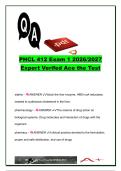
PHCL 412 Exam 1 2026/2027
Expert Verifed Ace the Test


statins - ANSWER ✔✔block the liver enzyme, HMG-coA reductase,

needed to synthesize cholesterol in the liver.


pharmacology - ANSWER ✔✔The science of drug action on

biological systems. Drug molecules and interaction of drugs with the

organism.


pharmacy - ANSWER ✔✔clinical practice devoted to the formulation,

proper and safe distribution, and use of drugs

,pharmaceutical drug - ANSWER ✔✔chemical substance for medical

diagnosis, treatment, or prevention of disease

what was the first country to discover the concept of pharmacology? -

ANSWER ✔✔china (2000 BC) by shennong a divine farmer


what is another recording of early pharmacological usage? -

ANSWER ✔✔the egyptians and the book of thoth - thoth is the

egyptian god of knowledge (between 1500-1200 BC)


who was the father of western medicine? - ANSWER ✔✔hippocrates

- he separated medicine from religion and superstition.

who were other greek physicians that wrote about medicine and

translated it and passed it down? - ANSWER ✔✔diocles of carystus

and pedanius discorides and Aulus Cornelius Celsus - these works were

used many years after publication


what did galen contribute from his studies? - ANSWER ✔✔Greek

physician, surgeon and philosopher in Roman Empire Promoted

Hippocratic teaching600 treatises or 10 million words Anatomy,

physiology, pathology, pharmacology, neurology


he also brought the idea of agonist and antagonists about

,what was done during the islamic golden age? - ANSWER

✔✔scientists developed an understanding of drug quantities and

formulations


what did paracelsus do? - ANSWER ✔✔- began to use chemicals

and minerals in medicine

- " the dose makes the poison"


what did william withering do? - ANSWER ✔✔discovered digitalus, a

drug that stimulates the heart muscle derived from foxglove


who "discovered" willow bark tea? - ANSWER ✔✔lewis and clark


what does willow bark tea treat - ANSWER ✔✔fevers and pains


what important ingredient is in willow bark tree - ANSWER ✔✔salicin

- which can be metabolized to aspirin


what is an alkaloid - ANSWER ✔✔nitrogen containing compound

from plants animals and microorganisms that has physiological effects

what did Friedrich Serturner discover and what were it's effects -

ANSWER ✔✔morphine by an isolated alkaloid from opium, which

caused him and three of his friends to overdose for three days


3
COPYRIGHT©JOSHCLAY 2025/2026. YEAR PUBLISHED 2026. COMPANY REGISTRATION NUMBER: 619652435. TERMS OF USE. PRIVACY
STATEMENT. ALL RIGHTS RESERVED

, why was it called morphine? - ANSWER ✔✔after the greek god

morpheus, since it caused them to have "wild dreams"


what is the largest pharm producing company - ANSWER ✔✔pfizer


fathers of modern pharmacology - ANSWER ✔✔friedrich wholer,

rudolph buchheim, oswald schmiedberg, and claude bernard


what did friedrich wholer do - ANSWER ✔✔began synthetic organic

chemistry


what did claude bernard do - ANSWER ✔✔founded the concept of

homeostasis


Rudolph Buchheim - ANSWER ✔✔"father of Pharmacology"


established the 1st independent laboratory devoted exclusively to the

study of pharmacology


Oswald Schmiedeberg - ANSWER ✔✔Trained most of the men who

became professor sat German universities and elsewhere - another

father of pharm


pharmocodynamics - ANSWER ✔✔mechanism of drug action and

how drug interacts with the body

Información del documento

Subido en
7 de agosto de 2026
Número de páginas
50
Escrito en
2026/2027
Tipo
Examen
Contiene
Preguntas y respuestas
$18.99

¿Documento equivocado? Cámbialo gratis Dentro de los 14 días posteriores a la compra y antes de descargarlo, puedes elegir otro documento. Puedes gastar el importe de nuevo.
Escrito por estudiantes que aprobaron
Inmediatamente disponible después del pago
Leer en línea o como PDF

Seller avatar
Los indicadores de reputación están sujetos a la cantidad de artículos vendidos por una tarifa y las reseñas que ha recibido por esos documentos. Hay tres niveles: Bronce, Plata y Oro. Cuanto mayor reputación, más podrás confiar en la calidad del trabajo del vendedor.
JOSHCLAY
3.5
(83)
Vendido
384
Seguidores
16
Artículos
20324
Última venta
18 horas hace


Por qué los estudiantes eligen Stuvia

Creado por compañeros estudiantes, verificado por reseñas

Calidad en la que puedes confiar: escrito por estudiantes que aprobaron y evaluado por otros que han usado estos resúmenes.

¿No estás satisfecho? Elige otro documento

¡No te preocupes! Puedes elegir directamente otro documento que se ajuste mejor a lo que buscas.

Paga como quieras, empieza a estudiar al instante

Sin suscripción, sin compromisos. Paga como estés acostumbrado con tarjeta de crédito y descarga tu documento PDF inmediatamente.

Student with book image

“Comprado, descargado y aprobado. Así de fácil puede ser.”

Alisha Student

Preguntas frecuentes
