

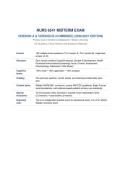
NURS 6541 MIDTERM EXAM
VERSION A & VERSION B (COMBINED) (2026/2027 EDITION)
Primary Care of Children & Adolescents • Walden University
150 Questions (75 per Version) with Answers & Rationale
Format: 150 multiple-choice questions (75 in Version A, 75 in Version B), single best
answer (A–D).
Structure: Each version contains 8 parallel sections (Growth & Development; Health
Promotion/Immunizations/Screenings; Acute; Chronic; Assessment;
Pharmacology; Adolescent; Child Abuse).
Cognitive ~30% recall • ~50% application • ~20% analysis.
levels:
Grading: One point per question; correct answer and rationale provided after each
item.
Content basis: Walden NURS 6541 curriculum, current AAP/CDC guidelines, Bright Futures
recommendations, and evidence-based pediatric primary care standards.
Special 10 immunization items (5/version); 5 growth-chart interpretation items
inclusions: (2-3/version); 4 case studies (2/version).
Important This is an independent practice exam for educational study; it is not an official
note: Walden University exam.
, VERSION A
Section 1: Growth & Development (12 questions)
Q1: At what age does an infant typically begin to roll from back to front?
A. 4-6 months [CORRECT]
B. 8-10 months
C. 12 months
D. 2 months
Correct Answer: A
Rationale: A is correct: rolling typically occurs at 4-6 months. B, C, and D are incorrect.
Q2: At what age does a toddler typically begin to run?
A. 6-9 months
B. 18-24 months [CORRECT]
C. 12 months
D. 30 months
Correct Answer: B
Rationale: A is correct: running typically occurs by 18-24 months. B, C, and D are incorrect.
Q3: Which is a typical language milestone for a 12-month-old?
A. Uses two-word phrases
B. Speaks in sentences
C. Says a few single words [CORRECT]
D. Recites the alphabet
Correct Answer: C
Rationale: A is correct: a 12-month-old says a few single words. B, C, and D are later.
Q4: Which is a typical fine motor milestone for a 9-month-old?
A. Scribbles
B. Uses scissors
C. Builds a tower
D. Uses a pincer grasp [CORRECT]
Correct Answer: D
Rationale: A is correct: the pincer grasp appears around 9 months. B, C, and D are later.
Q5: Which is a typical gross motor milestone for a 3-year-old?
A. Climbs stairs with alternating feet [CORRECT]
B. Rides a bicycle
C. Skips
D. Jumps rope
Correct Answer: A
Rationale: A is correct: a 3-year-old climbs stairs with alternating feet. B, C, and D are later.
Q6: Which is a social milestone for a 2-year-old?
A. Cooperative play
B. Engages in parallel play [CORRECT]
C. Complex imagination games
D. Team sports
Correct Answer: B
Rationale: A is correct: parallel play is typical at age 2. B and C are later; D is school-age.
NURS 6541 Midterm Exam – Versions A & B Combined (2026/2027) Page 2
, Q7: Which is a typical milestone for a 15-month-old?
A. Runs
B. Speaks in sentences
C. Walks independently and says a word or two [CORRECT]
D. Uses scissors
Correct Answer: C
Rationale: A is correct: a 15-month-old walks and says a few words. B, C, and D are later.
Q8: Which best describes growth in infancy for weight?
A. No weight gain
B. Weight gain only after age 2
C. Linear weight gain
D. Rapid weight gain in the first year [CORRECT]
Correct Answer: D
Rationale: A is correct: weight gain is rapid in infancy. B, C, and D are incorrect.
Q9: Which is a normal finding in a 2-month-old's reflexes?
A. Rooting and Moro reflexes present [CORRECT]
B. Absent reflexes
C. Only the Babinski absent
D. No reflexes
Correct Answer: A
Rationale: A is correct: newborn reflexes (rooting, Moro) are present in early infancy. B, C, and D are
incorrect.
Q10: Which is a typical milestone for a 4-year-old?
A. Reads fluently
B. Counts and knows some colors [CORRECT]
C. Writes essays
D. Solves algebra
Correct Answer: B
Rationale: A is correct: a 4-year-old counts and knows colors. B, C, and D are later.
Q11: Which is a typical pubertal event for a girl (thelarche)?
A. Menarche before breast development
B. No breast changes
C. Breast bud development [CORRECT]
D. Voice deepening
Correct Answer: C
Rationale: A is correct: thelarche (breast buds) is the first pubertal sign in girls. B, C, and D are incorrect.
Q12: Which is a typical pubertal event for a boy?
A. Voice change before testicular growth
B. No testicular changes
C. Growth spurt first
D. Testicular enlargement and scrotal changes [CORRECT]
Correct Answer: D
Rationale: A is correct: testicular enlargement is the first sign in boys. B, C, and D are incorrect.
Section 2: Health Promotion, Immunizations, & Screenings (12 questions)
NURS 6541 Midterm Exam – Versions A & B Combined (2026/2027) Page 3
VERSION A & VERSION B (COMBINED) (2026/2027 EDITION)
Primary Care of Children & Adolescents • Walden University
150 Questions (75 per Version) with Answers & Rationale
Format: 150 multiple-choice questions (75 in Version A, 75 in Version B), single best
answer (A–D).
Structure: Each version contains 8 parallel sections (Growth & Development; Health
Promotion/Immunizations/Screenings; Acute; Chronic; Assessment;
Pharmacology; Adolescent; Child Abuse).
Cognitive ~30% recall • ~50% application • ~20% analysis.
levels:
Grading: One point per question; correct answer and rationale provided after each
item.
Content basis: Walden NURS 6541 curriculum, current AAP/CDC guidelines, Bright Futures
recommendations, and evidence-based pediatric primary care standards.
Special 10 immunization items (5/version); 5 growth-chart interpretation items
inclusions: (2-3/version); 4 case studies (2/version).
Important This is an independent practice exam for educational study; it is not an official
note: Walden University exam.
, VERSION A
Section 1: Growth & Development (12 questions)
Q1: At what age does an infant typically begin to roll from back to front?
A. 4-6 months [CORRECT]
B. 8-10 months
C. 12 months
D. 2 months
Correct Answer: A
Rationale: A is correct: rolling typically occurs at 4-6 months. B, C, and D are incorrect.
Q2: At what age does a toddler typically begin to run?
A. 6-9 months
B. 18-24 months [CORRECT]
C. 12 months
D. 30 months
Correct Answer: B
Rationale: A is correct: running typically occurs by 18-24 months. B, C, and D are incorrect.
Q3: Which is a typical language milestone for a 12-month-old?
A. Uses two-word phrases
B. Speaks in sentences
C. Says a few single words [CORRECT]
D. Recites the alphabet
Correct Answer: C
Rationale: A is correct: a 12-month-old says a few single words. B, C, and D are later.
Q4: Which is a typical fine motor milestone for a 9-month-old?
A. Scribbles
B. Uses scissors
C. Builds a tower
D. Uses a pincer grasp [CORRECT]
Correct Answer: D
Rationale: A is correct: the pincer grasp appears around 9 months. B, C, and D are later.
Q5: Which is a typical gross motor milestone for a 3-year-old?
A. Climbs stairs with alternating feet [CORRECT]
B. Rides a bicycle
C. Skips
D. Jumps rope
Correct Answer: A
Rationale: A is correct: a 3-year-old climbs stairs with alternating feet. B, C, and D are later.
Q6: Which is a social milestone for a 2-year-old?
A. Cooperative play
B. Engages in parallel play [CORRECT]
C. Complex imagination games
D. Team sports
Correct Answer: B
Rationale: A is correct: parallel play is typical at age 2. B and C are later; D is school-age.
NURS 6541 Midterm Exam – Versions A & B Combined (2026/2027) Page 2
, Q7: Which is a typical milestone for a 15-month-old?
A. Runs
B. Speaks in sentences
C. Walks independently and says a word or two [CORRECT]
D. Uses scissors
Correct Answer: C
Rationale: A is correct: a 15-month-old walks and says a few words. B, C, and D are later.
Q8: Which best describes growth in infancy for weight?
A. No weight gain
B. Weight gain only after age 2
C. Linear weight gain
D. Rapid weight gain in the first year [CORRECT]
Correct Answer: D
Rationale: A is correct: weight gain is rapid in infancy. B, C, and D are incorrect.
Q9: Which is a normal finding in a 2-month-old's reflexes?
A. Rooting and Moro reflexes present [CORRECT]
B. Absent reflexes
C. Only the Babinski absent
D. No reflexes
Correct Answer: A
Rationale: A is correct: newborn reflexes (rooting, Moro) are present in early infancy. B, C, and D are
incorrect.
Q10: Which is a typical milestone for a 4-year-old?
A. Reads fluently
B. Counts and knows some colors [CORRECT]
C. Writes essays
D. Solves algebra
Correct Answer: B
Rationale: A is correct: a 4-year-old counts and knows colors. B, C, and D are later.
Q11: Which is a typical pubertal event for a girl (thelarche)?
A. Menarche before breast development
B. No breast changes
C. Breast bud development [CORRECT]
D. Voice deepening
Correct Answer: C
Rationale: A is correct: thelarche (breast buds) is the first pubertal sign in girls. B, C, and D are incorrect.
Q12: Which is a typical pubertal event for a boy?
A. Voice change before testicular growth
B. No testicular changes
C. Growth spurt first
D. Testicular enlargement and scrotal changes [CORRECT]
Correct Answer: D
Rationale: A is correct: testicular enlargement is the first sign in boys. B, C, and D are incorrect.
Section 2: Health Promotion, Immunizations, & Screenings (12 questions)
NURS 6541 Midterm Exam – Versions A & B Combined (2026/2027) Page 3

