

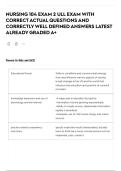
NURSING 104 EXAM 2 ULL EXAM WITH
CORRECT ACTUAL QUESTIONS AND
CORRECTLY WELL DEFINED ANSWERS LATEST
ALREADY GRADED A+
Terms in this set (63)
Educational Trends Shifts in conditions and concerns that emerge
from and influence various aspects of society;
broad changes in the US and the world that
influence the education and practice of nurses &
providers
knowledge expansion and use of -A major part in education & practice
technology and the internet -Information volume growing exponentially
-Ability to create, access, disseminate information
rapidly is beneficial
-examples: use of chat rooms, blogs, and online
sources
practice-based competency specify expected results (measurable); actually
outcomes learn to think like a nurse; include actions such as:
implement, plan, conduct
, sociodemographics, cultural -Aging population—people living longer
diversity, and economic and -Diverse population:Use of traditional
political changes practitioners and treatments other than traditional
Western medicine& Illegal Immigrants
-Increasing number of people living in poverty,
homeless, and/or uninsured
-Disrespect for others
-Domestic abuse of women and children
-Various forms of violence in homes, schools, and
public places
-Obesity epidemic
-Nontraditional families
Patient-centered care: engagement, -Shift from "giving care" to "working with" the
safety, and privacy patient as a member of the health care team
-Increased number of medical errors leading to
lawsuits have supported the need to insist on
competency-based performance examinations in
schools of nursing and as part of employer
evaluations and accreditation
shortage of nurses and faculty -Has caused serious issues
-Inadequate clinical staff - use of part-time and
agency nurses: Reduces quality of care &
Contributes to stress & burnout
-Fewer preceptors
-Qualified student applicants denied
admission
-Faculty are aging & retiring - limited
replacements
CORRECT ACTUAL QUESTIONS AND
CORRECTLY WELL DEFINED ANSWERS LATEST
ALREADY GRADED A+
Terms in this set (63)
Educational Trends Shifts in conditions and concerns that emerge
from and influence various aspects of society;
broad changes in the US and the world that
influence the education and practice of nurses &
providers
knowledge expansion and use of -A major part in education & practice
technology and the internet -Information volume growing exponentially
-Ability to create, access, disseminate information
rapidly is beneficial
-examples: use of chat rooms, blogs, and online
sources
practice-based competency specify expected results (measurable); actually
outcomes learn to think like a nurse; include actions such as:
implement, plan, conduct
, sociodemographics, cultural -Aging population—people living longer
diversity, and economic and -Diverse population:Use of traditional
political changes practitioners and treatments other than traditional
Western medicine& Illegal Immigrants
-Increasing number of people living in poverty,
homeless, and/or uninsured
-Disrespect for others
-Domestic abuse of women and children
-Various forms of violence in homes, schools, and
public places
-Obesity epidemic
-Nontraditional families
Patient-centered care: engagement, -Shift from "giving care" to "working with" the
safety, and privacy patient as a member of the health care team
-Increased number of medical errors leading to
lawsuits have supported the need to insist on
competency-based performance examinations in
schools of nursing and as part of employer
evaluations and accreditation
shortage of nurses and faculty -Has caused serious issues
-Inadequate clinical staff - use of part-time and
agency nurses: Reduces quality of care &
Contributes to stress & burnout
-Fewer preceptors
-Qualified student applicants denied
admission
-Faculty are aging & retiring - limited
replacements

