

Escrito por estudiantes que aprobaron Inmediatamente disponible después del pago Leer en línea o como PDF ¿Documento equivocado? Cámbialo gratis 4,6 TrustPilot
logo-home
Document preview thumbnail
Vista previa 2 fuera de 11 páginas
Examen

NUR 280 Inflammation and Immunity Exam 1 Study Guide | 75+ Practice Questions & Verified Answers | Inflammation, Innate & Adaptive Immunity, Leukocytes, Cytokines & Immune Responses | 2026

Document preview thumbnail
Vista previa 2 fuera de 11 páginas

Prepare for NUR 280 Inflammation and Immunity Exam 1 with this comprehensive study guide featuring 75+ expertly organized practice questions and verified answers covering the essential concepts of inflammation, innate immunity, adaptive immunity, and immune system function. This resource provides an in-depth review of acute and chronic inflammation, stages of the inflammatory response, vascular permeability, cellular chemotaxis, cytokines, leukocytes, complement proteins, macrophages, neutrophils, eosinophils, basophils, lymphocytes, innate immunity, adaptive immunity, antibody-mediated immunity, cell-mediated immunity, acquired immunity, immune testing, and inflammatory laboratory findings. The material is presented in a structured question-and-answer format that promotes active recall, strengthens clinical reasoning, and prepares nursing students for quizzes, unit examinations, comprehensive exams, and NCLEX-style assessments. This study guide systematically explains the physiological mechanisms of acute and chronic inflammation, including the body's nonspecific inflammatory response, vascular permeability, vasodilation, histamine and bradykinin release, edema formation, leukocyte migration, margination, chemotaxis, cytokine signaling, and the systemic inflammatory response. Students will review the three stages of inflammation, the five cardinal signs of inflammation, laboratory indicators such as white blood cell count (WBC), C-reactive protein (CRP), erythrocyte sedimentation rate (ESR), leukocytosis, and left shift, as well as the functions of major inflammatory cells including neutrophils, macrophages, eosinophils, basophils, mast cells, lymphocytes, and complement proteins. The guide also examines the causes and consequences of chronic inflammation, including persistent infections, hypersensitivity disorders, toxic exposures, tissue damage, organ dysfunction, and atherosclerosis. The resource further provides extensive coverage of innate and adaptive immunity, emphasizing the differences between nonspecific and antigen-specific immune responses. Students will master the roles of B lymphocytes, T lymphocytes, helper T cells, suppressor T cells, cytotoxic T cells, natural killer cells, antibody production, immune memory, antigen recognition, and immunocompetence. In addition, the guide reviews the four types of acquired immunity—natural active, artificial active, natural passive, and artificial passive immunity—along with immune testing methods including anergy panels, antibody screening and titers, and allergy testing. Organized into concise, exam-focused questions and answers, this study guide serves as an excellent revision resource for mastering the inflammation and immunity concepts most frequently assessed in NUR 280 and undergraduate pathophysiology courses. The content aligns with the foundational principles presented in leading pathophysiology, immunology, and medical-surgical nursing textbooks widely adopted in undergraduate nursing, BSN, and ADN programs. Relevant Students: NUR 280 students, Pathophysiology students, Immunology students, Medical-Surgical Nursing students, Adult Health Nursing students, BSN students, ADN students, Registered Nursing students, Practical Nursing students, Pre-Licensure Nursing students, NCLEX-RN candidates, Health Sciences students, Nursing Exam Preparation students. APA References: McCance, K. L., & Huether, S. E. (2023). Pathophysiology: The Biologic Basis for Disease in Adults and Children (9th ed.). Elsevier. Abbas, A. K., Lichtman, A. H., & Pillai, S. (2024). Cellular and Molecular Immunology (11th ed.). Elsevier. Harding, M. M., Kwong, J., Roberts, D., Hagler, D., & Reinisch, C. (2023). Lewis's Medical-Surgical Nursing: Assessment and Management of Clinical Problems (12th ed.). Elsevier. Keywords: NUR 280, Inflammation and Immunity, Exam 1, practice questions, verified answers, inflammation, acute inflammation, chronic inflammation, innate immune system, adaptive immune system, nonspecific immunity, specific immunity, immunocompetence, vascular permeability, vasodilation, histamine, bradykinin, edema, cellular chemotaxis, chemotaxis, margination, cytokines, inflammatory mediators, leukocytosis, left shift, white blood cells, WBC, C-reactive protein, CRP, erythrocyte sedimentation rate, ESR, neutrophils, macrophages, monocytes, eosinophils, basophils, lymphocytes, B cells, T cells, helper T cells, suppressor T cells, cytotoxic T cells, natural killer cells, mast cells, complement proteins, phagocytosis, inflammatory response, five cardinal signs of inflammation, fever, lymphadenopathy, anorexia, tissue damage, organ damage, persistent infection, hypersensitivity, atherosclerosis, antibody-mediated immunity, cell-mediated immunity, antigens, antibodies, immune memory, natural active immunity, artificial active immunity, natural passive immunity, artificial passive immunity, vaccination, breast milk immunity, placental immunity, immunity testing, antibody titers, anergy panel, allergy testing, immunology, pathophysiology, nursing interventions, NCLEX preparation

Vista previa del contenido

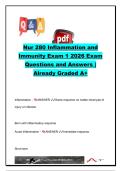
Nur 280 Inflammation and
Immunity Exam 1 2026 Exam
Questions and Answers |
Already Graded A+


Inflammation - ANSWER ✔✔Same response no matter what type of

injury or infection.


Born with inflammatory response


Acute Inflammation - ANSWER ✔✔Immediate response.


Short term

, Innate immune system


Nonspecific protection. Does the same thing against any type of

infection or injury.


Does not have memory


Can be resolved or become chronic


Stages:

• Vascular Permeability• Cellular Chemotaxis• Systemic Response


Stage 1: Vascular Permeability - ANSWER ✔✔1. Histamines and

Bradykinins are released causing arteries to dilate to allow blood to rush

to injury. (Redness and warmth)


2. Fluids, WBC, and platelets then travel to injury (Edema)

Información del documento

Subido en
31 de julio de 2026
Número de páginas
11
Escrito en
2025/2026
Tipo
Examen
Contiene
Preguntas y respuestas
$18.99

¿Documento equivocado? Cámbialo gratis Dentro de los 14 días posteriores a la compra y antes de descargarlo, puedes elegir otro documento. Puedes gastar el importe de nuevo.
Escrito por estudiantes que aprobaron
Inmediatamente disponible después del pago
Leer en línea o como PDF

Seller avatar
Los indicadores de reputación están sujetos a la cantidad de artículos vendidos por una tarifa y las reseñas que ha recibido por esos documentos. Hay tres niveles: Bronce, Plata y Oro. Cuanto mayor reputación, más podrás confiar en la calidad del trabajo del vendedor.
NinjaNerd
3.4
(76)
Vendido
396
Seguidores
6
Artículos
15309
Última venta
1 día hace


Por qué los estudiantes eligen Stuvia

Creado por compañeros estudiantes, verificado por reseñas

Calidad en la que puedes confiar: escrito por estudiantes que aprobaron y evaluado por otros que han usado estos resúmenes.

¿No estás satisfecho? Elige otro documento

¡No te preocupes! Puedes elegir directamente otro documento que se ajuste mejor a lo que buscas.

Paga como quieras, empieza a estudiar al instante

Sin suscripción, sin compromisos. Paga como estés acostumbrado con tarjeta de crédito y descarga tu documento PDF inmediatamente.

Student with book image

“Comprado, descargado y aprobado. Así de fácil puede ser.”

Alisha Student

Preguntas frecuentes
