1.8C Problem 8
Assessment: The Tail that Wags the Dog
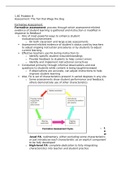
Formative Assessment
Formative assessment- process through which assessment-elicited
evidence of student learning is gathered and instruction is modified in
response to feedback
One of most powerful ways to enhance student
motivation/achievement
o On both classroom and large-scale assessments
Assessment-elicited evidence of student’s status used by teachers
to adjust ongoing instruction procedures or by students to adjust
current learning
Effective teachers use FA during instruction to:
o Identify specific student misunderstandings
o Provide feedback to students to help correct errors
o Identify and implement instructional correctives
Conducted primarily through informal observations and oral
questions to students while content is being taught/reviewed
o If observations are accurate, can adjust instructions to help
improve student learning
Also, FA is set of characteristics present in varied degrees in any situ
o Some assessments show student performance and feedback,
others demonstrate use of other characteristics
o L
o
w
-level FA- rudimentary, either excluding some characteristics
or just introduces each characteristic as an explicit component
to be fully developed
o High-level FA- complete dedication to fully integrating
characteristics into teacher and student practice
, If the environment where it is practiced is
supportive/trusting, will have most positive effect on
motivation and learning
FA= planned process as teacher consciously absorbs evidence of
student performance, then uses this to increase motivation and
engagement
Learn more through FA as:
1. Frequent, ongoing assessment allows for fine tuning of
instruction and student focus on progress
2. Immediate assessment helps ensure meaningful feedback
3. Specific assessments allow students to see concretely how they
can improve
4. FA is consistent with recent constructivist theories of learning
and motivation
Students use the info to decide if learning is worth the effort
o If believe it’s worth it, exert greater effort; if don’t believe this,
give up
Often perceived as simply gathering info from students and using it
to improve learning
It is much more than this
Assessment FOR learning (Stiggins)
Provides students with:
o clear standards
o examples of strong or weak work
o feedback so student can set personal learning goals
informs students about own learning and daily progress in meeting
goals
Effect of Formative Feedback
Affects kind of achievement goals students internalise
2 categories of achievement goals:
1. Performance goals- emphasises comparison of students’ abilities
o Promote these by:
Making student evaluations public
Attributing performance to individual ability
Rewarding students who outperform others
o Typically demonstrate more debilitating achievement
characteristics
o Show much concern on how abilities are judged by others (+
associated recognition)
Extrinsically motivated
2. Mastery goals- emphasises learning, understanding, improving,
mastering new skills, taking on challenges
o Promote these by:
Evaluating student progress
Providing students opportunities to improve
Treating mistakes as part of learning process
Varying evaluation methods
Making evaluation private
Assessment: The Tail that Wags the Dog
Formative Assessment
Formative assessment- process through which assessment-elicited
evidence of student learning is gathered and instruction is modified in
response to feedback
One of most powerful ways to enhance student
motivation/achievement
o On both classroom and large-scale assessments
Assessment-elicited evidence of student’s status used by teachers
to adjust ongoing instruction procedures or by students to adjust
current learning
Effective teachers use FA during instruction to:
o Identify specific student misunderstandings
o Provide feedback to students to help correct errors
o Identify and implement instructional correctives
Conducted primarily through informal observations and oral
questions to students while content is being taught/reviewed
o If observations are accurate, can adjust instructions to help
improve student learning
Also, FA is set of characteristics present in varied degrees in any situ
o Some assessments show student performance and feedback,
others demonstrate use of other characteristics
o L
o
w
-level FA- rudimentary, either excluding some characteristics
or just introduces each characteristic as an explicit component
to be fully developed
o High-level FA- complete dedication to fully integrating
characteristics into teacher and student practice
, If the environment where it is practiced is
supportive/trusting, will have most positive effect on
motivation and learning
FA= planned process as teacher consciously absorbs evidence of
student performance, then uses this to increase motivation and
engagement
Learn more through FA as:
1. Frequent, ongoing assessment allows for fine tuning of
instruction and student focus on progress
2. Immediate assessment helps ensure meaningful feedback
3. Specific assessments allow students to see concretely how they
can improve
4. FA is consistent with recent constructivist theories of learning
and motivation
Students use the info to decide if learning is worth the effort
o If believe it’s worth it, exert greater effort; if don’t believe this,
give up
Often perceived as simply gathering info from students and using it
to improve learning
It is much more than this
Assessment FOR learning (Stiggins)
Provides students with:
o clear standards
o examples of strong or weak work
o feedback so student can set personal learning goals
informs students about own learning and daily progress in meeting
goals
Effect of Formative Feedback
Affects kind of achievement goals students internalise
2 categories of achievement goals:
1. Performance goals- emphasises comparison of students’ abilities
o Promote these by:
Making student evaluations public
Attributing performance to individual ability
Rewarding students who outperform others
o Typically demonstrate more debilitating achievement
characteristics
o Show much concern on how abilities are judged by others (+
associated recognition)
Extrinsically motivated
2. Mastery goals- emphasises learning, understanding, improving,
mastering new skills, taking on challenges
o Promote these by:
Evaluating student progress
Providing students opportunities to improve
Treating mistakes as part of learning process
Varying evaluation methods
Making evaluation private