

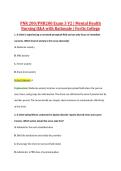
PNR 200/PNR200 Exam 3 V2 | Mental Health
Nursing Q&A with Rationale | Fortis College
1. A client is experiencing a narrowed perceptual field and can only focus on immediate
concerns. Which level of anxiety is the nurse observing?
A. Moderate anxiety
B. Mild anxiety
C. Severe anxiety
D. Panic level anxiety
Correct Answer: A
Explanation: Moderate anxiety involves a narrowed perceptual field where the person
sees, hears, and grasps less information. The client can still attend to more if pointed out by
another person. The nurse should use simple, short sentences to communicate effectively
at this level.
2. A client taking lithium carbonate for bipolar disorder reports blurred vision and coarse
tremors. Which action should the nurse take first?
A. Administer the next scheduled dose
B. Hold the medication and notify the provider
C. Encourage the client to increase fluid intake
D. Administer a PRN dose of acetaminophen
,Correct Answer: B
Explanation: Blurred vision and coarse tremors are significant signs of lithium toxicity.
The nurse must hold the next dose and prepare to check the serum lithium level
immediately. Safety is the priority when toxic symptoms appear in a client taking mood
stabilizers.
3. Which group of symptoms should the nurse identify as indicating Serotonin Syndrome in a
client taking an SSRI?
A. Bradycardia and hypotension
B. Significant weight gain and excessive somnolence
C. Constipation and extreme dry mouth
D. Tachycardia, hyperthermia, and muscle rigidity
Correct Answer: D
Explanation: Serotonin Syndrome is a potentially life-threatening condition caused by
excessive serotonin levels. Symptoms typically include tachycardia, fever, muscle rigidity,
and mental status changes. Immediate discontinuation of the offending agent and
supportive care are required.
4. A client with Obsessive-Compulsive Disorder (OCD) spends several hours a day washing
their hands. Which is the most appropriate initial nursing intervention?
A. Allow the behavior but set limits on the time spent
B. Stop the handwashing immediately by locking the bathroom
, C. Explain the irrationality of the behavior to the client
D. Provide the client with skin lotion to prevent breakdown
Correct Answer: A
Explanation: Initially, the nurse should allow the client to perform the ritual to decrease
anxiety. Setting limits on the time spent allows for the completion of other necessary
activities. Forcing a sudden stop can lead to overwhelming panic for the client.
5. A client with Schizophrenia tells the nurse, ‘The FBI is monitoring my every move through
the television.’ How should the nurse respond?
A. I do not see any FBI agents in the room right now.
B. Why would the FBI be interested in monitoring you?
C. The television is not capable of sending signals to the FBI.
D. That sounds very frightening for you to feel that way.
Correct Answer: D
Explanation: This response acknowledges the client’s feelings without validating the
delusion. The nurse should focus on the underlying emotion of fear rather than the content
of the delusion. Arguing with the client or using logic is generally ineffective in delusional
states.
6. Which assessment finding is considered a negative symptom of Schizophrenia?
A. Auditory hallucinations
Nursing Q&A with Rationale | Fortis College
1. A client is experiencing a narrowed perceptual field and can only focus on immediate
concerns. Which level of anxiety is the nurse observing?
A. Moderate anxiety
B. Mild anxiety
C. Severe anxiety
D. Panic level anxiety
Correct Answer: A
Explanation: Moderate anxiety involves a narrowed perceptual field where the person
sees, hears, and grasps less information. The client can still attend to more if pointed out by
another person. The nurse should use simple, short sentences to communicate effectively
at this level.
2. A client taking lithium carbonate for bipolar disorder reports blurred vision and coarse
tremors. Which action should the nurse take first?
A. Administer the next scheduled dose
B. Hold the medication and notify the provider
C. Encourage the client to increase fluid intake
D. Administer a PRN dose of acetaminophen
,Correct Answer: B
Explanation: Blurred vision and coarse tremors are significant signs of lithium toxicity.
The nurse must hold the next dose and prepare to check the serum lithium level
immediately. Safety is the priority when toxic symptoms appear in a client taking mood
stabilizers.
3. Which group of symptoms should the nurse identify as indicating Serotonin Syndrome in a
client taking an SSRI?
A. Bradycardia and hypotension
B. Significant weight gain and excessive somnolence
C. Constipation and extreme dry mouth
D. Tachycardia, hyperthermia, and muscle rigidity
Correct Answer: D
Explanation: Serotonin Syndrome is a potentially life-threatening condition caused by
excessive serotonin levels. Symptoms typically include tachycardia, fever, muscle rigidity,
and mental status changes. Immediate discontinuation of the offending agent and
supportive care are required.
4. A client with Obsessive-Compulsive Disorder (OCD) spends several hours a day washing
their hands. Which is the most appropriate initial nursing intervention?
A. Allow the behavior but set limits on the time spent
B. Stop the handwashing immediately by locking the bathroom
, C. Explain the irrationality of the behavior to the client
D. Provide the client with skin lotion to prevent breakdown
Correct Answer: A
Explanation: Initially, the nurse should allow the client to perform the ritual to decrease
anxiety. Setting limits on the time spent allows for the completion of other necessary
activities. Forcing a sudden stop can lead to overwhelming panic for the client.
5. A client with Schizophrenia tells the nurse, ‘The FBI is monitoring my every move through
the television.’ How should the nurse respond?
A. I do not see any FBI agents in the room right now.
B. Why would the FBI be interested in monitoring you?
C. The television is not capable of sending signals to the FBI.
D. That sounds very frightening for you to feel that way.
Correct Answer: D
Explanation: This response acknowledges the client’s feelings without validating the
delusion. The nurse should focus on the underlying emotion of fear rather than the content
of the delusion. Arguing with the client or using logic is generally ineffective in delusional
states.
6. Which assessment finding is considered a negative symptom of Schizophrenia?
A. Auditory hallucinations

