

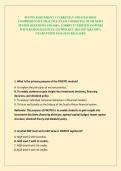
FIN3701 ASSIGNMENT 1 CURRENTLY UPDATED MOST
COMPREHENSIVE PRACTICE EXAM CONSISTING OF 100 MOST
TESTED QUESTIONS AND 100% CORRECT VERIFIED ANSWERS
WITH RATIONALES PLUS ANSWER KEY 2026-2027 Q&A 100%
GUARANTEED PASS JUST RELEASED
1. What is the primary purpose of the FIN3701 module?
A. To explain the principles of microeconomics.
B. To enable students to gain insight into investment decisions, financing
decisions, and dividend policy.
C. To analyse individual consumer behaviour in financial markets.
D. To focus exclusively on the history of the South African financial system.
Rationale: The purpose of FIN3701 is to enable students to gain insight into
investment decisions; financing decisions; optimal capital budget; target capital
structure; dividend theory and dividend policy.
2. At what NQF level and credit value is FIN3701 registered?
A. NQF level 6 with 8 credits.
B. NQF level 7 with 12 credits.
C. NQF level 8 with 18 credits.
D. NQF level 5 with 10 credits.
,Rationale: FIN3701 is registered as an undergraduate degree module at NQF
level 7 with 12 credits.
3. Which module is a prerequisite for FIN3701?
A. FIN2601.
B. FIN3702.
C. ECS1601.
D. FAC3701.
Rationale: The module description lists FIN2601 as a prerequisite for FIN3701.
4. What is the definition of capital budgeting?
A. The process of managing daily cash flows.
B. The process of evaluating and selecting long-term investments that will
maximise shareholder value.
C. The process of determining the optimal capital structure.
D. The process of paying dividends to shareholders.
Rationale: Capital budgeting is the process of evaluating and selecting
investments that will create value for the company and its shareholders.
5. Which of the following is a motive for capital expenditure?
A. Expansion of productive capacity.
B. Replacement of existing assets.
C. Renewal of existing assets.
D. All of the above.
Rationale: Motives for capital expenditure include expansion, replacement, and
renewal of existing assets.
,6. What is the difference between a capital expenditure and an operating
expenditure?
A. Capital expenditure produces benefits in the short term; operating expenditure
produces benefits in the long term.
B. Capital expenditure produces benefits over a time period of greater than one
year; operating expenditure produces benefits in the short term.
C. Capital expenditure is for revenue items; operating expenditure is for capital
items.
D. There is no difference between the two.
Rationale: A capital expenditure produces benefits over a time period of greater
than one year, while an operating expenditure produces benefits in the short
term.
7. What is a sunk cost in capital budgeting?
A. A future cost that will affect the investment decision.
B. A cash outlay that has already been made and therefore has no effect on the
cash flows relevant to a current investment decision.
C. The cost of the best alternative use of an owned asset.
D. The cost of financing the project.
Rationale: Sunk costs are cash outlays that have already been made and
therefore have no effect on the cash flows relevant to a current investment
decision.
8. What is the payback period of an investment?
A. The amount of time required for the firm to double its investment.
B. The amount of time required for the firm to recover its initial investment from
expected future operating cash inflows.
C. The amount of time required for the firm to pay off its debt.
D. The amount of time required for the firm to reach its target profit.
, Rationale: The payback period is the amount of time required for the firm to
recover its initial investment from expected future operating cash inflows.
9. Which of the following is a limitation of the payback period method?
A. It takes into account the time value of money.
B. It fails to take into account the time value of money and cash flows after the
payback period.
C. It is complex and difficult to calculate.
D. It always leads to the correct investment decision.
Rationale: The payback period is popular because it is simple, but it fails to take
into account the time value of money and cash flows after the payback period.
10. What is the Net Present Value (NPV) of a project?
A. The sum of all future cash inflows.
B. The initial investment minus the present value of future cash flows.
C. The present value of future cash flows minus the initial investment.
D. The discount rate that makes the present value of future cash flows equal to
zero.
Rationale: The NPV is found by subtracting the initial investment from the
present value of its expected future cash flows.
11. If the NPV of a project is positive, what decision should be made?
A. Accept the project, as it creates value for the firm.
B. Reject the project, as it destroys value for the firm.
C. The project is indifferent.
D. The decision cannot be determined.
Rationale: If the NPV is positive, the project creates value for the firm and
should be accepted.
COMPREHENSIVE PRACTICE EXAM CONSISTING OF 100 MOST
TESTED QUESTIONS AND 100% CORRECT VERIFIED ANSWERS
WITH RATIONALES PLUS ANSWER KEY 2026-2027 Q&A 100%
GUARANTEED PASS JUST RELEASED
1. What is the primary purpose of the FIN3701 module?
A. To explain the principles of microeconomics.
B. To enable students to gain insight into investment decisions, financing
decisions, and dividend policy.
C. To analyse individual consumer behaviour in financial markets.
D. To focus exclusively on the history of the South African financial system.
Rationale: The purpose of FIN3701 is to enable students to gain insight into
investment decisions; financing decisions; optimal capital budget; target capital
structure; dividend theory and dividend policy.
2. At what NQF level and credit value is FIN3701 registered?
A. NQF level 6 with 8 credits.
B. NQF level 7 with 12 credits.
C. NQF level 8 with 18 credits.
D. NQF level 5 with 10 credits.
,Rationale: FIN3701 is registered as an undergraduate degree module at NQF
level 7 with 12 credits.
3. Which module is a prerequisite for FIN3701?
A. FIN2601.
B. FIN3702.
C. ECS1601.
D. FAC3701.
Rationale: The module description lists FIN2601 as a prerequisite for FIN3701.
4. What is the definition of capital budgeting?
A. The process of managing daily cash flows.
B. The process of evaluating and selecting long-term investments that will
maximise shareholder value.
C. The process of determining the optimal capital structure.
D. The process of paying dividends to shareholders.
Rationale: Capital budgeting is the process of evaluating and selecting
investments that will create value for the company and its shareholders.
5. Which of the following is a motive for capital expenditure?
A. Expansion of productive capacity.
B. Replacement of existing assets.
C. Renewal of existing assets.
D. All of the above.
Rationale: Motives for capital expenditure include expansion, replacement, and
renewal of existing assets.
,6. What is the difference between a capital expenditure and an operating
expenditure?
A. Capital expenditure produces benefits in the short term; operating expenditure
produces benefits in the long term.
B. Capital expenditure produces benefits over a time period of greater than one
year; operating expenditure produces benefits in the short term.
C. Capital expenditure is for revenue items; operating expenditure is for capital
items.
D. There is no difference between the two.
Rationale: A capital expenditure produces benefits over a time period of greater
than one year, while an operating expenditure produces benefits in the short
term.
7. What is a sunk cost in capital budgeting?
A. A future cost that will affect the investment decision.
B. A cash outlay that has already been made and therefore has no effect on the
cash flows relevant to a current investment decision.
C. The cost of the best alternative use of an owned asset.
D. The cost of financing the project.
Rationale: Sunk costs are cash outlays that have already been made and
therefore have no effect on the cash flows relevant to a current investment
decision.
8. What is the payback period of an investment?
A. The amount of time required for the firm to double its investment.
B. The amount of time required for the firm to recover its initial investment from
expected future operating cash inflows.
C. The amount of time required for the firm to pay off its debt.
D. The amount of time required for the firm to reach its target profit.
, Rationale: The payback period is the amount of time required for the firm to
recover its initial investment from expected future operating cash inflows.
9. Which of the following is a limitation of the payback period method?
A. It takes into account the time value of money.
B. It fails to take into account the time value of money and cash flows after the
payback period.
C. It is complex and difficult to calculate.
D. It always leads to the correct investment decision.
Rationale: The payback period is popular because it is simple, but it fails to take
into account the time value of money and cash flows after the payback period.
10. What is the Net Present Value (NPV) of a project?
A. The sum of all future cash inflows.
B. The initial investment minus the present value of future cash flows.
C. The present value of future cash flows minus the initial investment.
D. The discount rate that makes the present value of future cash flows equal to
zero.
Rationale: The NPV is found by subtracting the initial investment from the
present value of its expected future cash flows.
11. If the NPV of a project is positive, what decision should be made?
A. Accept the project, as it creates value for the firm.
B. Reject the project, as it destroys value for the firm.
C. The project is indifferent.
D. The decision cannot be determined.
Rationale: If the NPV is positive, the project creates value for the firm and
should be accepted.

