

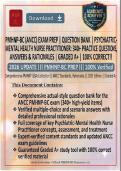
, PMHNP-BC (ANCC) Exam Prep Question
Bank: 340+ Practice Questions, Answers
& Detailed Rationales | Psychiatric-
Mental Health Nurse Practitioner
Certification | 2026/2027 Edition | 100%
Pass Guarantee
Question 1: The primary inhibitory neurotransmitter in the central nervous system is:
A) Glutamate
B) Dopamine
C) GABA
D) Norepinephrine
Correct Answer: C) GABA
Rationale: Gamma-aminobutyric acid (GABA) is the primary inhibitory neurotransmitter
in the CNS. It reduces neuronal excitability by opening chloride channels and
hyperpolarizing the neuron. GABA dysfunction is implicated in anxiety disorders,
seizures, and sleep disorders. Benzodiazepines enhance GABA activity by binding to the
GABA-A receptor complex. Glutamate is the primary excitatory neurotransmitter.
Question 2: The primary excitatory neurotransmitter in the central nervous system is:
A) GABA
B) Glutamate
C) Serotonin
D) Dopamine
Correct Answer: B) Glutamate
Rationale: Glutamate is the primary excitatory neurotransmitter in the CNS. It is
involved in synaptic plasticity, learning, and memory. Excessive glutamate activity is
,implicated in excitotoxicity, which can lead to neuronal damage in conditions such as
stroke and neurodegenerative diseases. NMDA receptors are a subtype of glutamate
receptors that are the target of medications like memantine.
Question 3: Which neurotransmitter pathway is primarily responsible for the positive
symptoms of schizophrenia?
A) Mesolimbic dopamine pathway
B) Mesocortical dopamine pathway
C) Nigrostriatal dopamine pathway
D) Tuberoinfundibular dopamine pathway
Correct Answer: A) Mesolimbic dopamine pathway
Rationale: The mesolimbic dopamine pathway is the primary target for antipsychotic
medications. Hyperactivity in this pathway is associated with positive symptoms of
schizophrenia (hallucinations, delusions). Blocking dopamine D2 receptors in this
pathway reduces these symptoms. The nigrostriatal pathway blockade causes
extrapyramidal symptoms; tuberoinfundibular blockade causes hyperprolactinemia; and
mesocortical blockade may contribute to negative and cognitive symptoms.
Question 4: Which neurotransmitter is most implicated in the pathophysiology of major
depressive disorder?
A) Dopamine
B) Acetylcholine
C) Serotonin
D) GABA
Correct Answer: C) Serotonin
Rationale: Serotonin (5-HT) is a key neurotransmitter in the pathophysiology of
depression. The monoamine hypothesis proposes that depression results from
decreased levels of serotonin, norepinephrine, and/or dopamine. SSRIs increase synaptic
serotonin by blocking reuptake, providing therapeutic benefit. Dysregulation of the
serotonergic system is also associated with anxiety, sleep disturbances, and appetite
changes in depression.
, Question 5: A patient with Parkinson's disease develops visual hallucinations. Which
medication is most likely causing this adverse effect?
A) Levodopa
B) Benztropine
C) Amantadine
D) Selegiline
Correct Answer: A) Levodopa
Rationale: Visual hallucinations are a common adverse effect of dopaminergic
medications used to treat Parkinson's disease, particularly levodopa. Elderly patients are
at higher risk. Hallucinations may indicate progression of the disease or medication-
induced psychosis. Management includes reducing the levodopa dose or adding an
atypical antipsychotic like quetiapine. Pimavanserin is FDA-approved specifically for
Parkinson's disease psychosis.
Question 6: The amygdala is primarily responsible for:
A) Memory formation
B) Fear processing and emotional memory
C) Executive function
D) Motor coordination
Correct Answer: B) Fear processing and emotional memory
Rationale: The amygdala is the brain's fear center, responsible for processing emotional
responses, particularly fear and anxiety. It plays a key role in the fight-or-flight response
and emotional memory formation. The amygdala is hyperactive in anxiety disorders,
PTSD, and depression. The hippocampus is involved in memory formation, and the
prefrontal cortex is involved in executive function and emotional regulation.
Question 7: A patient with schizophrenia is being treated with a typical antipsychotic.
Which pathway blockade causes extrapyramidal symptoms (EPS)?
A) Mesolimbic dopamine pathway
B) Mesocortical dopamine pathway
Bank: 340+ Practice Questions, Answers
& Detailed Rationales | Psychiatric-
Mental Health Nurse Practitioner
Certification | 2026/2027 Edition | 100%
Pass Guarantee
Question 1: The primary inhibitory neurotransmitter in the central nervous system is:
A) Glutamate
B) Dopamine
C) GABA
D) Norepinephrine
Correct Answer: C) GABA
Rationale: Gamma-aminobutyric acid (GABA) is the primary inhibitory neurotransmitter
in the CNS. It reduces neuronal excitability by opening chloride channels and
hyperpolarizing the neuron. GABA dysfunction is implicated in anxiety disorders,
seizures, and sleep disorders. Benzodiazepines enhance GABA activity by binding to the
GABA-A receptor complex. Glutamate is the primary excitatory neurotransmitter.
Question 2: The primary excitatory neurotransmitter in the central nervous system is:
A) GABA
B) Glutamate
C) Serotonin
D) Dopamine
Correct Answer: B) Glutamate
Rationale: Glutamate is the primary excitatory neurotransmitter in the CNS. It is
involved in synaptic plasticity, learning, and memory. Excessive glutamate activity is
,implicated in excitotoxicity, which can lead to neuronal damage in conditions such as
stroke and neurodegenerative diseases. NMDA receptors are a subtype of glutamate
receptors that are the target of medications like memantine.
Question 3: Which neurotransmitter pathway is primarily responsible for the positive
symptoms of schizophrenia?
A) Mesolimbic dopamine pathway
B) Mesocortical dopamine pathway
C) Nigrostriatal dopamine pathway
D) Tuberoinfundibular dopamine pathway
Correct Answer: A) Mesolimbic dopamine pathway
Rationale: The mesolimbic dopamine pathway is the primary target for antipsychotic
medications. Hyperactivity in this pathway is associated with positive symptoms of
schizophrenia (hallucinations, delusions). Blocking dopamine D2 receptors in this
pathway reduces these symptoms. The nigrostriatal pathway blockade causes
extrapyramidal symptoms; tuberoinfundibular blockade causes hyperprolactinemia; and
mesocortical blockade may contribute to negative and cognitive symptoms.
Question 4: Which neurotransmitter is most implicated in the pathophysiology of major
depressive disorder?
A) Dopamine
B) Acetylcholine
C) Serotonin
D) GABA
Correct Answer: C) Serotonin
Rationale: Serotonin (5-HT) is a key neurotransmitter in the pathophysiology of
depression. The monoamine hypothesis proposes that depression results from
decreased levels of serotonin, norepinephrine, and/or dopamine. SSRIs increase synaptic
serotonin by blocking reuptake, providing therapeutic benefit. Dysregulation of the
serotonergic system is also associated with anxiety, sleep disturbances, and appetite
changes in depression.
, Question 5: A patient with Parkinson's disease develops visual hallucinations. Which
medication is most likely causing this adverse effect?
A) Levodopa
B) Benztropine
C) Amantadine
D) Selegiline
Correct Answer: A) Levodopa
Rationale: Visual hallucinations are a common adverse effect of dopaminergic
medications used to treat Parkinson's disease, particularly levodopa. Elderly patients are
at higher risk. Hallucinations may indicate progression of the disease or medication-
induced psychosis. Management includes reducing the levodopa dose or adding an
atypical antipsychotic like quetiapine. Pimavanserin is FDA-approved specifically for
Parkinson's disease psychosis.
Question 6: The amygdala is primarily responsible for:
A) Memory formation
B) Fear processing and emotional memory
C) Executive function
D) Motor coordination
Correct Answer: B) Fear processing and emotional memory
Rationale: The amygdala is the brain's fear center, responsible for processing emotional
responses, particularly fear and anxiety. It plays a key role in the fight-or-flight response
and emotional memory formation. The amygdala is hyperactive in anxiety disorders,
PTSD, and depression. The hippocampus is involved in memory formation, and the
prefrontal cortex is involved in executive function and emotional regulation.
Question 7: A patient with schizophrenia is being treated with a typical antipsychotic.
Which pathway blockade causes extrapyramidal symptoms (EPS)?
A) Mesolimbic dopamine pathway
B) Mesocortical dopamine pathway

