

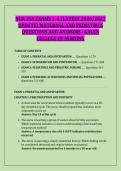
NUR 254 EXAMS 1–4 (LATEST 2026/2027
UPDATE) MATERNAL AND PEDIATRICS
QUESTIONS AND ANSWERS - GALEN
COLLEGE OF NURSING
TABLE OF CONTENTS
• EXAM 1: PRENATAL AND ANTEPARTUM ...... Questions 1-170
• EXAM 2: INTRAPARTUM AND POSTPARTUM ...... Questions 171-340
• EXAM 3: PEDIATRICS AND PEDIATRIC NURSING ...... Questions 341-
510
• EXAM 4: PEDIATRIC ALTERATIONS AND SPECIAL POPULATIONS ......
Questions 511-680
EXAM 1: PRENATAL AND ANTEPARTUM
CHAPTER 1: PRECONCEPTION AND FERTILITY
1. A client asks the nurse about when ovulation typically occurs in a 28-
day menstrual cycle. The nurse should respond that ovulation most
commonly occurs on:
Answer: Day 14 of the cycle
2. The nurse is teaching a group of women about fertility awareness.
Which statement indicates a correct understanding of the basal body
temperature method?
Answer: A temperature rise of 0.4-0.8°F indicates ovulation has
occurred
3. The nurse is assessing a client's menstrual history. Which finding would
be considered abnormal and require further evaluation?
Answer: No menstrual period for 6 months in a 30-year-old
,4. The nurse is educating a couple about the process of fertilization. The
nurse correctly states that fertilization typically occurs in which
location?
Answer: Ampulla of the fallopian tube
5. A client asks the nurse about the optimal timing for intercourse to
achieve pregnancy. The nurse should instruct the client that the fertile
window is:
Answer: 5 days before ovulation and the day of ovulation
6. The nurse is reviewing factors that can affect fertility. Which factor is
NOT considered a modifiable risk factor for infertility?
Answer: Genetic disorders
7. A client with an irregular menstrual cycle asks about ovulation
prediction. The nurse should recommend which method for identifying
ovulation?
Answer: Ovulation predictor kits (OPKs)
8. The nurse is teaching a client about the changes that occur in the cervix
during ovulation. Which change is characteristic of ovulation?
Answer: Cervical mucus becomes thin, clear, and stretchy
(spinnbarkeit)
9. A couple has been trying to conceive for 12 months without success. The
nurse should recommend that the couple:
Answer: Seek evaluation by a fertility specialist
10. The nurse is discussing the role of folic acid with a client planning
pregnancy. The nurse should explain that folic acid is important for:
Answer: Prevention of neural tube defects
11. The nurse is teaching a client about pre-pregnancy health. Which
statement by the client indicates a need for further teaching?
Answer: "I can stop taking folic acid once I am pregnant"
12. The nurse is assessing a client's risk factors for infertility. Which
factor is associated with decreased fertility?
Answer: Age over 35 years
,13. A client is starting ovulation induction with clomiphene citrate.
The nurse should instruct the client about the potential side effect of:
Answer: Hot flashes and ovarian hyperstimulation
14. The nurse is explaining the process of implantation to a client.
Implantation typically occurs:
Answer: 6-10 days after fertilization
15. A client asks the nurse about the lifespan of sperm in the female
reproductive tract. The nurse should respond that sperm can survive for
up to:
Answer: 5 days
16. The nurse is discussing the role of the male reproductive system
in conception. The nurse correctly identifies that spermatogenesis
occurs in the:
Answer: Seminiferous tubules
17. A client with a history of pelvic inflammatory disease is at risk for
which complication related to fertility?
Answer: Fallopian tube scarring and blockage
18. The nurse is teaching a client about the endometrial cycle. The
proliferative phase occurs in response to:
Answer: Estrogen
19. A client asks the nurse about the postcoital test. The nurse should
explain that this test evaluates:
Answer: Cervical mucus and sperm interaction
20. The nurse is discussing the luteal phase of the menstrual cycle.
The luteal phase typically lasts:
Answer: 14 days
21. A client is diagnosed with polycystic ovary syndrome (PCOS). The
nurse should explain that PCOS can cause infertility due to:
Answer: Anovulation
22. The nurse is teaching a client about the effect of exercise on
fertility. Which recommendation should the nurse provide?
, Answer: Moderate exercise is beneficial, but excessive exercise
may impair ovulation
23. A client is undergoing fertility treatment with in vitro fertilization
(IVF). The nurse should explain that IVF involves:
Answer: Fertilization of eggs outside the body with transfer of
embryos into the uterus
24. The nurse is assessing a client's cervical mucus. Mucus that is
clear, thin, and stretchy indicates:
Answer: Ovulation is approaching
25. A client asks the nurse about the role of progesterone in
pregnancy. The nurse should explain that progesterone:
Answer: Maintains the uterine lining and prevents uterine
contractions
26. The nurse is teaching a client about the impact of smoking on
fertility. Which statement about smoking and fertility is correct?
Answer: Smoking can affect both male and female fertility
27. A client is diagnosed with endometriosis. The nurse should
explain that this condition can cause infertility due to:
Answer: Pelvic adhesions and tubal blockage
28. The nurse is discussing the male reproductive system with a
client. The nurse correctly identifies that the vas deferens:
Answer: Transports sperm from the epididymis to the ejaculatory
duct
29. A client asks the nurse about the effect of age on male fertility. The
nurse should respond that:
Answer: Male fertility decreases with age, though more gradually
than female fertility
30. The nurse is teaching a client about the changes in cervical mucus
during the menstrual cycle. During the secretory phase, cervical mucus
is:
Answer: Thick and opaque
UPDATE) MATERNAL AND PEDIATRICS
QUESTIONS AND ANSWERS - GALEN
COLLEGE OF NURSING
TABLE OF CONTENTS
• EXAM 1: PRENATAL AND ANTEPARTUM ...... Questions 1-170
• EXAM 2: INTRAPARTUM AND POSTPARTUM ...... Questions 171-340
• EXAM 3: PEDIATRICS AND PEDIATRIC NURSING ...... Questions 341-
510
• EXAM 4: PEDIATRIC ALTERATIONS AND SPECIAL POPULATIONS ......
Questions 511-680
EXAM 1: PRENATAL AND ANTEPARTUM
CHAPTER 1: PRECONCEPTION AND FERTILITY
1. A client asks the nurse about when ovulation typically occurs in a 28-
day menstrual cycle. The nurse should respond that ovulation most
commonly occurs on:
Answer: Day 14 of the cycle
2. The nurse is teaching a group of women about fertility awareness.
Which statement indicates a correct understanding of the basal body
temperature method?
Answer: A temperature rise of 0.4-0.8°F indicates ovulation has
occurred
3. The nurse is assessing a client's menstrual history. Which finding would
be considered abnormal and require further evaluation?
Answer: No menstrual period for 6 months in a 30-year-old
,4. The nurse is educating a couple about the process of fertilization. The
nurse correctly states that fertilization typically occurs in which
location?
Answer: Ampulla of the fallopian tube
5. A client asks the nurse about the optimal timing for intercourse to
achieve pregnancy. The nurse should instruct the client that the fertile
window is:
Answer: 5 days before ovulation and the day of ovulation
6. The nurse is reviewing factors that can affect fertility. Which factor is
NOT considered a modifiable risk factor for infertility?
Answer: Genetic disorders
7. A client with an irregular menstrual cycle asks about ovulation
prediction. The nurse should recommend which method for identifying
ovulation?
Answer: Ovulation predictor kits (OPKs)
8. The nurse is teaching a client about the changes that occur in the cervix
during ovulation. Which change is characteristic of ovulation?
Answer: Cervical mucus becomes thin, clear, and stretchy
(spinnbarkeit)
9. A couple has been trying to conceive for 12 months without success. The
nurse should recommend that the couple:
Answer: Seek evaluation by a fertility specialist
10. The nurse is discussing the role of folic acid with a client planning
pregnancy. The nurse should explain that folic acid is important for:
Answer: Prevention of neural tube defects
11. The nurse is teaching a client about pre-pregnancy health. Which
statement by the client indicates a need for further teaching?
Answer: "I can stop taking folic acid once I am pregnant"
12. The nurse is assessing a client's risk factors for infertility. Which
factor is associated with decreased fertility?
Answer: Age over 35 years
,13. A client is starting ovulation induction with clomiphene citrate.
The nurse should instruct the client about the potential side effect of:
Answer: Hot flashes and ovarian hyperstimulation
14. The nurse is explaining the process of implantation to a client.
Implantation typically occurs:
Answer: 6-10 days after fertilization
15. A client asks the nurse about the lifespan of sperm in the female
reproductive tract. The nurse should respond that sperm can survive for
up to:
Answer: 5 days
16. The nurse is discussing the role of the male reproductive system
in conception. The nurse correctly identifies that spermatogenesis
occurs in the:
Answer: Seminiferous tubules
17. A client with a history of pelvic inflammatory disease is at risk for
which complication related to fertility?
Answer: Fallopian tube scarring and blockage
18. The nurse is teaching a client about the endometrial cycle. The
proliferative phase occurs in response to:
Answer: Estrogen
19. A client asks the nurse about the postcoital test. The nurse should
explain that this test evaluates:
Answer: Cervical mucus and sperm interaction
20. The nurse is discussing the luteal phase of the menstrual cycle.
The luteal phase typically lasts:
Answer: 14 days
21. A client is diagnosed with polycystic ovary syndrome (PCOS). The
nurse should explain that PCOS can cause infertility due to:
Answer: Anovulation
22. The nurse is teaching a client about the effect of exercise on
fertility. Which recommendation should the nurse provide?
, Answer: Moderate exercise is beneficial, but excessive exercise
may impair ovulation
23. A client is undergoing fertility treatment with in vitro fertilization
(IVF). The nurse should explain that IVF involves:
Answer: Fertilization of eggs outside the body with transfer of
embryos into the uterus
24. The nurse is assessing a client's cervical mucus. Mucus that is
clear, thin, and stretchy indicates:
Answer: Ovulation is approaching
25. A client asks the nurse about the role of progesterone in
pregnancy. The nurse should explain that progesterone:
Answer: Maintains the uterine lining and prevents uterine
contractions
26. The nurse is teaching a client about the impact of smoking on
fertility. Which statement about smoking and fertility is correct?
Answer: Smoking can affect both male and female fertility
27. A client is diagnosed with endometriosis. The nurse should
explain that this condition can cause infertility due to:
Answer: Pelvic adhesions and tubal blockage
28. The nurse is discussing the male reproductive system with a
client. The nurse correctly identifies that the vas deferens:
Answer: Transports sperm from the epididymis to the ejaculatory
duct
29. A client asks the nurse about the effect of age on male fertility. The
nurse should respond that:
Answer: Male fertility decreases with age, though more gradually
than female fertility
30. The nurse is teaching a client about the changes in cervical mucus
during the menstrual cycle. During the secretory phase, cervical mucus
is:
Answer: Thick and opaque

