

Escrito por estudiantes que aprobaron Inmediatamente disponible después del pago Leer en línea o como PDF ¿Documento equivocado? Cámbialo gratis 4,6 TrustPilot
logo-home
Document preview thumbnail
Vista previa 4 fuera de 39 páginas
Examen

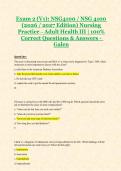
Exam 2 (V1): NSG4100 / NSG 4100 (2026 / 2027 Edition) Nursing Practice – Adult Health III | 100% Correct Questions & Answers - Galen

Document preview thumbnail
Vista previa 4 fuera de 39 páginas

Exam 2 (V1): NSG4100 / NSG 4100 (2026 / 2027 Edition) Nursing Practice – Adult Health III | 100% Correct Questions & Answers - Galen The nurse is discussing ways to prevent DKA w/ a client newly diagnosed w/ Type 1 DM, which instruction is most important to discuss with the client? a. refer them to the American Diabetes Association b. Take the prescribed insulin even when unable to eat due to illness c. Do not take any OTC meds d. explain the need to get the annual flu and pneumonia vaccines B a. "when was the last time you took your insulin?" b. "when do you have your last meal?" c. "have you had some type of infection lately?" d. "how long have you had diabetes?" C ED nurse is caring for pt with HHS who has BG of 680 mg/dl. Which question should the nurse ask to determine the cause of acute complications? Client w/ a diagnosis of Addisonian crisis is being admitted to the ICU. Which findings will the inter-professional care team focus on? Select all that apply: a. hypotension b. leuocytosis c. hyperkalmeia d. hypercalcemia e. hypernatremia A, C Nurse is caring for a client after hypophysectomy and notes clear nasal drainage from the client's nostril. The nurse should take which initial action? a. lower the head of the bed b. test drainage for glucose c. obtain culture of drainage d. continue to observe drainage B Nurse is admitting a client who is diagnosed w/ SIADH and has serum sodium of 118 mEq/L. Which physician prescription should the nurse anticipate receiving? Select all that apply: a. Initiate infusion of 3% NaCl b. administer IV furosemide c. Restrict fluids to 800ml over 24hrs d. elevate HOB to high fowler's e. administer a vasopressin antagonist as prescribed A, C, E Nurse performing an assessment on a client w/ pheochromocytoma. Which assessment data would indicate potential complication with this disease? a. urinary output of 50ml/h b. coagulation time of 5 mins c. HR that is 90bpm & irregular d. BUN of 20 mg/dL C Client is to have transsphenoidal hypophysectomy to remove a large, invasive pituitary tumor. The nurse should instruct the client that the surgery will be performed through an incision in the a. back of mouth b. nose c. sinus channel below right eye d. upper gingival mucosa in the space between the upper gum and lip D Nurse teaches client to report s/s of which potential complication after a hypophysectomy? a. acromegaly b. Cushing's ds c. diabetes mellitus d. hypopituitarism D After pituitary surgery, the nurse should assess the client for a. urine gravity 1.010 b. UO between 1-2L/day c. BG 300 mg/dL d. urine negative for glucose & ketones A Client with type 1 diabetes is admitted to ED w/ recurrent DKA. Current glucose level is 603 w/ moderate bicarbonate levels. The client is drowsy but responds appropriately. Vital signs are BP 90/42, sinus tachycardia 132/min, RR 36/min, temp 102F, & minimal UO. What does the nurse anticipate as the highest priority for the client? a. culture urine, blood, and sputum for bacteria b. start insulin drop following bolus of 7 units of rapid insulin c. start large bore IV access to allow rapid insulin of fluids d. give rapid acting insulin IM while waiting for labs C 19 y/o woman was admitted to ICU following high-velocity MVA in which she sustained a severe closed head injury. Nurse noticed she has been producing a large amount of urine for the past 3 hrs and is becoming tachycardia and hypotensive. The nurse knows that this client needs to be closely monitored for developing which condition? a. Cushing syndrome, which is treated w/ intermittent doses of corticoids b. DI, which is treated w/ antidiuretic hormone (Vasopressin) c. SIADH, which is create w/ ADH d. DM, which is treated w/ basal analog insulin B Client w/ pituitary tumor developed SIADH. Which intervention should the nurse implement? a. assess for dehydration and monitor BG level b. assess for n/v & weigh daily c. monitor potassium level & encourage fluid intake d. administer vasopressin IV and conduct fluid deprivation test B Nurse is admitting a client to the neurological ICU who is postoperative transsphenoidal hypophysectomy. Which data warrants immediate intervention? a. client is alert to name but unable to tell nurse the location b. client has output of 2500ml since surgery and intake of 1000ml c. client vital signs are T 97.6F, P 88, RR 22, BP 130/80 d. client has 3cm amount of dark red drainage on turban dressing B Client diagnosed with HHNS was admitted yesterday w/ BG of 780 mg/dL. Client BG is now 300 mg/dL. Which intervention should the nurse implement? a. increase regular insulin drip b. check the clients urine for ketones c. provide client w/ therapeutic meal d. notify HCP to obtain an order to decrease insulin D Elderly pt is admitted to ICU diagnosed with severe HHNS. Which collaborative intervention should the nurse include in the plan of care? a. infuse 0.9% NS intravenously b. administer intermediate-acting insulin c. perform blood glucose checks daily d. monitor ABG results A Client is diagnosed with type II DM is admitted to the ICU with HHNS coma. Which assessment data should the nurse expect the client to exhibit? a. Kussmaul's repirations b. diarrhea c. dry mucous membranes d. ketone breath odor C Client received 10 units of Humulin R, a fast-acting insulin, at 0700. At 1030, the UAP tells the nurse the client has a headache and is acting "funny." Which intervention should the nurse implement first? a. instruct UAP to obtain BG level b. have client drink 8oz of orange juice c. go to client's room and assess client for hypoglycemia d. prepare to administer 1 ampule of 50% dextrose IV C The nurse is discussing macrovascular complications of diabetes with a pt. The nurse would address what topic during this dialogue? a. the need for frequent eye examinations for pt's w/ diabetes b. the fact that pt's with diabetes have an elevated risk for myocardial infarction c. the relationship between kidney function and BG levels d. the need to monitor urine for the presence of albumin B An elderly pt comes to the clinic with her daughter. The pt is a diabetic and is concerned about foot care. The nurse goes over foot care with the pt and her daughter as the nurse realizes that foot care is extremely important. Why would the nurse feel that foot care is so importance to this pt? a. an elderly pt w/ foot ulcers experiences severe foot pain due to the diabetic polyneuropathy b. avoiding foot ulcers may mean the difference between institutionalization and continued independent living c. hypoglycemia is linked with a risk for falls; this risk is elevated in older adults with diabetes d. oral anti-hyperglycemics have the possible adviser effect of decreased circulation to the lower extremities B A diabetic educator is discussing sick day rules with a newly diagnosed type 1 diabetic. The educator is aware that the pt will require further teaching when the pt states what? a. I will not take my insulin on the days when I am sick, but I will certainly check my BG every 2 hours b. if I cannot eat a meal, I will eat a soft food such as soup, gelatin, or pudding six to eight times a day c. I will call the dr if I am not able to keep liquids in my body due to vomiting or diarrhea d. I will call the dr if my BG is over 300 mg/dL or if I have ketones in my urine A A medical nurse is aware of the need to screen specific pt's for their risk of hyperglycemic hyperosmolar syndrome (HHS). In what pt population does hyperosmolar nonketotic syndrome most often occur? a. pt's who are obese and who have no known hx of diabetes b. pt's w/ type 1 diabetes and poor dietary control c. adolescents with type 2 diabetes and sporadic use of antihyperglycemics d. middle-aged or older people with either type 2 diabetes or no known hx of diabetes D Physician has explained to a pt that he has developed diabetic neuropathy in his right foot. Later that day, the pt asks the nurse what causes diabetic neuropathy. What would be the nurse's best response? a. research has shown that diabetic neuropathy is caused by fluctuations in BG that have gone on for years b. the case is not known for sure but it is though to have something to do with ketoacidosis c. the cause is not known for sure but it is thought to involve elevated BG levels over a period of years d. research has shown that diabetic neuropathy is caused by a combination of elevated BG levels and elevated ketone levels C A pt with a hx of type 1 diabetes has just been admitted to the critical care unit (CCU) for diabetic keto acidosis. The CCU nurse should prioritize what assessment during the pt's initial phase of tx? a. monitoring pt for dysrhythmias b. maintaining and monitoring pt's fluid balance c. assess pt's LOC d. assessing the pt for s/s of venous thromboembolism B The most recent blood work of a pt with a longstanding diagnosis of type 1 diabetes has shown the presence of microalbuminuria. What is the nurses most appropriate action? a. teach pt about actions to slow progression of nephropathy b. ensure that pt receives a comprehensive assessment of liver function c. determine whether pt has been using expired insulin d. administer a fluid challenge and have test repeated A A nurse is assessing a pt who has diabetes for the presence of peripheral neuropathy. The nurse should question the pt about what sign or symptom that would suggest the possible development of peripheral neuropathy? a. persistently cold feet b. pain that does not respond to analgesia c. acute pain, unrelieved by rest d. the presence of a tingling sensation D A pt is brought to the ED by paramedics. The pt is a type 2 diabetic and is experiencing HHS. The nurse should identify what components of HHS? Select all that apply: a. leukocytosis b. glycosuria c. dehydration d. hypernatremia e. hyperglycemia B, C, D, E A pt has been admitted to the post-surgical unit following a thyroidectomy. To promote comfort and safety, how should the nurse best position the pt? a. side-lying (lateral) with one pillow under the head b. head of the bed elevated 30 degrees and no pillows placed under the head c. semi-fowlers with the head supported on two pillows d. supine, with a small roll supporting the neck C A pt with thyroid cancer has undergone surgery and a significant amount of parathyroid tissue has been removed. The nurse caring for the pt should prioritize what question when addressing potential complications? a. do you feel any muscle twitches or spasms? b. do you feel flushed or sweaty? c. are you experiencing any dizziness or lightheadedness? d. are you having any pain that seems to be radiating from your bones? A The nurse is caring for a pt with a diagnosis of Addison's Ds. What s/s is most closely associated with this health problem? a. truncal obesity b. HTN c. muscle weakness d. moon face C The nurse is caring for a pt with Addison's ds who is scheduled for d/c. When teaching the pt about hormone replacement therapy, the nurse should address what topic? a. the possibility of precipitous weight gain b. the need for lifelong steroid replacement c. the need to match the daily steroid dose to immediate sx d. the importance of monitoring liver function B A nurse caring for a pt with diabetes insipidus (DI) is reviewing lab results. What is an expected urinalysis finding? a. glucose in urine b. albumin in urine c. highly dilute urine d. leukocytes in urine C The nurse caring for a pt w/ Cushing syndrome is describing the dexamethasone suppression test scheduled for tomorrow/ What does the nurse explain that this test will involve? a. administration of dexamethasone orally, followed by a plasma cortisol level every hr for 3 hrs b. administration of dexamethasone IV, followed by an x-ray of the adrenal glands c. administration of dexamethasone orally at 11pm, and a plasma cortisol level at 8am the next morning d. administration of dexamethasone IV, followed by a plasma cortisol level 3 hrs after drug admin C You are developing a care plan for a pt w/ Cushing syndrome. What nursing diagnosis would have the highest priority in this care plan? a. risk for injury r/t weakness b. ineffective breathing pattern r/t muscle weakness c. risk for loneliness r/t disturbed body image d. autonomic dysreflexia r/t neurologic changes A The nurse is performing a shift assessment of a pt with aldosteronism. What assessments should the nurse include? Select all that apply: a. urine output b. s/s of venous thromboembolism c. peripheral pulses d. BP e. skin integrity A, D The home care nurse is conducting patient teaching with a patient on corticosteroid therapy. To achieve consistency with the body's natural secretion of cortisol, when would the home care nurse instruct the patient to take his or her corticosteroids? a. in evening between 4-6pm b. prior to going to sleep at night c. at noon every day d. in morning between 7-8am D A pt presents at the walk-in clinic complaining of diarrhea and vomiting. The pt has a documented hx of adrenal insufficiency. Considering the pt's hx and current sx, the nurse should anticipate that the pt will be instructed to do which of the following? a. increase his intake of sodium until the GI sx improve b. increase his intake of potassium until the GI sx improve c. increase his intake of glucose until GI sx improve d. increase intake of calcium until GI sx improve A When assisting with the surgical removal of an adrenal tumor, the OR nurse is aware that the pt's vital signs may change upon manipulation of the tumor. What vital sign changes would the nurse expect to see? a. hyperthermia and tachypnea b. HTN and HR changes c. hypotension and hypothermia d. hyperthermia and bradycardia B A pt has retuned to the floor after having a thyroidectomy for thyroid cancer. The Nurs knows that sometimes during thyroid surgery, the parathyroid glands an be injured or removed. What lab finding may be an early indication of parathyroid gland injury or removal? a. hyponatremia b. hypophosphatemia c. hypocalcemia d. hypokalemia C A pt with a diagnosis of syndrome of inappropriate hormone secretion (SIADH) is being cared for on the critical care unit. The priority nursing diagnosis for a pt with this condition is what? a. risk fo peripheral neurovascular dysfunction b. excess fluid volume c. hypothermia d. ineffective airway clearance B The dr has ordered a fluid deprivation test for a pt suspected of having DI. During the test, the nurse should prioritize what assessments? a. temperature and oxygen saturation b. HR and BP c. breath sounds and bowel sounds d. color, warmth, movement, and sensation of extremities B A pt has been admitted to the CCU w/ a diagnosis of thyroid storm. What interventions should the nurse include in this pt's immediate care? Select all that apply: a. administering diuretics to prevent fluid overload b. administering beta blockers to reduce HR c. administering insulin to reduce BG levels d. applying interventions to reduce temperature e. administering corticosteroids B, D The nurse assessment of a pt w/ thyroidectomy suggests tetany and a review of the most recent blood work corroborate this finding. The nurse should prepare to administer what intervention? a. oral calcium chloride and vitamin D b. IV calcium gluconate c. STAT levothyroxine d. administration of parathyroid hormone (PTH) B Following an Addisonian crisis, a pt's adrenal function has gradually regained. The nurse should ensure that the pt knows about the need for supplementary glucocorticoid therapy in which of the following circumstances? a. episodes of high psychosocial stress b. periods of dehydration c. episodes of physical exertion d. administration of a vaccine A A pt w/ pheochromocytoma has been admitted for an adrenalectomy to be performed the following day. To prevent complications, the nurse should anticipate preoperative administration of which of the following? a. IV abx b. oral antihypertensives c. parenteral nutrition d. IV corticosteroids D A pt is undergoing testing for suspected adrenocorticol insufficiency. The care team should ensure that the pt has been assessed for the most common cause of adrenocorticol insufficiency. What is the most common cause of this health problem? a. therapeutic use of corticosteroids b. pheochromocytoma c. inadequate secretion of ACTH d. adrenal tumor A A pt w/ Cushing syndrome has been hospitalized after a fall. The dietician consulted works w/ the pt to improve the pt's nutritional intake. What foods should a pt w/ Cushing syndrome eat to optimize health? Select all that apply: a. foods high in vitamin D b. foods high in calories c. foods high in protein d. foods high in calcium e. foods high in sodium A, C, D A pt w/ Cushing syndrome as a result of a pituitary tumor has been admitted for a transsphenoidal hypophysectomy. What would be most important for the nurse to monitor before, during, and after surgery? a. BG b. assessment of urine for blood c. weight d. oral temp A The Nurs caring for a pt at risk for an addisonian crisis. For what as/s should the nurse monitor the pt? Select all that apply: a. epistaxis b. pallor c. rapid RR d. bounding pulse e. hypotension B, C, E A pt has been assessed for aldosteronism and has recently begun tx. What are priority areas for assessment that the nurse should frequently address? Select all that apply: a. pupillary response b. creatinine and BUN levels c. potassium level d. peripheral pulses e. BP C, E The nurse is providing care for an older adult pt whose current med regimen includes levothyroxine (Synthroid). As a result, the nurse should be aware of the heightened risk of adverse effects when administering an IV dose of what medication? a. a fluoroquinolone abx b. a loop diuretic c. a proton pump inhibitor (PPI) d. a benzodiazepine D Cortisol is produced by the.. Adrenal cortex Aldosterone is produced by the... Adrenal cortex Androgen is produced by the... Adrenal cortex What does cortisol do to the body? What is cortisol's responsibilities? Helps control the body’s use of fats, proteins and carbohydrates Suppresses inflammation Regulates blood pressure Increases blood sugar Decrease bone formation What does aldosterone do to the body? What are its responsibilities? Tells kidneys to absorb more sodium into the bloodstream - Releases potassium into the urine (regulates BP) What do androgens do for the body? Assists ovaries produce estrogen and testes produce testosterone Congenital Adrenal Hyperplasia occurs when.... the enzyme needed for cortisol production in adrenal gland is lacking because of a gene defect. Primary hyperaldosteronism (Conn syndrome) is caused by... aldosterone-secreting tumors The adrenal medulla controls... adrenaline Secondary hyperaldosteronism is caused by.... Poor kidney perfusion What is hypoaldosteronism? What are symptoms of this condition? Patients with hypoaldosteronism will retain and , and have low levels. Salt and water retention Low K+ How is hypoaldosteronism treated? - Mineral corticoids to maintain that salt and water balance, - Glucocorticoids if there is a cortisol deFciency - Potentially diuretics Cushings Syndrome is a condition of hyperadrenalism - High cortisol levels The Pituitary is Located on the.... inferior aspect of the brain and is divided into anterior and posterior lobes. The gland is controlled by the hypothalamus, which is an adjacent area of the brain pituitary gland secretes hormones that... influence growth, metabolism and regeneration the Pituitary signals releases ACTH (adrenocorticotropin hormone), what does ACTH do? tell adrenal glands to release Cortisol (-) fdbck system Hypersecretion of anterior pituitary gland results in Cushings Syndrome ADH (anti diuretic hormone) is also called arginine vasopressin it is a hormone made by the hypothalamus in the brain and is stored in the.... posterior pituitary gland ADH constantly regulates and balances the amount of water in your blood stream. The adrenal glands secretes compounds like cortisone, adrenaline Too much cortisol makes things.... slow down Too little cortisol make things.. speed up If a patient has CONGENTIAL ADRENAL HYPERPLASIA, what happens to their cortisol levels? so less cortisol is being produced if a patient has CONGENTIAL ADRENAL HYPERPLASIA, what are they at risk for? Adrenal crisis bc they have very low levels of cortisol main symptoms of adrenal crisis is .. hypotension or hypovolemic shock If a patient has hyper-aldosteronism, what do you treat them with? we give them spironolactone (k sparing diuretic) this med: o increases sodium excretion and potassium retention these patients are high risk for renal wasting o we want to make sure they are very up to date and compliant with their treatment regimen What is the primary function of aldosterone? facilitates the salt and water retention by the kidney Signs and symptoms of hyper-aldosteronism include.... - HIGH Na, BP - LOWK+ A patient has an their adrenal glands removed due to their hyper-aldosteronism, this puts them at risk for.... insufficient cortisol production Post-Operative Complications for patients who had their adrenal glands removed include... low BP, bleeding infection and blood clots - Adrenal crisis Aldosterone is under the control of the pituitary gland. True or False? False Aldosterone is secreted by the adrenal gland. True or false? True This medication is used to treat heart failure hypertension and fluid retention that prevents your body from absorbing too much salt and keeps your potassium from getting too low? spironolactone Symptoms of Hypoaldosteronism include.... - LOW sodium (Na), Low BP - HIGH K+ - metabolic acidosis Clinical Manifestations of Cushing's Include... - Mood swings - Fatigue - Weight gain - Muscle Weakness - lassitude (A feeling of tiredness, weakness, and lack of interest in daily activities.) A patient presents with muscle weakness dark skin and lupus membranes pigmentation and emotional lability these are clinical manifestations of what? hypoaldosteronism Prednisone in pt with COPD could increase the levels of.... cortisol Your patient, a 35y/o F with emphysema, requests medication to help with her symptoms. What medication do you expect to be ordered? Prednisone Women between the ages of 20 and 40 years are five times more likely than men to develop.... Cushing's Syndrome The main cause of Cushing's syndrome is the pituitary gland producing too much... adrenocorticotropin hormone (ACTH) Cushing's Syndrome is caused by high levels of... cortisol When do people with cushing's tend to have high cortisol levels throughout the day? All day Normal AM Cortisol levels? 10-20 mcg/dl highest in the and lower in the ? AM PM Normal urine cortisol level is.. 3.5-45mcg/24 hours How is urine collected for cortisol levels? 24hr urine collection (keep urine cold between samples) Indicators of Cushing's aside from cortisol levels include... increased Na and blood GLUCOSE level - decreased K+ - reduction in number of blood eosinophils - disappearance of lymphoid tissue Nursing interventions for Cushing's Disease include... - Rest and decrease the activity - Skin Integrity (Every shift, check skin) - Diet: AVOID LOW CARB diet A patient with Cushing syndrome should be assessed for signs and symptoms of... (due to medications) Addisonian Crisis An Addisonian Crisis is life threatening because the patient could... go into circulatory collapse and shock Patient teachings about Cushing's Disease include... If s/s of an addisonian crisis appear this is an emergency. They need to call 911 or go to the ER immediately Signs and Symptoms of an addisonian crisis include... - life threatening shock Severe weakness Confusion Pain to the lower back and legs Severe and abdominal pain Unexplained restlessness N/V - leading to dehydration Decreased loc Decreased BP - they're not perfusing HIGH K+ and LOW sodium Treatment for Cushing's Disease includes Transsphenoidal Hypophysectomy. What is this? surgical removal of the tumor on pituitary gland - Tx of choice - 80% success rate Patients who undergo a Transsphenoidal Hypophysectomy are at high risk for... losing CSF or cerebral spinal fluid. - observations and assessments by the nurse after the surgery is very important, we have a small amount of CSF circulating at any one time so any loss is significant. How do we know if a patient is losing CSF from a Transsphenoidal Hypophysectomy? If you look at the nasal packing and you see something pinkish and then you see that drainage has this Halo that is CSF this is a medical emergency NOTIFY PCP because they have a CSF leak and they need to go back to surgery immediately. A patient may report "You know I feel like there's something salty, and I and I feel a whole bunch of drainage at the back of my throat” a patient diagnosed with Cushing syndrome may experience these symptoms except: A. Mooning Face B. Weight Loss C. Thin Extremities D. Central-Type Obesity E. HIRITUSIM (excessive growth of hair on face) B Patients with Cushing syndrome are at higher risk for invasive infections what would you teach the patient and caregivers? Wash your hands frequently, and well Addison's disease is a primary... adrenal insufficiency Symptoms of an Addisonian Crisis inlcude... Hypotension, Abd. Pain, Restlessness, N/V/D, dehydration - if patient all of a sudden has restlessness that you cannot find a reason for this is a red flag needs to be assessed A patient with Addison's Disease has a heart rate of 140, what is the priority? Contact the PCP, this patient could be entering an addisonian crisis. Patients who are at risk for Addisonian crisis need to be taught and need to.... carry around an emergency kit at all times. An addisonian crisis Emergency kit contains... - Hydrocortisone 100 million given IM - Dexamethasone it's a pill or milligrams which gives patients with it enough they could swap they could take orally - Saline or D5W The family and the patient may have to be taught how to reconstitute the hydrocortisone properly so they can be given IM. A patient has to use their Emergency Kit for an addisonian crisis. What do they need to do next? Go to ER. They still need to be assessed and treated. Why would you give Hydrocortisone (Solu-Cortef), a steriod, to a patient with addison's disease? give for low BP, N/V if pt hasn't taken their predinisone Does Synthroid or levothyroxine cause photo sensitivity? No. A patient on steroids or with high cortisol levels need to be educated on what, related to being outside? They will have increase photosensitivity. Your patient is prescribed Prednisone 50 milligrams daily and states that when he feels better, he will stop taking them what is your response? you need to be slowly weaned off this type of medication we do not want to push this patient into adrenal crisis. so you were caring for a patient who was status post bilateral adrenalectomy what are signs and symptoms that indicate they are going into Addisonian crisis? A. Pain level of 4/10 B. Severe Abdominal Pain, N/V/D C. Feelings of unease D. blood sugar of 350 mg/dL B Your patient was recently discharged home from being treated for Addison's disease. His wife states she forgot to pick up his Prednisone, and the patient is confused with a BP of 80/45 and he is vomiting what is your priority action? Hydrocortisone (Solu-Cortef) - only be administered via IV so when this patient comes into your ED you need to get the IV in right away Most common disorder of the posterior lobe of the pituitary gland and is characterized by a deficiency of Anti-Diuretic Hormone (ADH) - Diabetes Insipidus Diabetes insipidus (DI) is a disorder of the posterior pituitary that's characterized by a deficiency of.. ADH Secondary Diabetes Insipidus is caused by head trauma brain tumor surgical ablation or irradiation of the pituitary gland In a normal person the hypothalamus produces ADH in relation the the serum osmolarity. What is serum osmolarity? measurement of the concentration of particles dissolved in body fluid In a patient with Diabetes insipidus not enough ADH is being produced. In response the kidneys are being told to filter out as much urine as they want. This results in the #1 symptom of diabetes insipidus.... copious amount of urine. This urine will be pale and watery. Patients with diabetes insipidus need to be monitored frequently during a water deprivation test. Under what circumstances would the test be cancelled/stopped? if tachycardia, excessive weight loss or hypotension develops What is a water deprivation test? Drinking water is withheld from the patient to induce dehydration and to assess urinary water excretion. - Fluids are withheld for 8-12 hrs or until 3-5% of body weight is lost - Pt is weighed freq. during test - Plasma and urine osmolality are done at the beginning and end of the test - Pt is considered as having the DI if they are unable to increase the specific gravity or osmolarity of the urine This definitively diagnoses diabetes insipidus. Clinical Manifestation of Diabetes Insipidus include... Excessive Thirst (polydipsia) Large amts of Dilute urine Nocturia Tachycardia - developing DI A patient with Diabetes Insipidus will have what kind of electrolyte levels? Higher levels of electrolytes due to dehydration. What is the treatment for diabetes insipidus? Desmopressin IV or Nasal Spray (DDAVP) SIADH stands for... syndrome of inappropriate antidiuretic hormone. Too much ADH A patient was just prescribed DDAVP for diabetes insipidus. What do you expect them to report that indicates the medication is working? "I'm peeing less and my urine is getting darker." Normal urine specific gravity? 1.005-1.030 How will a patient's urine look with SIADH? Concentrated If a patient has excessive amount of ADH, what disease do they have? How will they appear? SIADH They will be swollen, with edema. They are retaining fluids. Why will patients with SIADH have low sodium levels? Due to the dilution of the body's fluids, remember they are retaining fluids. SIADH is often non-endocrine in origin often is from.. bronchogenic carcinoma- this Tumor releases a similar form of ADH and tricks the body Endocrine originating SIADH can be caused by medications like morphine, aquavine, phenothiazidesz, antycyclics, antidepressants, thiazides, barbituates diuretics, nicotine Patients with SIADH have fluid retention. This means they will gain water weight. What organ system is important to monitor because of this retention? What are you looking for? Pulmonary. auscultating crackles bilaterally in lower lobes (means =uid has travel to open spaces in lungs) A patient with SIADH must increase their serum sodium levels. How would you encourage sodium intake? DO NOT promote extra dietary sodium intake - ONLY SMALL amts of sodium are needed to increase levels - Encourage fluids high in Na like Broth & Tomato juice In a patient with SIADH If the primary problem is water retention its safer to reduce than to administer . Fluids Sodium The treatment for SIADH includes... Water restriction - For water retention - neurological s/s are severe - adm a small amt of hypertonic solu. To alleviate cerebral edema Furosemide (Lasix) - DO NOT GIVE HCTZ (hydrochlorothiazide) it will decrease sodium Hypertonic fluids: - For severe hyponatremia - Give 2% or up to 23% needs to be given slowly and pt is closely monitored Complications to monitor for in patients with SIADH include... - Hyperkalemia - Crackles in the lungs - Cerebral edem - Heart Attack - Seizure Both Diabetes Insipidus and SIADH patients may present with... excessive thirst What is Pheochromocytoma? A tumor that is usually benign and originates from the chromaffin cells of the adrenal medulla. - Rare tumor of the adrenal gland - Results in the release of too much EPI or NOREPI that control: HR, metabolism, BP - BP affected by the tumor - HTN Intermittent excessive release of catecholamines (Epinephrine and NoEpinephrine) from pheochromocytoma cause periods of... Hypertension What is a major risk factor of pheochromocytoma? Genetics - If a family member has this condition it is important to screen other members of the family. Family members should be alerted & screened if patient has. .... ? pheochromocytoma pheochromocytoma is diagnosed via... - 24-hour urine, speciFc lab tests (catecholamines and metanephrine) - Clinical Manifestations - CT, MRI, Ultrasound of abdomen/pelvis - Clonidine Suppression Test - for inconclusive catechol. & urine test - Plasma and Urine Catecholamine Levels What should you check before insulin is administered? Why? Potassium Levels Insulin will push potassium into cells, decreasing the serum levels. What orders would you question for a patient with pheochromocytoma? Morning Cortisol Test 3 multiple choice options What is the Clonidine Suppression test? a diagnostic tool used to differentiate between patients with and without paraganglioma (PPGL) and pheochromocytoma. PPGLs are rare tumors that originate from the sympathetic ganglia or adrenal medulla. Clinical Manifestations of pheochromocytoma include... - (Abrupt) Hypertension - Headache - Hyperhidrosis (Excessive Sweating) - Hypermetabolism - Hyperglycemia - Palpitations, Tachycardia - Blurred Vision - Anxiety - Feeling of Impending Doom What should you educate your patient with pheochromocytoma on related to their diet? Avoid foods high int tyramine: - some beers & wines - Aged cheese - Dried or smoked meats, sausages - Soy sauce - Sauerkraut A patient with pheochromocytoma is scheduled for an Adrenalectomy in two weeks. What should you educate them on related to pre-operative care? They will be prescribed antihypertensives approximately two weeks before the surgery to remain as healthy as possible. What medications are expected to be prescribed to a patient with pheochromocytoma? What should you educate the patient on related to these medications? Alpha-Adrenergic Blocker (Dibenzyline), (Minipress), (Hytrin), Or (Cardura) - Teach pt to change positions slowly OT HTN - Monitor salt intake & BP - Report blurred or hazy vision Calcium Channel Blockers (ProCardia or Cardene) - Usually given for spike during surgery to bring down BP A post-operative patient who came back from a thyroidectomy to remove their thyroid cancer reports feeling pressure, trouble breathing, and a 'pulling sensation' at the surgical site. You listen to their lungs and hear stridor. What is the priority? Call the PCP. The airway is about to compromise. What is important to keep at the bedside for post-operative thyroidectomy patients? tracheostomy kit How is Levothyroxine taken? What do you educate the patient on? - Synthroid - Lifelong therapy- - Levels need to be checked Q3 months so med/dose can be adjusted - PO: take 30-60 prior to eating for med to be effective Type 1 DM is characterized by.... the destruction of the pancreatic beta cells Type 2 DM is characterized by.... - insulin resistance and impaired insulin secretion. - In type 2 diabetes, intracellular reactions are diminished, making insulin less effective at stimulating glucose uptake by the tissues and at regulating glucose release by the liver Insulin will prevent KETONE breakdown. (some insulin will work breaking down ketones)- If there's no insulin = ketones are present (DKA) HHS is a metabolic disorder most often of type diabetes resulting from a relative insulin deficiency initiated by an illness that raises the demand for insulin. 2 What does HHS stand for? Hyperglycemic-Hyperosmolar state What is Hyperglycemic-Hyperosmolar state? An acute, life-threatening condition characterized by profound hyperglycemia (above 600) osmolarity that leads to dehydration and an absence of ketosis What is happening to insulin levels in a patient in HHS? Insulin is too low to prevent hyperglycemia (and osmotic diuresis); high enough to prevent fat brkdown. SOME INSULIN is being PRODUCED - insulin present but NOT ENOUGH What is happening to ketone levels in a patient in HHS? KETONES are minimal or ABSENT How does HHS present? - Onset over several days - Normal BiCarbonate (HCO3) - Serum Osmolarity will be greater than 350 - Triggered by stress - Lack of effective insulin (insulin resistance) - Hypernatremia r/t increased osmolarity What is normal serum osmolarity levels? 275 to 295 mOsm/kg What distinguishes HHS from DKA? ketosis and acidosis do not occur in HHS, partly because of differences in insulin levels. A priority Nursing considerations for a patient in HHS is... Put the patient on a cardiac monitor due to low potassium levels. What is DKA? a life-threatening complication of diabetes that occurs when the body doesn't have enough insulin to allow blood sugar into cells for energy. DKA is usually seen in patients with type-1 diabetes, but it can also occur in patients with type-2 diabetes. What are the three main clinical manifestations of DKA? Hyperglycemia Dehydration with Electrolyte loss Acidosis (Metabolic) (Also: Polyuria, Polydipsia, and dehydration, Fruity Breath, Kussmaul Respirations [deep, and rapid], changes in LOC and electrolyte levels) will be present in a patient with DKA. Ketones What are some diabetic keto-acidosis GI symptoms? Why do they occur? Anorexia, Nausea, Vomiting, Abdominal Pain These occur due to the disruption of the enteric nervous system (GI nerves) Why do patients have "fruity breath" when in DKA? Due to the presence of ketones What are kussmuals respirations? Why do patient's in DKA have them? Hyperventilation: Deep, rapid breathes.

Vista previa del contenido

Exam 2 (V1): NSG4100 / NSG 4100
( Edition) Nursing
Practice – Adult Health III | 100%
Correct Questions & Answers -
Galen

The nurse is discussing ways to prevent DKA w/ a client newly diagnosed w/ Type 1 DM, which
instruction is most important to discuss with the client?
a. refer them to the American Diabetes Association
b. Take the prescribed insulin even when unable to eat due to illness
c. Do not take any OTC meds
d. explain the need to get the annual flu and pneumonia vaccines
B


ED nurse is caring for pt with HHS who has BG of 680 mg/dl. Which question should the nurse
ask to determine the cause of acute complications?
a. "when was the last time you took your insulin?"
b. "when do you have your last meal?"
c. "have you had some type of infection lately?"
d. "how long have you had diabetes?"
C


Client w/ a diagnosis of Addisonian crisis is being admitted to the ICU. Which findings will the
inter-professional care team focus on? Select all that apply:
a. hypotension
b. leuocytosis
c. hyperkalmeia
d. hypercalcemia

,e. hypernatremia
A, C


Nurse is caring for a client after hypophysectomy and notes clear nasal drainage from the client's
nostril. The nurse should take which initial action?
a. lower the head of the bed
b. test drainage for glucose
c. obtain culture of drainage
d. continue to observe drainage
B


Nurse is admitting a client who is diagnosed w/ SIADH and has serum sodium of 118 mEq/L.
Which physician prescription should the nurse anticipate receiving? Select all that apply:
a. Initiate infusion of 3% NaCl
b. administer IV furosemide
c. Restrict fluids to 800ml over 24hrs
d. elevate HOB to high fowler's
e. administer a vasopressin antagonist as prescribed
A, C, E


Nurse performing an assessment on a client w/ pheochromocytoma. Which assessment data
would indicate potential complication with this disease?
a. urinary output of 50ml/h
b. coagulation time of 5 mins
c. HR that is 90bpm & irregular
d. BUN of 20 mg/dL
C


Client is to have transsphenoidal hypophysectomy to remove a large, invasive pituitary tumor.
The nurse should instruct the client that the surgery will be performed through an incision in the

,a. back of mouth
b. nose
c. sinus channel below right eye
d. upper gingival mucosa in the space between the upper gum and lip
D


Nurse teaches client to report s/s of which potential complication after a hypophysectomy?
a. acromegaly
b. Cushing's ds
c. diabetes mellitus
d. hypopituitarism
D


After pituitary surgery, the nurse should assess the client for
a. urine gravity <1.010
b. UO between 1-2L/day
c. BG >300 mg/dL
d. urine negative for glucose & ketones
A


Client with type 1 diabetes is admitted to ED w/ recurrent DKA. Current glucose level is 603 w/
moderate bicarbonate levels. The client is drowsy but responds appropriately. Vital signs are BP
90/42, sinus tachycardia 132/min, RR 36/min, temp 102F, & minimal UO. What does the nurse
anticipate as the highest priority for the client?
a. culture urine, blood, and sputum for bacteria
b. start insulin drop following bolus of 7 units of rapid insulin
c. start large bore IV access to allow rapid insulin of fluids
d. give rapid acting insulin IM while waiting for labs
C

, 19 y/o woman was admitted to ICU following high-velocity MVA in which she sustained a
severe closed head injury. Nurse noticed she has been producing a large amount of urine for the
past 3 hrs and is becoming tachycardia and hypotensive. The nurse knows that this client needs
to be closely monitored for developing which condition?
a. Cushing syndrome, which is treated w/ intermittent doses of corticoids
b. DI, which is treated w/ antidiuretic hormone (Vasopressin)
c. SIADH, which is create w/ ADH
d. DM, which is treated w/ basal analog insulin
B


Client w/ pituitary tumor developed SIADH. Which intervention should the nurse implement?
a. assess for dehydration and monitor BG level
b. assess for n/v & weigh daily
c. monitor potassium level & encourage fluid intake
d. administer vasopressin IV and conduct fluid deprivation test
B


Nurse is admitting a client to the neurological ICU who is postoperative transsphenoidal
hypophysectomy. Which data warrants immediate intervention?
a. client is alert to name but unable to tell nurse the location
b. client has output of 2500ml since surgery and intake of 1000ml
c. client vital signs are T 97.6F, P 88, RR 22, BP 130/80
d. client has 3cm amount of dark red drainage on turban dressing
B


Client diagnosed with HHNS was admitted yesterday w/ BG of 780 mg/dL. Client BG is now
300 mg/dL. Which intervention should the nurse implement?
a. increase regular insulin drip
b. check the clients urine for ketones
c. provide client w/ therapeutic meal
d. notify HCP to obtain an order to decrease insulin
D


Información del documento

Subido en
28 de julio de 2026
Número de páginas
39
Escrito en
2025/2026
Tipo
Examen
Contiene
Preguntas y respuestas
$12.99

¿Documento equivocado? Cámbialo gratis Dentro de los 14 días posteriores a la compra y antes de descargarlo, puedes elegir otro documento. Puedes gastar el importe de nuevo.
Escrito por estudiantes que aprobaron
Inmediatamente disponible después del pago
Leer en línea o como PDF

Seller avatar
Los indicadores de reputación están sujetos a la cantidad de artículos vendidos por una tarifa y las reseñas que ha recibido por esos documentos. Hay tres niveles: Bronce, Plata y Oro. Cuanto mayor reputación, más podrás confiar en la calidad del trabajo del vendedor.
EliteStudyPro
4.0
(699)
Vendido
3586
Seguidores
2869
Artículos
9190
Última venta
4 días hace


Por qué los estudiantes eligen Stuvia

Creado por compañeros estudiantes, verificado por reseñas

Calidad en la que puedes confiar: escrito por estudiantes que aprobaron y evaluado por otros que han usado estos resúmenes.

¿No estás satisfecho? Elige otro documento

¡No te preocupes! Puedes elegir directamente otro documento que se ajuste mejor a lo que buscas.

Paga como quieras, empieza a estudiar al instante

Sin suscripción, sin compromisos. Paga como estés acostumbrado con tarjeta de crédito y descarga tu documento PDF inmediatamente.

Student with book image

“Comprado, descargado y aprobado. Así de fácil puede ser.”

Alisha Student

Preguntas frecuentes