

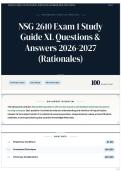
NSG 2610 EXAM 1 STUDY GUIDE XL QUESTIONS & ANSWERS 2026-2027 (RATIO… EXAM
P R O F E S S I O N A L P R A C T I C E M AT E R I A L S
NSG 2610 Exam 1 Study
Guide XL Questions &
Answers 2026-2027
(Rationales)
Verified Answers Exam Ready With Rationales
100 QUESTIONS
DOCUMENT OVERVIEW
This document contains 100 verified questions with correct answers and detailed rationales focused on
nursing concepts. Each question is crafted to enhance understanding and retention of key principles
relevant to the subject matter. It is suitable for exam preparation, comprehensive review, and certification
readiness, ensuring students grasp essential knowledge effectively.
CONTENTS
01 Respiratory Conditions Q1–Q13
02 Assessment Techniques Q14–Q26
03 Pulmonary Complications Q27–Q39
Page 1
, 04 Therapeutic Interventions Q40–Q52
05 Emergency Situations Q53–Q64
06 Oxygenation and Ventilation Q65–Q76
07 Monitoring and Diagnostics Q77–Q88
08 Asthma Management Q89–Q100
E XA M Q U EST I O N S
Q1 QUESTION 1 OF 100
Chronic bronchitis
CORRECT ANSWER
Cough and sputum for 3 months, 2 years.
RATIONALE
Chronic bronchitis is characterized by a persistent cough and production of sputum for at least three months in two
consecutive years, reflecting airway inflammation and mucus hypersecretion. This clinical definition differentiates it
from other respiratory conditions, emphasizing the duration and nature of symptoms.
Q2 QUESTION 2 OF 100
Diaphragmatic breathing
CORRECT ANSWER
Breathing technique to enhance lung inflation.
RATIONALE
Diaphragmatic breathing engages the diaphragm fully, increasing lung capacity and facilitating optimal gas
exchange by promoting greater lung inflation. This technique can improve oxygenation and reduce respiratory
effort, particularly beneficial in patients with respiratory conditions.
Page 2
, Q3 QUESTION 3 OF 100
Viral rhinitis
CORRECT ANSWER
Antibiotics only for bacterial infections.
RATIONALE
Viral rhinitis is caused by viruses, and antibiotics are ineffective against viral pathogens; they should only be
prescribed when a secondary bacterial infection complicates the initial viral illness, highlighting the importance of
distinguishing between viral and bacterial etiologies in treatment. This principle underscores the necessity of
appropriate antibiotic stewardship to prevent resistance.
Q4 QUESTION 4 OF 100
Pleurisy pain
CORRECT ANSWER
Knife-like pain worsens with coughing or deep breaths.
RATIONALE
Pleurisy involves inflammation of the pleura, leading to sharp, localized pain that intensifies with movement such as
coughing or deep inhalation due to the friction between the inflamed pleural layers. This characteristic pain pattern
is a key clinical indicator of pleuritic conditions, distinguishing it from other types of chest pain.
Q5 QUESTION 5 OF 100
Pneumothorax
CORRECT ANSWER
Presence of air in the pleural space.
RATIONALE
Presence of air in the pleural space disrupts the negative pressure required for lung expansion, leading to potential
respiratory compromise. Understanding this pathophysiology is critical for diagnosing and managing
pneumothorax effectively.
Page 3
, Q6 QUESTION 6 OF 100
COPD risk factors
CORRECT ANSWER
Tobacco smoke causes 80-90% of cases.
RATIONALE
Tobacco smoke contains harmful chemicals that lead to chronic inflammation and damage to lung tissue,
significantly increasing the risk of developing chronic obstructive pulmonary disease (COPD). Understanding this
primary risk factor highlights the importance of smoking cessation in prevention and management strategies for
COPD.
Q7 QUESTION 7 OF 100
Secondhand smoke
CORRECT ANSWER
Increases risk of developing respiratory diseases.
RATIONALE
Exposure to secondhand smoke contains numerous harmful chemicals that can initiate inflammatory responses and
damage lung tissue, leading to a higher incidence of respiratory diseases such as asthma and chronic obstructive
pulmonary disease. This highlights the detrimental effects of passive smoking on respiratory health.
Q8 QUESTION 8 OF 100
Pursed-lip breathing
CORRECT ANSWER
Technique to reduce CO₂ retention.
Page 4
P R O F E S S I O N A L P R A C T I C E M AT E R I A L S
NSG 2610 Exam 1 Study
Guide XL Questions &
Answers 2026-2027
(Rationales)
Verified Answers Exam Ready With Rationales
100 QUESTIONS
DOCUMENT OVERVIEW
This document contains 100 verified questions with correct answers and detailed rationales focused on
nursing concepts. Each question is crafted to enhance understanding and retention of key principles
relevant to the subject matter. It is suitable for exam preparation, comprehensive review, and certification
readiness, ensuring students grasp essential knowledge effectively.
CONTENTS
01 Respiratory Conditions Q1–Q13
02 Assessment Techniques Q14–Q26
03 Pulmonary Complications Q27–Q39
Page 1
, 04 Therapeutic Interventions Q40–Q52
05 Emergency Situations Q53–Q64
06 Oxygenation and Ventilation Q65–Q76
07 Monitoring and Diagnostics Q77–Q88
08 Asthma Management Q89–Q100
E XA M Q U EST I O N S
Q1 QUESTION 1 OF 100
Chronic bronchitis
CORRECT ANSWER
Cough and sputum for 3 months, 2 years.
RATIONALE
Chronic bronchitis is characterized by a persistent cough and production of sputum for at least three months in two
consecutive years, reflecting airway inflammation and mucus hypersecretion. This clinical definition differentiates it
from other respiratory conditions, emphasizing the duration and nature of symptoms.
Q2 QUESTION 2 OF 100
Diaphragmatic breathing
CORRECT ANSWER
Breathing technique to enhance lung inflation.
RATIONALE
Diaphragmatic breathing engages the diaphragm fully, increasing lung capacity and facilitating optimal gas
exchange by promoting greater lung inflation. This technique can improve oxygenation and reduce respiratory
effort, particularly beneficial in patients with respiratory conditions.
Page 2
, Q3 QUESTION 3 OF 100
Viral rhinitis
CORRECT ANSWER
Antibiotics only for bacterial infections.
RATIONALE
Viral rhinitis is caused by viruses, and antibiotics are ineffective against viral pathogens; they should only be
prescribed when a secondary bacterial infection complicates the initial viral illness, highlighting the importance of
distinguishing between viral and bacterial etiologies in treatment. This principle underscores the necessity of
appropriate antibiotic stewardship to prevent resistance.
Q4 QUESTION 4 OF 100
Pleurisy pain
CORRECT ANSWER
Knife-like pain worsens with coughing or deep breaths.
RATIONALE
Pleurisy involves inflammation of the pleura, leading to sharp, localized pain that intensifies with movement such as
coughing or deep inhalation due to the friction between the inflamed pleural layers. This characteristic pain pattern
is a key clinical indicator of pleuritic conditions, distinguishing it from other types of chest pain.
Q5 QUESTION 5 OF 100
Pneumothorax
CORRECT ANSWER
Presence of air in the pleural space.
RATIONALE
Presence of air in the pleural space disrupts the negative pressure required for lung expansion, leading to potential
respiratory compromise. Understanding this pathophysiology is critical for diagnosing and managing
pneumothorax effectively.
Page 3
, Q6 QUESTION 6 OF 100
COPD risk factors
CORRECT ANSWER
Tobacco smoke causes 80-90% of cases.
RATIONALE
Tobacco smoke contains harmful chemicals that lead to chronic inflammation and damage to lung tissue,
significantly increasing the risk of developing chronic obstructive pulmonary disease (COPD). Understanding this
primary risk factor highlights the importance of smoking cessation in prevention and management strategies for
COPD.
Q7 QUESTION 7 OF 100
Secondhand smoke
CORRECT ANSWER
Increases risk of developing respiratory diseases.
RATIONALE
Exposure to secondhand smoke contains numerous harmful chemicals that can initiate inflammatory responses and
damage lung tissue, leading to a higher incidence of respiratory diseases such as asthma and chronic obstructive
pulmonary disease. This highlights the detrimental effects of passive smoking on respiratory health.
Q8 QUESTION 8 OF 100
Pursed-lip breathing
CORRECT ANSWER
Technique to reduce CO₂ retention.
Page 4

