

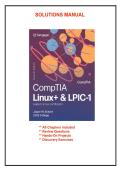
SOLUTIONS MANUAL
** All Chapters included
** Review Questions
** Hands-On Projects
** Discovery Exercises
,Table of Contents are given below
Chapter 1. Introduction to Linux
Chapter 2. Linux Installation and Usage
Chapter 3. Exploring Linux Filesystems
Chapter 4. Linux Filesystem Management
Chapter 5. Linux Filesystem Administration
Chapter 6. Linux Server Deployment
Chapter 7. Working with the Shell
Chapter 8. System Initialization, X Windows, and Localization
Chapter 9. Managing Linux Processes
Chapter 10. Common Administrative Tasks
Chapter 11. Compression, System Backup, and Software Installation
Chapter 12. Network Configuration
Chapter 13. Configuring Network Services and Cloud Technologies
Chapter 14. Security, Troubleshooting, and Performance
,Fehler! Verwenden Sie die Registerkarte 'Start', um Title dem Text zuzuweisen, der hier angezeigt werden soll.: Fehler! Verwenden Sie die Registerkarte 'Start', um
Book Title dem Text zuzuweisen, der hier angezeigt werden soll.
Solution and Answer Guide
JASON ECKERT , Linux+ and LPIC-1 Guide to Linux Certification, Seventh Edition 2027, 979-8214-
409962; CHAPTER 1: INTRODUCTION TO LINUX
TABLE OF CONTENTS
Review Questions ..............................................................................................................................1
Hands-On Projects .............................................................................................................................6
Discovery Exercises ............................................................................................................................6
Discovery Exercise 1-1 .............................................................................................................................. 6
Discovery Exercise 1-2 .............................................................................................................................. 6
Discovery Exercise 1-3w............................................................................................................................ 6
Discovery Exercise 1-4 .............................................................................................................................. 7
Discovery Exercise 1-5 .............................................................................................................................. 7
Discovery Exercise 1-6 .............................................................................................................................. 7
Discovery Exercise 1-7 .............................................................................................................................. 7
REVIEW QUESTIONS
1. Which of the following components comprise an operating system? (Choose all that apply.)
a. User interface
b. Kernel
c. Device drivers
d. Services
Answer: a, b, c, d
Explanation: An operating system is composed of a kernel and associated hardware drivers as well as
software (user interfaces, frameworks, libraries, services, and applications).
2. Which of the following kernels are development kernels? (Choose all that apply.)
a. 2.3.4
b. 4.5.5
c. 6.10-rc5
d. 7.0.0
Answer: a, c
Explanation: For early Linux kernels up to 2.6, odd minor numbers denoted a development kernel.
Later Linux kernels appended release candidate (rc) numbers to development kernels.
1
,Fehler! Verwenden Sie die Registerkarte 'Start', um Title dem Text zuzuweisen, der hier angezeigt werden soll.: Fehler! Verwenden Sie die Registerkarte 'Start', um
Book Title dem Text zuzuweisen, der hier angezeigt werden soll.
3. Many types of software are available today. Which type of software does Linux represent?
a. Open source
b. Closed source
c. Freeware
d. Shareware
Answer: a
Explanation: Linux is open source software.
4. Which of the following are characteristics of OSS? (Choose all that apply.)
a. The value of the software is directly related to its price.
b. The software is developed collaboratively.
c. The source code for software is available for a small fee.
d. Bugs are fixed quickly.
Answer: b, d
Explanation: Open source software is developed collaboratively, and source code is distributed free
of charge. As a result, bugs are fixed and new features added quickly.
5. To which license does Linux adhere?
a. BSD
b. MIT
c. GNU GPL
d. Apache
Answer: c
Explanation: Linux is licensed under the GNU General Public License (GPL).
6. What are some good reasons for using Linux in a corporate environment? (Choose all that apply.)
a. Linux software is unlikely to be abandoned by its developers.
b. Linux is secure and has a lower total cost of ownership than other operating systems.
c. Linux is widely available for many hardware platforms and supports many programming
languages.
d. Most Linux software is closed source.
Answer: a, b, c
Explanation: Because Linux is open source, it is supported for a long period of time, has greater
security and lower costs, and supports nearly all hardware platforms and programming languages.
7. Which of the following are common methods for gaining support for Linux?
a. Websites
b. Linux User Groups
c. Online forums
d. All these methods
Answer: d
Explanation: You can find Linux support online at many different websites and forums as well as at
local Linux User Groups (LUGs).
8. Which two people are credited with creating the UNIX operating system? (Choose two answers.)
2
** All Chapters included
** Review Questions
** Hands-On Projects
** Discovery Exercises
,Table of Contents are given below
Chapter 1. Introduction to Linux
Chapter 2. Linux Installation and Usage
Chapter 3. Exploring Linux Filesystems
Chapter 4. Linux Filesystem Management
Chapter 5. Linux Filesystem Administration
Chapter 6. Linux Server Deployment
Chapter 7. Working with the Shell
Chapter 8. System Initialization, X Windows, and Localization
Chapter 9. Managing Linux Processes
Chapter 10. Common Administrative Tasks
Chapter 11. Compression, System Backup, and Software Installation
Chapter 12. Network Configuration
Chapter 13. Configuring Network Services and Cloud Technologies
Chapter 14. Security, Troubleshooting, and Performance
,Fehler! Verwenden Sie die Registerkarte 'Start', um Title dem Text zuzuweisen, der hier angezeigt werden soll.: Fehler! Verwenden Sie die Registerkarte 'Start', um
Book Title dem Text zuzuweisen, der hier angezeigt werden soll.
Solution and Answer Guide
JASON ECKERT , Linux+ and LPIC-1 Guide to Linux Certification, Seventh Edition 2027, 979-8214-
409962; CHAPTER 1: INTRODUCTION TO LINUX
TABLE OF CONTENTS
Review Questions ..............................................................................................................................1
Hands-On Projects .............................................................................................................................6
Discovery Exercises ............................................................................................................................6
Discovery Exercise 1-1 .............................................................................................................................. 6
Discovery Exercise 1-2 .............................................................................................................................. 6
Discovery Exercise 1-3w............................................................................................................................ 6
Discovery Exercise 1-4 .............................................................................................................................. 7
Discovery Exercise 1-5 .............................................................................................................................. 7
Discovery Exercise 1-6 .............................................................................................................................. 7
Discovery Exercise 1-7 .............................................................................................................................. 7
REVIEW QUESTIONS
1. Which of the following components comprise an operating system? (Choose all that apply.)
a. User interface
b. Kernel
c. Device drivers
d. Services
Answer: a, b, c, d
Explanation: An operating system is composed of a kernel and associated hardware drivers as well as
software (user interfaces, frameworks, libraries, services, and applications).
2. Which of the following kernels are development kernels? (Choose all that apply.)
a. 2.3.4
b. 4.5.5
c. 6.10-rc5
d. 7.0.0
Answer: a, c
Explanation: For early Linux kernels up to 2.6, odd minor numbers denoted a development kernel.
Later Linux kernels appended release candidate (rc) numbers to development kernels.
1
,Fehler! Verwenden Sie die Registerkarte 'Start', um Title dem Text zuzuweisen, der hier angezeigt werden soll.: Fehler! Verwenden Sie die Registerkarte 'Start', um
Book Title dem Text zuzuweisen, der hier angezeigt werden soll.
3. Many types of software are available today. Which type of software does Linux represent?
a. Open source
b. Closed source
c. Freeware
d. Shareware
Answer: a
Explanation: Linux is open source software.
4. Which of the following are characteristics of OSS? (Choose all that apply.)
a. The value of the software is directly related to its price.
b. The software is developed collaboratively.
c. The source code for software is available for a small fee.
d. Bugs are fixed quickly.
Answer: b, d
Explanation: Open source software is developed collaboratively, and source code is distributed free
of charge. As a result, bugs are fixed and new features added quickly.
5. To which license does Linux adhere?
a. BSD
b. MIT
c. GNU GPL
d. Apache
Answer: c
Explanation: Linux is licensed under the GNU General Public License (GPL).
6. What are some good reasons for using Linux in a corporate environment? (Choose all that apply.)
a. Linux software is unlikely to be abandoned by its developers.
b. Linux is secure and has a lower total cost of ownership than other operating systems.
c. Linux is widely available for many hardware platforms and supports many programming
languages.
d. Most Linux software is closed source.
Answer: a, b, c
Explanation: Because Linux is open source, it is supported for a long period of time, has greater
security and lower costs, and supports nearly all hardware platforms and programming languages.
7. Which of the following are common methods for gaining support for Linux?
a. Websites
b. Linux User Groups
c. Online forums
d. All these methods
Answer: d
Explanation: You can find Linux support online at many different websites and forums as well as at
local Linux User Groups (LUGs).
8. Which two people are credited with creating the UNIX operating system? (Choose two answers.)
2

