

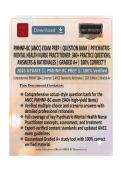
,PMHNP-BC (ANCC) Exam Prep Question Bank
Psychiatric-Mental Health Nurse Practitioner: 340+ Practice
Questions, Answers & Rationales
Exam Overview
The ANCC Psychiatric-Mental Health Nurse Practitioner (PMHNP-BC) certification exam
consists of 175 questions (150 scored, 25 pretest) to be completed in 3.5 hours. The
exam covers five domains:
Domain Questions Percentage Key Topics
Advanced pathophysiology,
I. Scientific pharmacology,
~30 20%
Foundation psychopharmacology,
neuroanatomy
II. Advanced Clinical interviewing, screening tools,
~38 25%
Practice Skills MSE, risk assessment
III. Diagnosis & DSM-5-TR criteria, differential
~37 25%
Treatment diagnosis, evidence-based treatment
IV. Psychotherapy Psychotherapy principles, change
~22 15%
& Theories theories, therapeutic alliance
V. Ethical & Legal Confidentiality, scope of practice,
~23 15%
Principles ethics, cultural care
, Domain I: Scientific Foundation (68 Questions)
1. A 45-year-old patient with major depressive disorder reports anhedonia,
psychomotor retardation, and early morning awakening. Which neurotransmitter
imbalance is most strongly associated with this presentation?
• A. Dopamine excess in the mesolimbic pathway
• B. Serotonin and norepinephrine deficiency
• C. GABA excess in the prefrontal cortex
• D. Acetylcholine deficiency in the basal forebrain
Answer: B. Serotonin and norepinephrine deficiency
Rationale: Major depressive disorder is primarily associated with deficiencies in serotonin
and norepinephrine. The classic symptoms of anhedonia, psychomotor retardation, and
early morning awakening reflect this imbalance. Dopamine excess is associated with
schizophrenia; GABA excess with sedation; acetylcholine deficiency with dementia.
2. A 28-year-old patient with schizophrenia on haloperidol for 6 months develops
involuntary tongue movements and lip smacking. Which pathophysiological
mechanism explains this side effect?
• A. Serotonin syndrome
• B. Dopamine receptor supersensitivity in the nigrostriatal pathway
• C. Norepinephrine depletion in the locus coeruleus
• D. Acetylcholine excess in the basal ganglia
Answer: B. Dopamine receptor supersensitivity in the nigrostriatal pathway
Rationale: Tardive dyskinesia results from chronic dopamine receptor blockade in the
nigrostriatal pathway, leading to receptor supersensitivity and abnormal involuntary
movements. Serotonin syndrome presents with agitation and hyperthermia;
norepinephrine and acetylcholine are not primary in this mechanism.
, 3. A 62-year-old patient with Alzheimer's disease is prescribed donepezil. Which
neurotransmitter system does this medication primarily affect?
• A. Dopamine
• B. Serotonin
• C. Acetylcholine
• D. GABA
Answer: C. Acetylcholine
Rationale: Donepezil is a cholinesterase inhibitor that increases acetylcholine availability
in the synaptic cleft. Alzheimer's disease is associated with cholinergic deficits in the basal
forebrain. Dopamine is targeted in Parkinson's; serotonin in depression; GABA in anxiety.
4. A patient with bipolar disorder is started on lithium. The PMHNP explains that
lithium's mechanism of action involves:
• A. Blockade of dopamine D2 receptors
• B. Inhibition of inositol monophosphatase and glycogen synthase kinase-3 (GSK-3)
• C. Enhancement of GABA activity at GABA-A receptors
• D. Reuptake inhibition of serotonin and norepinephrine
Answer: B. Inhibition of inositol monophosphatase and glycogen synthase kinase-
3 (GSK-3)
Rationale: Lithium's primary mechanisms include inhibition of inositol monophosphatase
(affecting the phosphatidylinositol cycle) and GSK-3, which stabilizes mood. D2 blockade is
typical of antipsychotics; GABA enhancement is seen with benzodiazepines; serotonin
reuptake inhibition is seen with SSRIs.
5. A 34-year-old patient presents with auditory hallucinations, delusions, and
disorganized speech. Which brain region is most implicated in the positive
symptoms of schizophrenia?
• A. Prefrontal cortex (hypoactivity)
• B. Mesolimbic pathway (dopamine hyperactivity)
Psychiatric-Mental Health Nurse Practitioner: 340+ Practice
Questions, Answers & Rationales
Exam Overview
The ANCC Psychiatric-Mental Health Nurse Practitioner (PMHNP-BC) certification exam
consists of 175 questions (150 scored, 25 pretest) to be completed in 3.5 hours. The
exam covers five domains:
Domain Questions Percentage Key Topics
Advanced pathophysiology,
I. Scientific pharmacology,
~30 20%
Foundation psychopharmacology,
neuroanatomy
II. Advanced Clinical interviewing, screening tools,
~38 25%
Practice Skills MSE, risk assessment
III. Diagnosis & DSM-5-TR criteria, differential
~37 25%
Treatment diagnosis, evidence-based treatment
IV. Psychotherapy Psychotherapy principles, change
~22 15%
& Theories theories, therapeutic alliance
V. Ethical & Legal Confidentiality, scope of practice,
~23 15%
Principles ethics, cultural care
, Domain I: Scientific Foundation (68 Questions)
1. A 45-year-old patient with major depressive disorder reports anhedonia,
psychomotor retardation, and early morning awakening. Which neurotransmitter
imbalance is most strongly associated with this presentation?
• A. Dopamine excess in the mesolimbic pathway
• B. Serotonin and norepinephrine deficiency
• C. GABA excess in the prefrontal cortex
• D. Acetylcholine deficiency in the basal forebrain
Answer: B. Serotonin and norepinephrine deficiency
Rationale: Major depressive disorder is primarily associated with deficiencies in serotonin
and norepinephrine. The classic symptoms of anhedonia, psychomotor retardation, and
early morning awakening reflect this imbalance. Dopamine excess is associated with
schizophrenia; GABA excess with sedation; acetylcholine deficiency with dementia.
2. A 28-year-old patient with schizophrenia on haloperidol for 6 months develops
involuntary tongue movements and lip smacking. Which pathophysiological
mechanism explains this side effect?
• A. Serotonin syndrome
• B. Dopamine receptor supersensitivity in the nigrostriatal pathway
• C. Norepinephrine depletion in the locus coeruleus
• D. Acetylcholine excess in the basal ganglia
Answer: B. Dopamine receptor supersensitivity in the nigrostriatal pathway
Rationale: Tardive dyskinesia results from chronic dopamine receptor blockade in the
nigrostriatal pathway, leading to receptor supersensitivity and abnormal involuntary
movements. Serotonin syndrome presents with agitation and hyperthermia;
norepinephrine and acetylcholine are not primary in this mechanism.
, 3. A 62-year-old patient with Alzheimer's disease is prescribed donepezil. Which
neurotransmitter system does this medication primarily affect?
• A. Dopamine
• B. Serotonin
• C. Acetylcholine
• D. GABA
Answer: C. Acetylcholine
Rationale: Donepezil is a cholinesterase inhibitor that increases acetylcholine availability
in the synaptic cleft. Alzheimer's disease is associated with cholinergic deficits in the basal
forebrain. Dopamine is targeted in Parkinson's; serotonin in depression; GABA in anxiety.
4. A patient with bipolar disorder is started on lithium. The PMHNP explains that
lithium's mechanism of action involves:
• A. Blockade of dopamine D2 receptors
• B. Inhibition of inositol monophosphatase and glycogen synthase kinase-3 (GSK-3)
• C. Enhancement of GABA activity at GABA-A receptors
• D. Reuptake inhibition of serotonin and norepinephrine
Answer: B. Inhibition of inositol monophosphatase and glycogen synthase kinase-
3 (GSK-3)
Rationale: Lithium's primary mechanisms include inhibition of inositol monophosphatase
(affecting the phosphatidylinositol cycle) and GSK-3, which stabilizes mood. D2 blockade is
typical of antipsychotics; GABA enhancement is seen with benzodiazepines; serotonin
reuptake inhibition is seen with SSRIs.
5. A 34-year-old patient presents with auditory hallucinations, delusions, and
disorganized speech. Which brain region is most implicated in the positive
symptoms of schizophrenia?
• A. Prefrontal cortex (hypoactivity)
• B. Mesolimbic pathway (dopamine hyperactivity)

