6.1 Enzymes Are Powerful and Highly Specific Catalysts
Learning goal: Explain why enzymes are versatile biological catalysts.
Answer: Enzymes are highly effective catalysts because they can accelerate reaction rates by
factors of up to 106 or more. For example, carbonic anhydrase hydrates 106 CO2 molecules per
second, making the reaction 107 times faster than uncatalyzed. This efficiency ensures reactions
occur at biologically relevant speeds, which is essential for processes like CO 2 transport from
tissues to lungs.
Learning goal: Appreciate that catalytic power and specificity are critical characteristics of enzymes. Give examples of the rate enhancements of
enzymes and the substrate selectivity they display.
Answer:
Catalytic Power: Enzymes significantly enhance reaction rates, often by millions of times.
• Example: Carbonic anhydrase’s acceleration of CO2 hydration.
Specificity: Enzymes are highly specific to their substrates and reactions.
• Examples of substrate selectivity:
o Papain: Broad specificity and cleaves any peptide bond.
o Trypsin: Cleaves peptide bonds only on the carboxyl side of lysine or arginine.
o Thrombin: Highly specific, cleaving Arg–Gly bonds in specific peptide sequences.
• Specificity arises from precise interactions between the enzyme’s active site
and the substrate, determined by the enzyme’s three-dimensional structure.
Learning goal: Realize that both protein and RNA molecules are enzymes.
Answer: While most enzymes are proteins, RNA molecules can also serve as enzymes, known as ribozymes. These RNA-based catalysts
demonstrate that the catalytic ability is not restricted to proteins.
Learning goal: Provide examples of proteases with diverse substrate specificity and explain how substrate
specificity arises from precise interactions of the enzyme with the substrate.
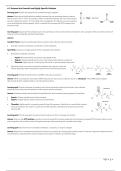
Answer: Proteases catalyse the hydrolysis of peptide bonds, demonstrating varying degrees of specificity:
• Papain: Cleaves peptide bonds indiscriminately.
• Trypsin: Targets specific residues (lysine and arginine) (A).
• Thrombin: Highly specific, recognizing specific Arg–Gly sequences. Specificity is a result of the intricate
interaction between the enzyme's active site and the substrate, tailored by the enzyme's precise 3D
structure (B).
Learning goal: Provide examples of enzymes that transduce one form of energy into another.
Answer: Enzymes like ATP synthase transduce chemical energy (from proton gradients) into biochemical energy (ATP). Enzymes often convert
one energy form into another to drive biological processes, demonstrating their versatile functionality.
Learning goal: Describe the role of catalytic antibodies, or abzymes, in enzyme catalysis.
Answer: Abzymes are antibodies engineered to function as enzymes. By mimicking the transition state of a reaction, abzymes catalyze chemical
transformations, expanding the scope of enzyme functionality in medicine and biotechnology.
1|Page
,Learning goal: Describe the 6 classes of enzymes. Be able to classify an enzyme in its class.
Answer:
1. Oxidoreductases: Transfer electrons (oxidation-reduction reactions).
• Example: Lactate dehydrogenase.
2. Transferases: Transfer functional groups.
• Example: Aminotransferases in amino acid metabolism.
3. Hydrolyases: Cleave bonds using water.
• Example: Trypsin.
4. Lyases: Add/remove atoms or groups to form double bonds.
• Example: Fumarase in aerobic metabolism.
5. Isomerases: Rearrange atoms within molecules.
• Example: Triose phosphate isomerase in glycolysis.
6. Ligases: Join two molecules using ATP hydrolysis.
• Example: DNA ligase in DNA replication.
6.2 Many Enzymes Require Cofactors for Activity
Learning goal: Define substrate, cofactor, prosthetic group, apoenzyme, and holoenzyme. Relate vitamins to cofactors.
Answer:
• Substrate: The reactant molecule(s) upon which an enzyme acts.
• Cofactor: A non-protein component required for enzyme activity. There are different types of cofactors:
1) Coenzymes: Organic molecules (e.g., vitamins-derived NAD+).
2) Metals: Inorganic ions (e.g., Zn2+, Mg2+).
• Prosthetic Group: A tightly bound coenzyme or metal ion integral to enzyme activity.
• Apoenzyme: An inactive enzyme lacking its cofactor.
• Holoenzyme: The active enzyme-cofactor complex.
• Relation to Vitamins: Many coenzymes are derived from vitamins, underscoring their essential role in enzyme function. For example, NAD +
(from niacin) participates in oxidation-reduction reactions.
Question 1: The catalytic activity of many enzymes depends on the presence of small molecules named cofactors. What term describes an
enzyme without its required cofactor?
a. Holoenzyme
b. Isozyme
c. Apoenzyme
d. Coenzyme
Answer: Apoenzyme. Keep in mind: apoenzyme + cofactor = holoenzyme.
Question 2A: Finish the sentences with the following enzymes: OMP decarboxylase, Carbonic anhydrase, AMP-nucleosidase and Ketosteroid-
isomerase. From all the enzymes, _1_ as the highest rate enhancement (meaning that it speeds up the reaction the most effectively). However,
_2_ is the fastest enzyme because it has the highest catalyzed rate. This is because the reaction that _3_ catalyzes is extremely slow if uncatalyzed.
Answer:
1. OMP decarboxylase
2. Carbonic anhydrase
3. OMP decarboxylase
Question 2B: Are all enzymes known as proteins?
Answer: No. RNA molecules can also be enzymes.
2|Page
, Question 2C: Do all enzymes bind substrates with high specificity?
Answer: Yes.
Question 2D: Do all enzymes use hydrophobic interactions exclusively in binding substrates?
Answer: No. Enzymes can use both hydrophobic and hydrophilic interactions in binding substrates.
Enzymes accelerate reactions by factors as much as a million or more. They bind substrates with high specificity, and their catalytic activity is often
regulated. The catalytic activity of many enzymes depends on the presence of small molecules named cofactors.
Question 3A: What is a tightly bound coenzyme for an enzyme often called?
1. Prosthetic group
2. Co-substrate
3. Allosteric activator
4. Inorganic cofactor
Answer: Tightly bound coenzymes are called prosthetic groups. Loosely associated coenzymes are more likely to be co-substrates.
Question 3B: Categorize the enzymes: glyceraldehyde-3-phosphate dehydrogenase (EC 1.2.1.9), hexokinase (EC 2.7.1.1), chymotrypsin (EC
3.4.21.1), enolase (EC 4.2.1.11), medium-chain acyl-CoA ligase (EC 6.2.1.2), glucose-6-phosphate isomerase (EC 5.3.1.9). Their EC number is
added as a hint. Categories: oxidoreductases, transferases, hydrolases, lyases, isomerase and ligases.
Answer:
• Glyceraldehyde-3-phosphate dehydrogenase (EC 1.2.1.9) → oxidoreductases
• Hexokinase (EC 2.7.1.1) → transferases
• Chymotrypsin (EC 3.4.21.1) → hydrolases
• Enolase (EC 4.2.1.11) → lyases
• Glucose-6-phosphate isomerase (EC 5.3.1.9) → isomerase
• Medium-chain acyl-CoA ligase (EC 6.2.1.2) → ligases
6.3 Gibbs Free Energy Is a Useful Thermodynamic Function for Understanding Enzymes
Learning goal: Describe how ΔG can be used to predict whether a reaction can occur spontaneously.
Answer: ΔG (Gibbs free energy change) determines whether a reaction can occur spontaneously:
• If ΔG < 0 (negative) → reaction is spontaneous (exergonic) and releases energy.
• If ΔG > 0 (positive) → reaction is non-spontaneous (endergonic) and requires energy input.
• If ΔG = 0 → the reaction is at equilibrium, meaning no net change occurs in reactants or products.
Key Concept: ΔG depends only on the free energy difference between products and reactants, not on how the reaction occurs. Example: The
combustion of glucose and its breakdown in cells via enzymatic steps have the same ΔG but different reaction rates.
Learning goal: Write the equation for the ΔG of a chemical reaction. Define the standard free-energy change (ΔGº); define ΔG and ΔGº′.
Interconvert kilojoules and kilocalories.
Answer: The free energy change of a reaction is given by:
• ΔG = actual free-energy change under cellular conditions.
• ΔGº = standard free-energy change (when reactants/products are at 1M concentration, 298K temperature, and 1 atm pressure).
• ΔGº' = standard free-energy change at pH 7 (used in biochemistry).
• R = gas constant (8.315 × 10⁻³ kJ/mol·K).
• T = temperature (298 K or 25°C).
Unit conversions:
• 1 kJ = 0.239 kcal
• 1 kcal = 4.184 kJ
3|Page
Learning goal: Explain why enzymes are versatile biological catalysts.
Answer: Enzymes are highly effective catalysts because they can accelerate reaction rates by
factors of up to 106 or more. For example, carbonic anhydrase hydrates 106 CO2 molecules per
second, making the reaction 107 times faster than uncatalyzed. This efficiency ensures reactions
occur at biologically relevant speeds, which is essential for processes like CO 2 transport from
tissues to lungs.
Learning goal: Appreciate that catalytic power and specificity are critical characteristics of enzymes. Give examples of the rate enhancements of
enzymes and the substrate selectivity they display.
Answer:
Catalytic Power: Enzymes significantly enhance reaction rates, often by millions of times.
• Example: Carbonic anhydrase’s acceleration of CO2 hydration.
Specificity: Enzymes are highly specific to their substrates and reactions.
• Examples of substrate selectivity:
o Papain: Broad specificity and cleaves any peptide bond.
o Trypsin: Cleaves peptide bonds only on the carboxyl side of lysine or arginine.
o Thrombin: Highly specific, cleaving Arg–Gly bonds in specific peptide sequences.
• Specificity arises from precise interactions between the enzyme’s active site
and the substrate, determined by the enzyme’s three-dimensional structure.
Learning goal: Realize that both protein and RNA molecules are enzymes.
Answer: While most enzymes are proteins, RNA molecules can also serve as enzymes, known as ribozymes. These RNA-based catalysts
demonstrate that the catalytic ability is not restricted to proteins.
Learning goal: Provide examples of proteases with diverse substrate specificity and explain how substrate
specificity arises from precise interactions of the enzyme with the substrate.
Answer: Proteases catalyse the hydrolysis of peptide bonds, demonstrating varying degrees of specificity:
• Papain: Cleaves peptide bonds indiscriminately.
• Trypsin: Targets specific residues (lysine and arginine) (A).
• Thrombin: Highly specific, recognizing specific Arg–Gly sequences. Specificity is a result of the intricate
interaction between the enzyme's active site and the substrate, tailored by the enzyme's precise 3D
structure (B).
Learning goal: Provide examples of enzymes that transduce one form of energy into another.
Answer: Enzymes like ATP synthase transduce chemical energy (from proton gradients) into biochemical energy (ATP). Enzymes often convert
one energy form into another to drive biological processes, demonstrating their versatile functionality.
Learning goal: Describe the role of catalytic antibodies, or abzymes, in enzyme catalysis.
Answer: Abzymes are antibodies engineered to function as enzymes. By mimicking the transition state of a reaction, abzymes catalyze chemical
transformations, expanding the scope of enzyme functionality in medicine and biotechnology.
1|Page
,Learning goal: Describe the 6 classes of enzymes. Be able to classify an enzyme in its class.
Answer:
1. Oxidoreductases: Transfer electrons (oxidation-reduction reactions).
• Example: Lactate dehydrogenase.
2. Transferases: Transfer functional groups.
• Example: Aminotransferases in amino acid metabolism.
3. Hydrolyases: Cleave bonds using water.
• Example: Trypsin.
4. Lyases: Add/remove atoms or groups to form double bonds.
• Example: Fumarase in aerobic metabolism.
5. Isomerases: Rearrange atoms within molecules.
• Example: Triose phosphate isomerase in glycolysis.
6. Ligases: Join two molecules using ATP hydrolysis.
• Example: DNA ligase in DNA replication.
6.2 Many Enzymes Require Cofactors for Activity
Learning goal: Define substrate, cofactor, prosthetic group, apoenzyme, and holoenzyme. Relate vitamins to cofactors.
Answer:
• Substrate: The reactant molecule(s) upon which an enzyme acts.
• Cofactor: A non-protein component required for enzyme activity. There are different types of cofactors:
1) Coenzymes: Organic molecules (e.g., vitamins-derived NAD+).
2) Metals: Inorganic ions (e.g., Zn2+, Mg2+).
• Prosthetic Group: A tightly bound coenzyme or metal ion integral to enzyme activity.
• Apoenzyme: An inactive enzyme lacking its cofactor.
• Holoenzyme: The active enzyme-cofactor complex.
• Relation to Vitamins: Many coenzymes are derived from vitamins, underscoring their essential role in enzyme function. For example, NAD +
(from niacin) participates in oxidation-reduction reactions.
Question 1: The catalytic activity of many enzymes depends on the presence of small molecules named cofactors. What term describes an
enzyme without its required cofactor?
a. Holoenzyme
b. Isozyme
c. Apoenzyme
d. Coenzyme
Answer: Apoenzyme. Keep in mind: apoenzyme + cofactor = holoenzyme.
Question 2A: Finish the sentences with the following enzymes: OMP decarboxylase, Carbonic anhydrase, AMP-nucleosidase and Ketosteroid-
isomerase. From all the enzymes, _1_ as the highest rate enhancement (meaning that it speeds up the reaction the most effectively). However,
_2_ is the fastest enzyme because it has the highest catalyzed rate. This is because the reaction that _3_ catalyzes is extremely slow if uncatalyzed.
Answer:
1. OMP decarboxylase
2. Carbonic anhydrase
3. OMP decarboxylase
Question 2B: Are all enzymes known as proteins?
Answer: No. RNA molecules can also be enzymes.
2|Page
, Question 2C: Do all enzymes bind substrates with high specificity?
Answer: Yes.
Question 2D: Do all enzymes use hydrophobic interactions exclusively in binding substrates?
Answer: No. Enzymes can use both hydrophobic and hydrophilic interactions in binding substrates.
Enzymes accelerate reactions by factors as much as a million or more. They bind substrates with high specificity, and their catalytic activity is often
regulated. The catalytic activity of many enzymes depends on the presence of small molecules named cofactors.
Question 3A: What is a tightly bound coenzyme for an enzyme often called?
1. Prosthetic group
2. Co-substrate
3. Allosteric activator
4. Inorganic cofactor
Answer: Tightly bound coenzymes are called prosthetic groups. Loosely associated coenzymes are more likely to be co-substrates.
Question 3B: Categorize the enzymes: glyceraldehyde-3-phosphate dehydrogenase (EC 1.2.1.9), hexokinase (EC 2.7.1.1), chymotrypsin (EC
3.4.21.1), enolase (EC 4.2.1.11), medium-chain acyl-CoA ligase (EC 6.2.1.2), glucose-6-phosphate isomerase (EC 5.3.1.9). Their EC number is
added as a hint. Categories: oxidoreductases, transferases, hydrolases, lyases, isomerase and ligases.
Answer:
• Glyceraldehyde-3-phosphate dehydrogenase (EC 1.2.1.9) → oxidoreductases
• Hexokinase (EC 2.7.1.1) → transferases
• Chymotrypsin (EC 3.4.21.1) → hydrolases
• Enolase (EC 4.2.1.11) → lyases
• Glucose-6-phosphate isomerase (EC 5.3.1.9) → isomerase
• Medium-chain acyl-CoA ligase (EC 6.2.1.2) → ligases
6.3 Gibbs Free Energy Is a Useful Thermodynamic Function for Understanding Enzymes
Learning goal: Describe how ΔG can be used to predict whether a reaction can occur spontaneously.
Answer: ΔG (Gibbs free energy change) determines whether a reaction can occur spontaneously:
• If ΔG < 0 (negative) → reaction is spontaneous (exergonic) and releases energy.
• If ΔG > 0 (positive) → reaction is non-spontaneous (endergonic) and requires energy input.
• If ΔG = 0 → the reaction is at equilibrium, meaning no net change occurs in reactants or products.
Key Concept: ΔG depends only on the free energy difference between products and reactants, not on how the reaction occurs. Example: The
combustion of glucose and its breakdown in cells via enzymatic steps have the same ΔG but different reaction rates.
Learning goal: Write the equation for the ΔG of a chemical reaction. Define the standard free-energy change (ΔGº); define ΔG and ΔGº′.
Interconvert kilojoules and kilocalories.
Answer: The free energy change of a reaction is given by:
• ΔG = actual free-energy change under cellular conditions.
• ΔGº = standard free-energy change (when reactants/products are at 1M concentration, 298K temperature, and 1 atm pressure).
• ΔGº' = standard free-energy change at pH 7 (used in biochemistry).
• R = gas constant (8.315 × 10⁻³ kJ/mol·K).
• T = temperature (298 K or 25°C).
Unit conversions:
• 1 kJ = 0.239 kcal
• 1 kcal = 4.184 kJ
3|Page