

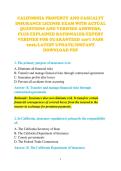
CALIFORNIA PROPERTY AND CASUALTY
INSURANCE LICENSE EXAM WITH ACTUAL
QUESTIONS AND VERIFIED ANSWERS,
PLUS EXPLAINED RATIONALES/EXPERT
VERIFIED FOR GUARANTEED 100% PASS
2026/LATEST UPDATE/INSTANT
DOWNLOAD PDF
1. The primary purpose of insurance is to:
A. Eliminate all financial risks
B. Transfer and manage financial risks through contractual agreements
C. Guarantee profits after losses
D. Prevent all accidents from occurring
Answer: B. Transfer and manage financial risks through
contractual agreements
Rationale: Insurance does not eliminate risk. It transfers certain
financial consequences of covered losses from the insured to the
insurer in exchange for premium payments.
2. In California, insurance regulation is primarily the responsibility
of:
A. The California Secretary of State
B. The California Department of Insurance
C. County governments
D. The Federal Trade Commission
Answer: B. The California Department of Insurance
1
,Rationale: The California Department of Insurance regulates
insurers, producers, licensing, consumer protection, and insurance
practices within the state.
3. An insurance contract is considered a contract of:
A. Guarantee
B. Indemnity
C. Employment
D. Investment
Answer: B. Indemnity
Rationale: Most property and casualty insurance contracts are
contracts of indemnity, meaning they are designed to restore the
insured financially after a covered loss rather than create profit.
4. The principle of indemnity means:
A. The insured should profit from a loss
B. The insurer should pay unlimited amounts
C. The insured should be restored financially to approximately the
position before the loss
D. The insured should receive payment regardless of coverage
Answer: C. The insured should be restored financially to
approximately the position before the loss
Rationale: Indemnity prevents insured individuals from benefiting
financially from insurance claims.
5. Which element is required for a valid insurance contract?
2
,A. Legal purpose
B. Guaranteed claim payment
C. No written agreement
D. Unlimited coverage
Answer: A. Legal purpose
Rationale: A valid contract requires legal purpose, offer and
acceptance, consideration, competent parties, and mutual agreement.
6. The person who purchases an insurance policy is generally called
the:
A. Beneficiary
B. Insured
C. Adjuster
D. Underwriter
Answer: B. Insured
Rationale: The insured is the person or entity protected under the
insurance contract.
7. The insurer’s promise to provide coverage is called:
A. Consideration
B. Representation
C. Insuring agreement
D. Warranty
Answer: C. Insuring agreement
Rationale: The insuring agreement describes the insurer’s obligation
to provide protection according to policy terms.
3
, 8. A premium is:
A. The amount paid for insurance coverage
B. The amount of a claim payment
C. A penalty charged after a loss
D. A policy exclusion
Answer: A. The amount paid for insurance coverage
Rationale: Premiums are payments made by insureds in exchange for
insurance protection.
9. An insurance deductible is:
A. The amount the insurer always pays first
B. The portion of a covered loss paid by the insured before insurance
responds
C. A policy cancellation fee
D. A commission paid to agents
Answer: B. The portion of a covered loss paid by the insured before
insurance responds
Rationale: Deductibles require the insured to absorb part of the loss,
reducing small claims and affecting premiums.
10. The principle of utmost good faith requires:
A. Both parties to act honestly and disclose important information
B. Insurers to approve every claim
C. Insureds to accept all settlements
D. Agents to guarantee coverage
Answer: A. Both parties to act honestly and disclose important
information
4
INSURANCE LICENSE EXAM WITH ACTUAL
QUESTIONS AND VERIFIED ANSWERS,
PLUS EXPLAINED RATIONALES/EXPERT
VERIFIED FOR GUARANTEED 100% PASS
2026/LATEST UPDATE/INSTANT
DOWNLOAD PDF
1. The primary purpose of insurance is to:
A. Eliminate all financial risks
B. Transfer and manage financial risks through contractual agreements
C. Guarantee profits after losses
D. Prevent all accidents from occurring
Answer: B. Transfer and manage financial risks through
contractual agreements
Rationale: Insurance does not eliminate risk. It transfers certain
financial consequences of covered losses from the insured to the
insurer in exchange for premium payments.
2. In California, insurance regulation is primarily the responsibility
of:
A. The California Secretary of State
B. The California Department of Insurance
C. County governments
D. The Federal Trade Commission
Answer: B. The California Department of Insurance
1
,Rationale: The California Department of Insurance regulates
insurers, producers, licensing, consumer protection, and insurance
practices within the state.
3. An insurance contract is considered a contract of:
A. Guarantee
B. Indemnity
C. Employment
D. Investment
Answer: B. Indemnity
Rationale: Most property and casualty insurance contracts are
contracts of indemnity, meaning they are designed to restore the
insured financially after a covered loss rather than create profit.
4. The principle of indemnity means:
A. The insured should profit from a loss
B. The insurer should pay unlimited amounts
C. The insured should be restored financially to approximately the
position before the loss
D. The insured should receive payment regardless of coverage
Answer: C. The insured should be restored financially to
approximately the position before the loss
Rationale: Indemnity prevents insured individuals from benefiting
financially from insurance claims.
5. Which element is required for a valid insurance contract?
2
,A. Legal purpose
B. Guaranteed claim payment
C. No written agreement
D. Unlimited coverage
Answer: A. Legal purpose
Rationale: A valid contract requires legal purpose, offer and
acceptance, consideration, competent parties, and mutual agreement.
6. The person who purchases an insurance policy is generally called
the:
A. Beneficiary
B. Insured
C. Adjuster
D. Underwriter
Answer: B. Insured
Rationale: The insured is the person or entity protected under the
insurance contract.
7. The insurer’s promise to provide coverage is called:
A. Consideration
B. Representation
C. Insuring agreement
D. Warranty
Answer: C. Insuring agreement
Rationale: The insuring agreement describes the insurer’s obligation
to provide protection according to policy terms.
3
, 8. A premium is:
A. The amount paid for insurance coverage
B. The amount of a claim payment
C. A penalty charged after a loss
D. A policy exclusion
Answer: A. The amount paid for insurance coverage
Rationale: Premiums are payments made by insureds in exchange for
insurance protection.
9. An insurance deductible is:
A. The amount the insurer always pays first
B. The portion of a covered loss paid by the insured before insurance
responds
C. A policy cancellation fee
D. A commission paid to agents
Answer: B. The portion of a covered loss paid by the insured before
insurance responds
Rationale: Deductibles require the insured to absorb part of the loss,
reducing small claims and affecting premiums.
10. The principle of utmost good faith requires:
A. Both parties to act honestly and disclose important information
B. Insurers to approve every claim
C. Insureds to accept all settlements
D. Agents to guarantee coverage
Answer: A. Both parties to act honestly and disclose important
information
4

