

Escrito por estudiantes que aprobaron Inmediatamente disponible después del pago Leer en línea o como PDF ¿Documento equivocado? Cámbialo gratis 4,6 TrustPilot
logo-home
Document preview thumbnail
Vista previa 2 fuera de 14 páginas
Examen

NUR 661 Exam 1 2026 | 180+ Practice Questions & Verified Answers | Key Topics: Psychotherapy, EMDR, Motivational Interviewing, Personality Disorders, Defense Mechanisms & Neurobiology | Maryville University

Document preview thumbnail
Vista previa 2 fuera de 14 páginas

Prepare for Maryville University NUR 661 Exam 1 with this comprehensive 2026 study guide featuring 180+ expertly verified practice questions and detailed answers covering the core concepts of advanced psychiatric-mental health nursing and psychotherapy. Designed specifically for students enrolled in NUR 661, this resource provides an in-depth review of foundational theories, therapeutic communication, neurobiology, psychodynamic principles, motivational interviewing, trauma-informed care, personality disorders, cognitive behavioral interventions, and evidence-based psychiatric nursing practice. The structured question-and-answer format strengthens clinical reasoning, reinforces examination concepts, and prepares graduate nursing students for classroom assessments and advanced clinical practice. This exam preparation guide closely follows the learning objectives commonly assessed in NUR 661, providing comprehensive coverage of Benner's Stages of Learning, neuroplasticity, resilience, the biomedical-holistic model, Adaptive Information Processing (AIP) Model, Diathesis-Stress Model, neurotransmitters (dopamine, serotonin, GABA, glutamate, acetylcholine, cortisol), defense mechanisms, therapeutic communication techniques, motivational interviewing (OARS and Stages of Change), Cognitive Behavioral Therapy (CBT), cognitive restructuring, psychodynamic therapy, supportive psychotherapy, expressive psychotherapy, EMDR, trauma-focused CBT, interpersonal therapy, Gestalt therapy, transference, countertransference, projective identification, mindfulness, personality disorders, Freud's psychosexual stages, therapeutic alliance, therapeutic questioning, and evidence-based interventions for trauma, anxiety, addiction, depression, and personality disorders. The practice questions emphasize application of psychiatric nursing concepts and clinical decision-making expected in graduate-level psychiatric nursing education. The content aligns with contemporary psychiatric-mental health nursing education and incorporates evidence-based concepts from the American Psychiatric Association (APA), the Diagnostic and Statistical Manual of Mental Disorders (DSM-5-TR), the American Nurses Association (ANA), and current psychotherapy literature. Key concepts reflect nationally recognized standards in advanced psychiatric assessment, psychotherapy modalities, trauma-informed care, motivational interviewing, cognitive behavioral therapy, interpersonal psychotherapy, neurobiology, and therapeutic communication. This study guide is an excellent resource for graduate nursing students preparing for NUR 661 examinations, Psychiatric-Mental Health Nurse Practitioner (PMHNP) coursework, and advanced clinical practice. Relevant for Students: Maryville University NUR 661 students Psychiatric-Mental Health Nurse Practitioner (PMHNP) students Master of Science in Nursing (MSN) students Doctor of Nursing Practice (DNP) students Advanced Practice Registered Nurse (APRN) students Psychiatric Nursing students Mental Health Nursing students Advanced Health Assessment students Graduate Nursing students Behavioral Health students Psychotherapy students Healthcare professionals specializing in psychiatric-mental health nursing References: American Psychiatric Association. (2022). Diagnostic and Statistical Manual of Mental Disorders (DSM-5-TR). American Psychiatric Publishing. American Nurses Association. (2022). Psychiatric-Mental Health Nursing: Scope and Standards of Practice (3rd ed.). Benner, P. (1984). From Novice to Expert: Excellence and Power in Clinical Nursing Practice. Addison-Wesley. Shapiro, F. (2018). Eye Movement Desensitization and Reprocessing (EMDR) Therapy: Basic Principles, Protocols, and Procedures (3rd ed.). Guilford Press. Miller, W. R., & Rollnick, S. (2023). Motivational Interviewing: Helping People Change (4th ed.). Guilford Press. Beck, J. S. (2021). Cognitive Behavior Therapy: Basics and Beyond (3rd ed.). Guilford Press. Keywords: NUR 661, Maryville University, NUR 661 Exam 1, psychiatric mental health nursing, PMHNP, psychotherapy, Benner model, novice to expert, neuroplasticity, resilience, biomedical holistic model, Adaptive Information Processing Model, AIP model, Diathesis Stress Model, dopamine, serotonin, GABA, glutamate, acetylcholine, cortisol, defense mechanisms, transference, countertransference, motivational interviewing, OARS, stages of change, CBT, cognitive behavioral therapy, cognitive restructuring, psychodynamic therapy, supportive therapy, expressive psychotherapy, EMDR, trauma focused CBT, interpersonal therapy, Gestalt therapy, personality disorders, borderline personality disorder, avoidant personality disorder, dependent personality disorder, obsessive compulsive personality disorder, therapeutic communication, psychiatric assessment, graduate nursing, practice questions

Vista previa del contenido

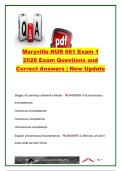
Maryville NUR 661 Exam 1
2026 Exam Questions and
Correct Answers | New Update


Stages of Learning in Benner's Model - ANSWER ✔✔Unconscious

Incompetence

Conscious Incompetence

Conscious Competence

Unconscious competence


Explain Unconscious Incompetence - ANSWER ✔✔Novice, we don't

know what we don't know

, Explain Conscious Incompetence - ANSWER ✔✔Advanced beginner,

feeling uncomfortable about what we don't know


Explain Conscious Competence - ANSWER ✔✔Competent/proficient,

getting skills and feeling more confident


Explain Unconscious Competence - ANSWER ✔✔Expert, skills

become blended together and become habits


Attunement - ANSWER ✔✔in tune to someone's feeling and

emotions, reacting to someone's needs and moods.


Egocentrism - ANSWER ✔✔can't differentiate between yourself and

others, self-centered, all about me


Neuroplasticity - ANSWER ✔✔neuronal pathways are malleable and

adaptable. The brain responds to things in the environment and it can

change, this is once reason why therapy is pushed because it can

change the structure of the brain if applied correctly.


Nuturing - ANSWER ✔✔caring, can be a good think or can be

maladaptive or enabling.


Overdeterminism - ANSWER ✔✔problem has multiple causes.

Someone has depression from a situation that is prolonged for years,

could be taht one problem or could be biologic where it's genetic, may

Información del documento

Subido en
17 de julio de 2026
Número de páginas
14
Escrito en
2025/2026
Tipo
Examen
Contiene
Preguntas y respuestas
$18.99

¿Documento equivocado? Cámbialo gratis Dentro de los 14 días posteriores a la compra y antes de descargarlo, puedes elegir otro documento. Puedes gastar el importe de nuevo.
Escrito por estudiantes que aprobaron
Inmediatamente disponible después del pago
Leer en línea o como PDF

Seller avatar
Los indicadores de reputación están sujetos a la cantidad de artículos vendidos por una tarifa y las reseñas que ha recibido por esos documentos. Hay tres niveles: Bronce, Plata y Oro. Cuanto mayor reputación, más podrás confiar en la calidad del trabajo del vendedor.
PROFFKERRYMARTIN
3.4
(53)
Vendido
267
Seguidores
9
Artículos
10856
Última venta
1 día hace


Por qué los estudiantes eligen Stuvia

Creado por compañeros estudiantes, verificado por reseñas

Calidad en la que puedes confiar: escrito por estudiantes que aprobaron y evaluado por otros que han usado estos resúmenes.

¿No estás satisfecho? Elige otro documento

¡No te preocupes! Puedes elegir directamente otro documento que se ajuste mejor a lo que buscas.

Paga como quieras, empieza a estudiar al instante

Sin suscripción, sin compromisos. Paga como estés acostumbrado con tarjeta de crédito y descarga tu documento PDF inmediatamente.

Student with book image

“Comprado, descargado y aprobado. Así de fácil puede ser.”

Alisha Student

Preguntas frecuentes
