

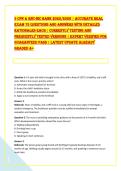
5 CPN & RNC-NIC BANK 2025/2026 | ACCURATE REAL
EXAM 75 QUESTIONS AND ANSWERS WITH DETAILED
RATIONALES EACH | CURRENTLY TESTING AND
FREQUENTLY TESTED VERSIONS | EXPERT VERIFIED FOR
GUARANTEED PASS | LATEST UPDATE ALREADY
GRADED A+
Question 1: A 2-year-old child is brought to the clinic with a fever of 102°F, irritability, and a stiff
neck. What is the nurse's priority action?
A. Administer acetaminophen for the fever
B. Assess the child's hydration status
C. Notify the healthcare provider immediately
D. Apply a cool compress to the forehead
Answer: C
Rationale: Fever, irritability, and a stiff neck in a young child are classic signs of meningitis, a
medical emergency. The healthcare provider must be notified immediately for prompt
evaluation and treatment.
Question 2: The nurse is providing anticipatory guidance to the parents of a 9-month-old infant.
Which developmental milestone should the nurse discuss?
A. Walking independently
B. Drinking from a cup
C. Pincer grasp
D. Speaking in short sentences
Answer: C
Rationale: The pincer grasp (using thumb and forefinger) typically develops between 9-10
months of age. Walking usually begins around 12-15 months, and speaking in sentences occurs
much later.
1
, Question 3: A child with a peanut allergy accidentally ingests a food containing peanuts and
develops hives, wheezing, and difficulty breathing. What is the priority intervention?
A. Administer oral diphenhydramine
B. Administer epinephrine IM
C. Call the child's parent
D. Monitor the child's oxygen saturation
Answer: B
Rationale: The child is experiencing anaphylaxis, a life-threatening allergic reaction. Epinephrine
is the first-line treatment and must be administered immediately to reverse bronchospasm and
hypotension.
Question 4: A 6-year-old child with a history of asthma is experiencing an acute exacerbation.
The nurse auscultates diminished breath sounds. What should the nurse do first?
A. Administer a scheduled dose of albuterol
B. Assess the child's peak expiratory flow rate
C. Administer a beta-agonist bronchodilator
D. Notify the healthcare provider
Answer: C
Rationale: Diminished breath sounds during an asthma exacerbation indicate significant airway
obstruction. The priority is to administer a bronchodilator (albuterol) to open the airways and
improve ventilation.
Question 5: A toddler is being discharged after a febrile seizure. Which instruction should the
nurse include in the discharge teaching?
A. "Seizures are uncommon in children with fever"
B. "Your child should avoid all future immunizations"
C. "Monitor your child's temperature and treat fever promptly"
D. "Anticonvulsant medication should be given daily"
Answer: C
Rationale: Febrile seizures are triggered by rapid temperature elevation in young children.
Parents should be taught to monitor temperature and treat fever promptly with antipyretics.
Question 6: A child with sickle cell anemia presents with acute chest pain, fever, and a cough.
What is the priority nursing action?
A. Administer pain medication
B. Initiate oxygen therapy
C. Encourage oral fluid intake
D. Notify the healthcare provider
2
, Answer: B
Rationale: The child is experiencing a possible acute chest syndrome, a life-threatening
complication of sickle cell disease. Oxygen therapy is the priority to prevent further hypoxia and
treat the underlying vaso-occlusive crisis.
Question 7: An adolescent patient is diagnosed with type 1 diabetes and is being taught about
insulin administration. Which statement indicates understanding?
A. "I will inject my insulin only in the same spot"
B. "I will rotate injection sites to prevent lipohypertrophy"
C. "I don't need to check my blood sugar before meals"
D. "Insulin stops working after 30 days in the refrigerator"
Answer: B
Rationale: Rotating insulin injection sites prevents lipohypertrophy (fatty tissue buildup), which
can affect insulin absorption. This is a key teaching point for adolescents with type 1 diabetes.
Question 8: A newborn infant is being discharged from the well-baby nursery. The nurse should
teach the parents about:
A. Signs of respiratory distress
B. Proper feeding techniques
C. Car seat safety
D. All of the above
Answer: D
Rationale: Discharge teaching for parents of a newborn should include a comprehensive
approach covering feeding, safety (including car seat use), and signs of illness like respiratory
distress.
Question 9: A child has a newly diagnosed seizure disorder and is prescribed phenytoin. Which
nursing intervention is most important?
A. Monitor for gingival hyperplasia
B. Monitor serum phenytoin levels
C. Monitor for GI upset
D. Monitor for hair loss
Answer: B
Rationale: Phenytoin has a narrow therapeutic window, making serum level monitoring
essential to prevent toxicity and ensure therapeutic efficacy.
Question 10: When assessing a pediatric patient, the nurse notes a "barrel chest" appearance.
This is most likely associated with:
A. Congenital heart disease
3
EXAM 75 QUESTIONS AND ANSWERS WITH DETAILED
RATIONALES EACH | CURRENTLY TESTING AND
FREQUENTLY TESTED VERSIONS | EXPERT VERIFIED FOR
GUARANTEED PASS | LATEST UPDATE ALREADY
GRADED A+
Question 1: A 2-year-old child is brought to the clinic with a fever of 102°F, irritability, and a stiff
neck. What is the nurse's priority action?
A. Administer acetaminophen for the fever
B. Assess the child's hydration status
C. Notify the healthcare provider immediately
D. Apply a cool compress to the forehead
Answer: C
Rationale: Fever, irritability, and a stiff neck in a young child are classic signs of meningitis, a
medical emergency. The healthcare provider must be notified immediately for prompt
evaluation and treatment.
Question 2: The nurse is providing anticipatory guidance to the parents of a 9-month-old infant.
Which developmental milestone should the nurse discuss?
A. Walking independently
B. Drinking from a cup
C. Pincer grasp
D. Speaking in short sentences
Answer: C
Rationale: The pincer grasp (using thumb and forefinger) typically develops between 9-10
months of age. Walking usually begins around 12-15 months, and speaking in sentences occurs
much later.
1
, Question 3: A child with a peanut allergy accidentally ingests a food containing peanuts and
develops hives, wheezing, and difficulty breathing. What is the priority intervention?
A. Administer oral diphenhydramine
B. Administer epinephrine IM
C. Call the child's parent
D. Monitor the child's oxygen saturation
Answer: B
Rationale: The child is experiencing anaphylaxis, a life-threatening allergic reaction. Epinephrine
is the first-line treatment and must be administered immediately to reverse bronchospasm and
hypotension.
Question 4: A 6-year-old child with a history of asthma is experiencing an acute exacerbation.
The nurse auscultates diminished breath sounds. What should the nurse do first?
A. Administer a scheduled dose of albuterol
B. Assess the child's peak expiratory flow rate
C. Administer a beta-agonist bronchodilator
D. Notify the healthcare provider
Answer: C
Rationale: Diminished breath sounds during an asthma exacerbation indicate significant airway
obstruction. The priority is to administer a bronchodilator (albuterol) to open the airways and
improve ventilation.
Question 5: A toddler is being discharged after a febrile seizure. Which instruction should the
nurse include in the discharge teaching?
A. "Seizures are uncommon in children with fever"
B. "Your child should avoid all future immunizations"
C. "Monitor your child's temperature and treat fever promptly"
D. "Anticonvulsant medication should be given daily"
Answer: C
Rationale: Febrile seizures are triggered by rapid temperature elevation in young children.
Parents should be taught to monitor temperature and treat fever promptly with antipyretics.
Question 6: A child with sickle cell anemia presents with acute chest pain, fever, and a cough.
What is the priority nursing action?
A. Administer pain medication
B. Initiate oxygen therapy
C. Encourage oral fluid intake
D. Notify the healthcare provider
2
, Answer: B
Rationale: The child is experiencing a possible acute chest syndrome, a life-threatening
complication of sickle cell disease. Oxygen therapy is the priority to prevent further hypoxia and
treat the underlying vaso-occlusive crisis.
Question 7: An adolescent patient is diagnosed with type 1 diabetes and is being taught about
insulin administration. Which statement indicates understanding?
A. "I will inject my insulin only in the same spot"
B. "I will rotate injection sites to prevent lipohypertrophy"
C. "I don't need to check my blood sugar before meals"
D. "Insulin stops working after 30 days in the refrigerator"
Answer: B
Rationale: Rotating insulin injection sites prevents lipohypertrophy (fatty tissue buildup), which
can affect insulin absorption. This is a key teaching point for adolescents with type 1 diabetes.
Question 8: A newborn infant is being discharged from the well-baby nursery. The nurse should
teach the parents about:
A. Signs of respiratory distress
B. Proper feeding techniques
C. Car seat safety
D. All of the above
Answer: D
Rationale: Discharge teaching for parents of a newborn should include a comprehensive
approach covering feeding, safety (including car seat use), and signs of illness like respiratory
distress.
Question 9: A child has a newly diagnosed seizure disorder and is prescribed phenytoin. Which
nursing intervention is most important?
A. Monitor for gingival hyperplasia
B. Monitor serum phenytoin levels
C. Monitor for GI upset
D. Monitor for hair loss
Answer: B
Rationale: Phenytoin has a narrow therapeutic window, making serum level monitoring
essential to prevent toxicity and ensure therapeutic efficacy.
Question 10: When assessing a pediatric patient, the nurse notes a "barrel chest" appearance.
This is most likely associated with:
A. Congenital heart disease
3

