

Personality Disorder Plans – Clinical Psychology Week 10 Page 1 of 8
SHORT ANSWER QUESTION
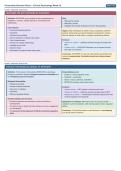
DESCRIBE THE KEY FEATURES OF EUPD/BPD
Definition: EUPD/BPD is a personality disorder characterised by Risk:
instability in: emotions, identity, behaviour, and interpersonal 75% attempt suicide
relationships. 10% die by suicide
Highlights the severity of distress and risk in this population
Core Features:
Emotional instability/reactivity Stigma: Often stereotyped as selfish, needy, manipulative, attention-
Impulsivity seeking. These behaviours should instead be understood in context —
Self-harm and suicidality often as attempts to seek safety or manage overwhelming distress.
Chronic emptiness or feeling "dead inside"
Fear of abandonment Evidence:
Intense and unstable relationships Porter et al. (2020) — childhood adversity strongly associated with
Unstable sense of self BPD
Explosive anger Linehan (2015) — BPD/EUPD difficulties can be targeted through
Dissociation or paranoid ideas under stress DBT skills and validation
Conclusion: EUPD/BPD is a high-risk, high-distress presentation that
requires compassionate, formulation-based and evidence-based
treatment
SHORT ANSWER QUESTION
EXPLAIN THE BIOSOCIAL MODEL OF BPD/EUPD
Definition: The biosocial model explains BPD/EUPD as developing Stress-Diathesis Link:
through the interaction between biological emotional vulnerability and Similar to a stress-diathesis model
an invalidating social environment. Diathesis = vulnerability
Stress = trauma, adversity, invalidation
Biological Vulnerability:
BPD/EUPD develops when these interact
Emotional sensitivity
Intense emotional responses Evidence:
Slow return to baseline Linehan (2015) — DBT is based on the biosocial model
Impulsivity Porter et al. (2020) — childhood adversity strongly linked to BPD
Difficulty regulating distress Winsper et al. (2016) — neurobiological evidence supports links with
emotion regulation and impulsivity
Social/Invalidating Environment:
Emotional responses are dismissed, mocked, punished or Application to Treatment: DBT follows from the biosocial model —
misinterpreted validation counters invalidation; skills training targets emotion regulation
The person may be taught that their feelings are wrong, exaggerated deficits
or unacceptable
This prevents the development of effective emotional regulation Conclusion: The biosocial model is useful because it is non-blaming
skills and directly informs treatment
, Personality Disorder Plans – Clinical Psychology Week 10 Page 2 of 8
SHORT ANSWER QUESTION
EXPLAIN THE ROLE OF INVALIDATION IN BPD/EUPD
Definition: Invalidation means repeatedly being told or shown that Impact:
emotional responses are: wrong, unimportant, exaggerated, The person may stop trusting their own emotions
unacceptable. Genuine needs may be ignored until distress escalates
Crisis behaviour may become the only reliable route to care
Sources of Invalidation:
This can maintain self-harm, emotional dysregulation and crisis-
Childhood based help-seeking
Home & school
Mental health services Evidence:
Physical health services / A&E Linehan (2015) — invalidation is central to the biosocial model
Self-invalidation Porter et al. (2020) — childhood adversity strongly associated with
BPD
Examples:
Being told to stop crying Conclusion: Invalidation helps reframe behaviours as attempts to
Being called dramatic or attention-seeking seek safety or recognition, rather than as manipulation or attention-
seeking
Abuse being denied
Adults failing to protect a child
Services dismissing distress
SHORT ANSWER QUESTION
DESCRIBE THE MAIN COMPONENTS OF DBT
Definition: DBT is a structured psychological treatment for BPD/EUPD Behavioural Change Analysis: DBT uses chain analysis to identify:
developed by Linehan. It balances acceptance/validation and triggers, vulnerabilities, consequences, alternative responses
behavioural change.
Treatment Hierarchy:
Core Components: 1. Life-threatening behaviours
Individual therapy — increases motivation; reduces barriers to using 2. Therapy-interfering behaviours
skills 3. Quality-of-life interfering behaviours
Group skills training — teaches practical skills
Skills coaching — helps clients use skills during real-life crises Evidence: Linehan (2015) — core DBT model and skills training manual
Structuring the environment — uses reinforcement and
contingency management to encourage skilful behaviour Conclusion: DBT is not just a skills group; it is a full treatment system
Consultation team — supports therapist skill, motivation and aiming to help the person build "a life worth living"
consistency
Skills Modules:
Mindfulness
Distress tolerance
Emotion regulation
Interpersonal effectiveness
SHORT ANSWER QUESTION
DESCRIBE THE KEY FEATURES OF EUPD/BPD
Definition: EUPD/BPD is a personality disorder characterised by Risk:
instability in: emotions, identity, behaviour, and interpersonal 75% attempt suicide
relationships. 10% die by suicide
Highlights the severity of distress and risk in this population
Core Features:
Emotional instability/reactivity Stigma: Often stereotyped as selfish, needy, manipulative, attention-
Impulsivity seeking. These behaviours should instead be understood in context —
Self-harm and suicidality often as attempts to seek safety or manage overwhelming distress.
Chronic emptiness or feeling "dead inside"
Fear of abandonment Evidence:
Intense and unstable relationships Porter et al. (2020) — childhood adversity strongly associated with
Unstable sense of self BPD
Explosive anger Linehan (2015) — BPD/EUPD difficulties can be targeted through
Dissociation or paranoid ideas under stress DBT skills and validation
Conclusion: EUPD/BPD is a high-risk, high-distress presentation that
requires compassionate, formulation-based and evidence-based
treatment
SHORT ANSWER QUESTION
EXPLAIN THE BIOSOCIAL MODEL OF BPD/EUPD
Definition: The biosocial model explains BPD/EUPD as developing Stress-Diathesis Link:
through the interaction between biological emotional vulnerability and Similar to a stress-diathesis model
an invalidating social environment. Diathesis = vulnerability
Stress = trauma, adversity, invalidation
Biological Vulnerability:
BPD/EUPD develops when these interact
Emotional sensitivity
Intense emotional responses Evidence:
Slow return to baseline Linehan (2015) — DBT is based on the biosocial model
Impulsivity Porter et al. (2020) — childhood adversity strongly linked to BPD
Difficulty regulating distress Winsper et al. (2016) — neurobiological evidence supports links with
emotion regulation and impulsivity
Social/Invalidating Environment:
Emotional responses are dismissed, mocked, punished or Application to Treatment: DBT follows from the biosocial model —
misinterpreted validation counters invalidation; skills training targets emotion regulation
The person may be taught that their feelings are wrong, exaggerated deficits
or unacceptable
This prevents the development of effective emotional regulation Conclusion: The biosocial model is useful because it is non-blaming
skills and directly informs treatment
, Personality Disorder Plans – Clinical Psychology Week 10 Page 2 of 8
SHORT ANSWER QUESTION
EXPLAIN THE ROLE OF INVALIDATION IN BPD/EUPD
Definition: Invalidation means repeatedly being told or shown that Impact:
emotional responses are: wrong, unimportant, exaggerated, The person may stop trusting their own emotions
unacceptable. Genuine needs may be ignored until distress escalates
Crisis behaviour may become the only reliable route to care
Sources of Invalidation:
This can maintain self-harm, emotional dysregulation and crisis-
Childhood based help-seeking
Home & school
Mental health services Evidence:
Physical health services / A&E Linehan (2015) — invalidation is central to the biosocial model
Self-invalidation Porter et al. (2020) — childhood adversity strongly associated with
BPD
Examples:
Being told to stop crying Conclusion: Invalidation helps reframe behaviours as attempts to
Being called dramatic or attention-seeking seek safety or recognition, rather than as manipulation or attention-
seeking
Abuse being denied
Adults failing to protect a child
Services dismissing distress
SHORT ANSWER QUESTION
DESCRIBE THE MAIN COMPONENTS OF DBT
Definition: DBT is a structured psychological treatment for BPD/EUPD Behavioural Change Analysis: DBT uses chain analysis to identify:
developed by Linehan. It balances acceptance/validation and triggers, vulnerabilities, consequences, alternative responses
behavioural change.
Treatment Hierarchy:
Core Components: 1. Life-threatening behaviours
Individual therapy — increases motivation; reduces barriers to using 2. Therapy-interfering behaviours
skills 3. Quality-of-life interfering behaviours
Group skills training — teaches practical skills
Skills coaching — helps clients use skills during real-life crises Evidence: Linehan (2015) — core DBT model and skills training manual
Structuring the environment — uses reinforcement and
contingency management to encourage skilful behaviour Conclusion: DBT is not just a skills group; it is a full treatment system
Consultation team — supports therapist skill, motivation and aiming to help the person build "a life worth living"
consistency
Skills Modules:
Mindfulness
Distress tolerance
Emotion regulation
Interpersonal effectiveness

