

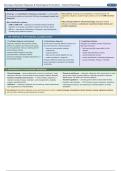
Nosology, Psychiatric Diagnosis & Psychological Formulation – Clinical Psychology Page 1 of 8
1. WHAT IS NOSOLOGY?
Nosology = the classification of diseases or disorders. In mental health: Key sentence: Nosology is the classification of mental disorders into
the way psychological and psychiatric difficulties are grouped, named, and diagnostic categories, usually through systems such as the DSM-5 and ICD-
diagnosed. 11.
Main classification systems: Why nosology matters in clinical psychology: diagnostic systems
influence how distress is understood, researched, treated, funded, and
DSM-5 / DSM-5-TR — Diagnostic and Statistical Manual of Mental
socially recognised
Disorders; used widely in psychiatric research and clinical practice
ICD-11 — International Classification of Diseases; used internationally
including many healthcare systems
2. THE PURPOSE OF PSYCHIATRIC CLASSIFICATION
1. Facilitates diagnosis and treatment 2. Standardises diagnosis 3. Legitimises distress
Diagnostic categories help clinicians identify Shared criteria meaning different clinicians use Diagnosis can validate people's experiences.
patterns of symptoms and decide what support the same framework. Useful because it: May help individuals:
may be appropriate. Acts as a starting point for improves communication between feel less personally responsible for their
clinical decision-making. professionals distress
Example: ADHD diagnosis may guide supports research explain their difficulties to others
psychoeducation, medication referral, helps services decide eligibility for care access healthcare services
behavioural strategies, workplace adjustments, or creates consistency in diagnosis receive educational or workplace adjustments
psychological support.
Example: DSM/ICD criteria help researchers access medication, therapy, or benefits
ensure depression participants are classified
comparably.
3. ADVANTAGES OF PSYCHIATRIC DIAGNOSIS
Shared language — gives professionals a common vocabulary; "major Research usefulness — diagnostic categories allow researchers to study
depressive disorder" communicates a broad symptom pattern efficiently groups with similar symptom patterns; supports prevalence, treatment
Access to treatment and services — in many systems, diagnosis is effectiveness, risk factor and outcome research
needed to access therapy, medication, school adjustments, disability Treatment guidance — can help guide evidence-based interventions
support, specialist referral Example: panic disorder → CBT focused on panic symptoms, avoidance,
Validation — receiving a diagnosis can be relieving; makes experiences interoceptive exposure, and catastrophic misinterpretations of bodily
feel recognised and understandable sensations
Key sentence: Psychiatric diagnosis can be useful because it provides a shared language, standardises clinical decision-making, legitimises distress,
and may help individuals access treatment and support.
, Nosology, Psychiatric Diagnosis & Psychological Formulation – Clinical Psychology Page 2 of 8
4. LIMITATIONS OF PSYCHIATRIC DIAGNOSIS
1. Lack of objective biological markers 4. Risk of pathologising normal experience
Many psychiatric diagnoses do not have a definitive biological test (e.g. Diagnostic systems may turn understandable human responses into
blood test or scan). Instead, diagnosis is often based on: reported disorders. Distress after trauma, loss, poverty, discrimination, or relationship
symptoms, observed behaviour, clinical interviews, questionnaires, breakdown may be labelled as individual disorder rather than understood in
professional judgement, impairment and duration criteria. Makes psychiatric context.
diagnosis different from many physical health diagnoses. Clinical psychologists ask not only "what symptoms does this person have?"
but also "what has happened to this person?" and "what meaning does this
2. Diagnosis may describe rather than explain distress have?"
A diagnosis often summarises a pattern of symptoms but may not explain
why those symptoms developed. e.g. ADHD describes difficulties with 5. Stigma and labelling
attention, impulsivity and/or hyperactivity, but does not always explain the full Diagnosis can help some people feel validated, but can also lead to:
cause. being treated differently by others
Strong exam wording: Psychiatric diagnoses can be descriptive rather than internalising the label; feeling defined by the diagnosis
explanatory because they classify patterns of symptoms without necessarily discrimination in work, education, or relationships
identifying a clear underlying cause.
reduced expectations from professionals or family
3. Diagnostic boundaries can be unclear Balanced point: Diagnosis can be both validating and stigmatising,
Many psychological experiences exist on a continuum — everyone depending on the individual, context, and how the label is used.
experiences anxiety, inattention, or mood fluctuation sometimes. The
boundary between "normal variation" and "disorder" can seem arbitrary.
5–6. ADHD AS A CASE STUDY IN NOSOLOGICAL DEBATE
ADHD symptoms: Position 2 — Diagnosis can medicalise behaviour: Restlessness,
Inattention: difficulty sustaining attention, easily distracted, forgetfulness, inattention, and impulsivity may exist on a continuum. Labelling these as a
losing things, difficulty organising, failing to follow instructions, avoiding tasks disorder risks pathologising normal variation, especially in children. The key
requiring sustained mental effort issue is not whether people experience difficulties, but whether those
Hyperactivity/Impulsivity: fidgeting, restlessness, difficulty remaining seated, difficulties are best understood as: symptoms of a disorder, responses to
excessive talking, interrupting, difficulty waiting turns, acting "driven by a context, developmental differences, or a combination.
motor", blurting out answers
Strong balanced sentence: ADHD illustrates the wider nosological debate:
diagnosis may be essential for recognising impairment and accessing
Position 1 — Diagnosis is useful and necessary: ADHD causes real
support, but it also raises questions about where normal behavioural
impairment in education, work, relationships, self-esteem, and daily
variation ends and disorder begins.
functioning. Undiagnosed ADHD linked with depression, suicidal ideation,
poorer quality of life, sleep problems, substance misuse, higher
unemployment rates, social difficulties, offending behaviour.
Underdiagnosis can be harmful.
1. WHAT IS NOSOLOGY?
Nosology = the classification of diseases or disorders. In mental health: Key sentence: Nosology is the classification of mental disorders into
the way psychological and psychiatric difficulties are grouped, named, and diagnostic categories, usually through systems such as the DSM-5 and ICD-
diagnosed. 11.
Main classification systems: Why nosology matters in clinical psychology: diagnostic systems
influence how distress is understood, researched, treated, funded, and
DSM-5 / DSM-5-TR — Diagnostic and Statistical Manual of Mental
socially recognised
Disorders; used widely in psychiatric research and clinical practice
ICD-11 — International Classification of Diseases; used internationally
including many healthcare systems
2. THE PURPOSE OF PSYCHIATRIC CLASSIFICATION
1. Facilitates diagnosis and treatment 2. Standardises diagnosis 3. Legitimises distress
Diagnostic categories help clinicians identify Shared criteria meaning different clinicians use Diagnosis can validate people's experiences.
patterns of symptoms and decide what support the same framework. Useful because it: May help individuals:
may be appropriate. Acts as a starting point for improves communication between feel less personally responsible for their
clinical decision-making. professionals distress
Example: ADHD diagnosis may guide supports research explain their difficulties to others
psychoeducation, medication referral, helps services decide eligibility for care access healthcare services
behavioural strategies, workplace adjustments, or creates consistency in diagnosis receive educational or workplace adjustments
psychological support.
Example: DSM/ICD criteria help researchers access medication, therapy, or benefits
ensure depression participants are classified
comparably.
3. ADVANTAGES OF PSYCHIATRIC DIAGNOSIS
Shared language — gives professionals a common vocabulary; "major Research usefulness — diagnostic categories allow researchers to study
depressive disorder" communicates a broad symptom pattern efficiently groups with similar symptom patterns; supports prevalence, treatment
Access to treatment and services — in many systems, diagnosis is effectiveness, risk factor and outcome research
needed to access therapy, medication, school adjustments, disability Treatment guidance — can help guide evidence-based interventions
support, specialist referral Example: panic disorder → CBT focused on panic symptoms, avoidance,
Validation — receiving a diagnosis can be relieving; makes experiences interoceptive exposure, and catastrophic misinterpretations of bodily
feel recognised and understandable sensations
Key sentence: Psychiatric diagnosis can be useful because it provides a shared language, standardises clinical decision-making, legitimises distress,
and may help individuals access treatment and support.
, Nosology, Psychiatric Diagnosis & Psychological Formulation – Clinical Psychology Page 2 of 8
4. LIMITATIONS OF PSYCHIATRIC DIAGNOSIS
1. Lack of objective biological markers 4. Risk of pathologising normal experience
Many psychiatric diagnoses do not have a definitive biological test (e.g. Diagnostic systems may turn understandable human responses into
blood test or scan). Instead, diagnosis is often based on: reported disorders. Distress after trauma, loss, poverty, discrimination, or relationship
symptoms, observed behaviour, clinical interviews, questionnaires, breakdown may be labelled as individual disorder rather than understood in
professional judgement, impairment and duration criteria. Makes psychiatric context.
diagnosis different from many physical health diagnoses. Clinical psychologists ask not only "what symptoms does this person have?"
but also "what has happened to this person?" and "what meaning does this
2. Diagnosis may describe rather than explain distress have?"
A diagnosis often summarises a pattern of symptoms but may not explain
why those symptoms developed. e.g. ADHD describes difficulties with 5. Stigma and labelling
attention, impulsivity and/or hyperactivity, but does not always explain the full Diagnosis can help some people feel validated, but can also lead to:
cause. being treated differently by others
Strong exam wording: Psychiatric diagnoses can be descriptive rather than internalising the label; feeling defined by the diagnosis
explanatory because they classify patterns of symptoms without necessarily discrimination in work, education, or relationships
identifying a clear underlying cause.
reduced expectations from professionals or family
3. Diagnostic boundaries can be unclear Balanced point: Diagnosis can be both validating and stigmatising,
Many psychological experiences exist on a continuum — everyone depending on the individual, context, and how the label is used.
experiences anxiety, inattention, or mood fluctuation sometimes. The
boundary between "normal variation" and "disorder" can seem arbitrary.
5–6. ADHD AS A CASE STUDY IN NOSOLOGICAL DEBATE
ADHD symptoms: Position 2 — Diagnosis can medicalise behaviour: Restlessness,
Inattention: difficulty sustaining attention, easily distracted, forgetfulness, inattention, and impulsivity may exist on a continuum. Labelling these as a
losing things, difficulty organising, failing to follow instructions, avoiding tasks disorder risks pathologising normal variation, especially in children. The key
requiring sustained mental effort issue is not whether people experience difficulties, but whether those
Hyperactivity/Impulsivity: fidgeting, restlessness, difficulty remaining seated, difficulties are best understood as: symptoms of a disorder, responses to
excessive talking, interrupting, difficulty waiting turns, acting "driven by a context, developmental differences, or a combination.
motor", blurting out answers
Strong balanced sentence: ADHD illustrates the wider nosological debate:
diagnosis may be essential for recognising impairment and accessing
Position 1 — Diagnosis is useful and necessary: ADHD causes real
support, but it also raises questions about where normal behavioural
impairment in education, work, relationships, self-esteem, and daily
variation ends and disorder begins.
functioning. Undiagnosed ADHD linked with depression, suicidal ideation,
poorer quality of life, sleep problems, substance misuse, higher
unemployment rates, social difficulties, offending behaviour.
Underdiagnosis can be harmful.

