

GU- MALE GENITO-URINARY PROBLEMS REVIEW SHEET
MEDSURG 2
A&P not on test!
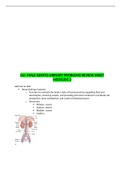
Renal &Urinary Systems
o Function to maintain the body’s state of homeostasis by regulating fluid and
electrolytes, removing wastes, and providing hormones involved in red blood cell
production, bone metabolism, and control of blood pressure.
o Structures:
Kidneys- cancer
Ureters- stones
Bladder- cancer
Urethra
,****Major complication of kidney removal bleeding !! (aorta right there)
NOTES:
kidney stone priority is PAIN !! so pain meds 1st
Rx for kidney stones= lithrotrspy (shock waves) BEST WAY
If stone too deep &shock waves dnt get to it, need to remove it surgically
Stone in ureter= obstruction= a lot of pain
Nephon function= it filters
Gerontological Consideration
o GFR decreases (medication clearance)issues w/meds- BUN& creatinine b/c
there’s a decrease in how we filter when older so change med amount
o Diminished osmotic stimulation (hypernatremia, fluid volume deficit)they
dehydrated
o Structural or functional changes to bladder (incontinence or bladder outlet
obstruction-> BPH)chronic UTI’s b/c bladder just falling out of them (woman
who had mad kids)
Health History
o Pain
o Hx of UTI
o Fever or chills
o Previous renal or urinary dx test, foley catherers?
o Dysuria
o Hesitancy, straining, urgency,
o Urinary incontinence
o Hematuria
o Nocturia how frequently ***
o Renal calculi/stones
o Pregnancy
o Anuria-absence of urine
o Genital lesions
o Tobacco/etoh/illicits
o Meds
Risk factors for renal disease
o Nephrotic syndrome
o Advanced age
o Cystoscope, catherization
o DM
o HTN
o MS (multiple sclerosis), PD (parkinsons dx)
o Lupus, gout, hyperparathyroidism
o Sickle cell, Multiple myeloma
o Radiation therapy to pelvis
o Pregnancy
, o BPH
o Obstetric injury
o Spinal cord injury
Common symptoms- Pain
o Kidneyà CVA-T (dull, severe, sharp, colicky)
Assoc s/s N/V. diaphoresis, shockà obstruction, stone, blood clot,
pyelonephritis, trauma
o Bladderà suprapubic (dull, continous, more intense with voiding, worse with full
bladder)
Assoc s/s-> urgency, pain at end of void, strainingà infection, tumor,
intersitial cystitis, overdistended bladder
o Ureteralà CVA, flank, Lower abd, labium (severe, sharp, stabbing, colicky)assoc
s/s: N/V, paralytic illeusà ureteral stone, stricture, blood clot
o Prostateà perineum, rectum (vague discomfort, feeling of fullness, back pain)
assoc s/s: suprapubic tenderness, obstruction, hesitancy, frequency, urgency,
nocturiaà prostate Ca, prostatitis,
o Urethral (M-along penis to meatus, F-urethra to meatus) assoc s/s: frequency,
urgency, dysuria, nocturia, urethral dischargeà infection, irritation of bladder
neck, foreign body
Common s&s: change in void
o Frequency: > every 3 hour
o Urgency: strong desire to void
o Dysuria: painful or difficulty voiding
o Hesitancy: delay , difficulty initiating voiding
o Nocturia: excessive urination at night
o Incontinence: involuntary loss of urine
o Enuresis: involuntary voiding during sleep
o Polyuria: increased volume of urine voided
o Oliguria: urine output < 500 ml/day
o Anuria: urine output < 50ml/day
o Hematuria: RBC in urine
o Proteinuria: abnormal protein level in urine
Common s&s: GI GI symptoms come with GU problems b/c of the closeness of
kidneys to abdominal organs!!
o Nausea
o Vomiting
o Diarrhea
o Abd discomfort
o Abd distention
Because of shared anatomic space, GU symptoms can often mimic peptic
ulcer disease, appendicitiis, cholecystitis but it can be renal calculi
**PT has hematuria symptom and it causes anemia:
Common s&s of unexplained anemia
MEDSURG 2
A&P not on test!
Renal &Urinary Systems
o Function to maintain the body’s state of homeostasis by regulating fluid and
electrolytes, removing wastes, and providing hormones involved in red blood cell
production, bone metabolism, and control of blood pressure.
o Structures:
Kidneys- cancer
Ureters- stones
Bladder- cancer
Urethra
,****Major complication of kidney removal bleeding !! (aorta right there)
NOTES:
kidney stone priority is PAIN !! so pain meds 1st
Rx for kidney stones= lithrotrspy (shock waves) BEST WAY
If stone too deep &shock waves dnt get to it, need to remove it surgically
Stone in ureter= obstruction= a lot of pain
Nephon function= it filters
Gerontological Consideration
o GFR decreases (medication clearance)issues w/meds- BUN& creatinine b/c
there’s a decrease in how we filter when older so change med amount
o Diminished osmotic stimulation (hypernatremia, fluid volume deficit)they
dehydrated
o Structural or functional changes to bladder (incontinence or bladder outlet
obstruction-> BPH)chronic UTI’s b/c bladder just falling out of them (woman
who had mad kids)
Health History
o Pain
o Hx of UTI
o Fever or chills
o Previous renal or urinary dx test, foley catherers?
o Dysuria
o Hesitancy, straining, urgency,
o Urinary incontinence
o Hematuria
o Nocturia how frequently ***
o Renal calculi/stones
o Pregnancy
o Anuria-absence of urine
o Genital lesions
o Tobacco/etoh/illicits
o Meds
Risk factors for renal disease
o Nephrotic syndrome
o Advanced age
o Cystoscope, catherization
o DM
o HTN
o MS (multiple sclerosis), PD (parkinsons dx)
o Lupus, gout, hyperparathyroidism
o Sickle cell, Multiple myeloma
o Radiation therapy to pelvis
o Pregnancy
, o BPH
o Obstetric injury
o Spinal cord injury
Common symptoms- Pain
o Kidneyà CVA-T (dull, severe, sharp, colicky)
Assoc s/s N/V. diaphoresis, shockà obstruction, stone, blood clot,
pyelonephritis, trauma
o Bladderà suprapubic (dull, continous, more intense with voiding, worse with full
bladder)
Assoc s/s-> urgency, pain at end of void, strainingà infection, tumor,
intersitial cystitis, overdistended bladder
o Ureteralà CVA, flank, Lower abd, labium (severe, sharp, stabbing, colicky)assoc
s/s: N/V, paralytic illeusà ureteral stone, stricture, blood clot
o Prostateà perineum, rectum (vague discomfort, feeling of fullness, back pain)
assoc s/s: suprapubic tenderness, obstruction, hesitancy, frequency, urgency,
nocturiaà prostate Ca, prostatitis,
o Urethral (M-along penis to meatus, F-urethra to meatus) assoc s/s: frequency,
urgency, dysuria, nocturia, urethral dischargeà infection, irritation of bladder
neck, foreign body
Common s&s: change in void
o Frequency: > every 3 hour
o Urgency: strong desire to void
o Dysuria: painful or difficulty voiding
o Hesitancy: delay , difficulty initiating voiding
o Nocturia: excessive urination at night
o Incontinence: involuntary loss of urine
o Enuresis: involuntary voiding during sleep
o Polyuria: increased volume of urine voided
o Oliguria: urine output < 500 ml/day
o Anuria: urine output < 50ml/day
o Hematuria: RBC in urine
o Proteinuria: abnormal protein level in urine
Common s&s: GI GI symptoms come with GU problems b/c of the closeness of
kidneys to abdominal organs!!
o Nausea
o Vomiting
o Diarrhea
o Abd discomfort
o Abd distention
Because of shared anatomic space, GU symptoms can often mimic peptic
ulcer disease, appendicitiis, cholecystitis but it can be renal calculi
**PT has hematuria symptom and it causes anemia:
Common s&s of unexplained anemia

