

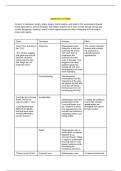
Appearance vs Reality
Context: In Jacobean society, where loyalty, moral integrity, and belief in the supernatural shaped
social expectations, acts of deception and hidden ambition were seen as both morally corrupt and
socially dangerous, creating a world in which appearances are often misleading and can lead to
chaos and tragedy.
Quote Technique Analysis Effect
“Fair is foul, and foul is Chiasmus Shakespeare uses This creates dramatic
fair.”(1.1) chiasmus in this line, tension and prompts
reversing the words the audience to
-The witches suggest “fair” and “foul” to critically question
that good and evil will emphasise the appearances
become confused, inversion of moral
introducing the idea order in the play. This
that things are not suggests that what
what they seem appears good may
actually be evil, and
what appears evil may
seem harmless
Foreshadowing This statement
foreshadows how the
characters of the play
will appear as kind and
novel but will reveal
themselves to be evil
by betraying the king.
“Look like the innocent Juxtaposition
flower, but be the Shakespeare uses the It makes the audience
serpent under’t.” (1.5) juxtaposition of the aware that outward
“innocent flower” and appearances are
-Lady Macbeth tells the “serpent” to show deceptive and cannot
Macbeth to appear how appearances can be fully trusted.
kind and loyal while conceal true intentions,
secretly planning to misleading others and
murder Duncan hiding reality.
Simile Shakespeare uses a
simile which compares
Macbeth to an
‘innocent flower’ hiding
a ‘serpent’ underneath,
showing that he must
appear harmless while
concealing his
murderous intentions.
‘There’s no art to find Dramatic irony Shakespeare uses It creates tension and
, the mind’s construction dramatic irony makes the audience
in the face.’(1.4) because Duncan trusts aware of the hidden
Macbeth completely, danger Duncan cannot
believing that Macbeth see.
is loyal, while the
audience knows
Macbeth plans to
betray him.
Metaphor Shakespeare uses a
metaphor by
comparing the mind to
a hidden construction,
showing that a
person’s thoughts and
intentions cannot be
read from their
appearance,
highlighting the
deception of outward
appearances.
‘False face must hide Metaphor Shakespeare’s
what the false heart metaphor of the “false
doth know’ (1.7) face” and “false heart”
shows how Macbeth
plans to murder
Duncan while
presenting a loyal,
innocent appearance,
highlighting his ability
to mask murderous
intentions behind a
calm exterior.
‘Stars, hide your Aside The aside allows This creates intense
fires; / Let not light Macbeth to confess his dramatic irony where
see my black and dark reality to the the audience sees the
deep Desires’ audience while traitorous reality that
(Macbeth, maintaining a the characters on
1.4) facade for Duncan. stage are
tragically blind to.
Celestial symbolism Because the Stars and This creates
Light symbolized God intense dramatic irony,
and Heaven in the as the audience sees
Jacobean era, his
Macbeth is rotting conscience
effectively asking the while Duncan remains
universe to go blind. completely unaware of
He is the danger.
terrified of the Great
Chain of Being,
believing
that if the light of truth
shines on him, he will
face
divine judgment for his
Context: In Jacobean society, where loyalty, moral integrity, and belief in the supernatural shaped
social expectations, acts of deception and hidden ambition were seen as both morally corrupt and
socially dangerous, creating a world in which appearances are often misleading and can lead to
chaos and tragedy.
Quote Technique Analysis Effect
“Fair is foul, and foul is Chiasmus Shakespeare uses This creates dramatic
fair.”(1.1) chiasmus in this line, tension and prompts
reversing the words the audience to
-The witches suggest “fair” and “foul” to critically question
that good and evil will emphasise the appearances
become confused, inversion of moral
introducing the idea order in the play. This
that things are not suggests that what
what they seem appears good may
actually be evil, and
what appears evil may
seem harmless
Foreshadowing This statement
foreshadows how the
characters of the play
will appear as kind and
novel but will reveal
themselves to be evil
by betraying the king.
“Look like the innocent Juxtaposition
flower, but be the Shakespeare uses the It makes the audience
serpent under’t.” (1.5) juxtaposition of the aware that outward
“innocent flower” and appearances are
-Lady Macbeth tells the “serpent” to show deceptive and cannot
Macbeth to appear how appearances can be fully trusted.
kind and loyal while conceal true intentions,
secretly planning to misleading others and
murder Duncan hiding reality.
Simile Shakespeare uses a
simile which compares
Macbeth to an
‘innocent flower’ hiding
a ‘serpent’ underneath,
showing that he must
appear harmless while
concealing his
murderous intentions.
‘There’s no art to find Dramatic irony Shakespeare uses It creates tension and
, the mind’s construction dramatic irony makes the audience
in the face.’(1.4) because Duncan trusts aware of the hidden
Macbeth completely, danger Duncan cannot
believing that Macbeth see.
is loyal, while the
audience knows
Macbeth plans to
betray him.
Metaphor Shakespeare uses a
metaphor by
comparing the mind to
a hidden construction,
showing that a
person’s thoughts and
intentions cannot be
read from their
appearance,
highlighting the
deception of outward
appearances.
‘False face must hide Metaphor Shakespeare’s
what the false heart metaphor of the “false
doth know’ (1.7) face” and “false heart”
shows how Macbeth
plans to murder
Duncan while
presenting a loyal,
innocent appearance,
highlighting his ability
to mask murderous
intentions behind a
calm exterior.
‘Stars, hide your Aside The aside allows This creates intense
fires; / Let not light Macbeth to confess his dramatic irony where
see my black and dark reality to the the audience sees the
deep Desires’ audience while traitorous reality that
(Macbeth, maintaining a the characters on
1.4) facade for Duncan. stage are
tragically blind to.
Celestial symbolism Because the Stars and This creates
Light symbolized God intense dramatic irony,
and Heaven in the as the audience sees
Jacobean era, his
Macbeth is rotting conscience
effectively asking the while Duncan remains
universe to go blind. completely unaware of
He is the danger.
terrified of the Great
Chain of Being,
believing
that if the light of truth
shines on him, he will
face
divine judgment for his

