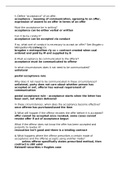
1. What is the definition of consideration? Something that has value in
the eyes of the law, essential element to make a contract, must
be provided for contract to be legally binding, ensure there is
seriousness in the contract, needs to be sufficient [judges decide
sufficiency] and have economic value
Why does the law require consideration as an element of a legally
enforceable promise? Without consideration, promise isn’t
enforceable and contract not valid
2. Why does the law usually not accept past consideration as good
consideration? Not going to constitute consideration for substitute
transaction – cannot use it for another
benefit and detriment of both parties was in previous transaction
– cannot be used for another – act done in past was not done in
request, but done in past
roscorla v Thomas = sale of horse, statement made by seller was
subsequent, not part of previous transactions of
horse/consideration provided
ree v micardo
promises need to be made in exchange for one another
In what circumstances will it accept past consideration as good
consideration? Pao On = good consideration – even though parties
different in two agreements, consideration for entering into side
agreement was P’s agreeing would actually enter into main
act was done at promisor’s request
parties understood act was to be remunerated
remunerated would have been legally enforceable had it been
promised in advance
Pao On v L
General rule for past consideration = no good consideration, less
rules of Pao on fulfilled
Past act has to be done at request of promisor, is there
understand that this past act would be remunerated, if promise
made earlier, in advance, would it have been enforceable
3. John is an elderly retired lecturer. Bill, his cousin and a student on a
tight budget, visits him to ask for money. John tells Bill to mow the lawn
and trim the hedges. When Bill finishes these chores, John gives him a
basket of apples and tells him: "What a great job. Come back next week
and I'll give you £100." When Bill returns to John's house the following
week, John refuses to give him the £100. Advise John and Bill.
roscorla v Thomas
ree v micardo
the eyes of the law, essential element to make a contract, must
be provided for contract to be legally binding, ensure there is
seriousness in the contract, needs to be sufficient [judges decide
sufficiency] and have economic value
Why does the law require consideration as an element of a legally
enforceable promise? Without consideration, promise isn’t
enforceable and contract not valid
2. Why does the law usually not accept past consideration as good
consideration? Not going to constitute consideration for substitute
transaction – cannot use it for another
benefit and detriment of both parties was in previous transaction
– cannot be used for another – act done in past was not done in
request, but done in past
roscorla v Thomas = sale of horse, statement made by seller was
subsequent, not part of previous transactions of
horse/consideration provided
ree v micardo
promises need to be made in exchange for one another
In what circumstances will it accept past consideration as good
consideration? Pao On = good consideration – even though parties
different in two agreements, consideration for entering into side
agreement was P’s agreeing would actually enter into main
act was done at promisor’s request
parties understood act was to be remunerated
remunerated would have been legally enforceable had it been
promised in advance
Pao On v L
General rule for past consideration = no good consideration, less
rules of Pao on fulfilled
Past act has to be done at request of promisor, is there
understand that this past act would be remunerated, if promise
made earlier, in advance, would it have been enforceable
3. John is an elderly retired lecturer. Bill, his cousin and a student on a
tight budget, visits him to ask for money. John tells Bill to mow the lawn
and trim the hedges. When Bill finishes these chores, John gives him a
basket of apples and tells him: "What a great job. Come back next week
and I'll give you £100." When Bill returns to John's house the following
week, John refuses to give him the £100. Advise John and Bill.
roscorla v Thomas
ree v micardo