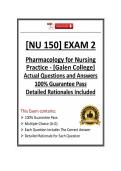
,NU 150|NU 150 Exam 2 | pharmacology |
Galen College | Q & A | 2026 Edition (PDF)
1. Which laboratory test is used to monitor the therapeutic effect of warfarin?
A) Activated partial thromboplastin time (aPTT)
B) International Normalized Ratio (INR)
C) Platelet count
D) Prothrombin time (PT) only
Correct Answer: International Normalized Ratio (INR)
Rationale: Warfarin's anticoagulant effect is monitored by INR, which standardizes PT results. The goal is
typically 2.0–3.0 for most indications. aPTT monitors unfractionated heparin, not warfarin. Platelet
count does not reflect warfarin activity.
2. The nurse is teaching a patient who is starting warfarin therapy. Which statement by the patient
indicates a need for further teaching?
A) "I will avoid eating spinach and broccoli altogether."
B) "I should keep my intake of vitamin K foods consistent."
C) "I need to report any unusual bleeding or bruising."
D) "I will use a soft toothbrush to prevent gum bleeding."
Correct Answer: "I will avoid eating spinach and broccoli altogether."
Rationale: The patient should maintain consistent vitamin K intake, not eliminate it entirely. Avoiding all
vitamin K can lead to erratic INR. The other statements reflect correct understanding of bleeding
precautions.
3. A patient receiving intravenous heparin has an aPTT of 90 seconds (therapeutic range 60–80 seconds).
What is the priority nursing action?
A) Increase the heparin infusion rate.
,B) Decrease the heparin infusion rate.
C) Continue the infusion at the current rate.
D) Administer protamine sulfate immediately.
Correct Answer: Decrease the heparin infusion rate.
Rationale: An aPTT above the therapeutic range indicates increased bleeding risk. The nurse should
decrease the infusion rate and notify the provider. Protamine sulfate is used for severe bleeding, not for
a single elevated aPTT.
4. The nurse is reviewing dietary restrictions for a client who is currently taking warfarin. Which
statement by the client demonstrates correct understanding?
A) "I will avoid all carbohydrates."
B) "I will limit the amount of spinach salad I eat."
C) "I will stop drinking water."
D) "I will increase my intake of green leafy vegetables."
Correct Answer: "I will limit the amount of spinach salad I eat."
Rationale: Spinach is high in vitamin K, which antagonizes warfarin's effects. Clients should keep vitamin
K intake consistent and avoid sudden increases.
5. The nurse is caring for an older adult client who is newly prescribed a beta-adrenergic antagonist
drug. It is important to notify the primary healthcare provider if the client reports:
A) Allergy to penicillin
B) Allergy to beta blockers
C) Allergy to shellfish
D) Allergy to pollen
Correct Answer: Allergy to beta blockers
, Rationale: A prior allergy to beta blockers is a contraindication and may put the client at risk for serious
hypersensitivity reactions.
6. The nurse is caring for a client who is newly prescribed a thyroid supplement. The nurse correctly
informs the client that the full effects of the therapy may not be apparent for up to:
A) 1–2 days
B) 1–2 weeks
C) 6–8 weeks
D) 3–6 months
Correct Answer: 6–8 weeks
Rationale: Levothyroxine has a long half-life, and full therapeutic effect takes approximately 6–8 weeks.
Dose adjustments should be based on TSH levels.
7. Which laboratory test is used to monitor the effectiveness of antihyperlipidemic therapy?
A) Complete blood count (CBC)
B) Serum lipid panel
C) Serum creatinine
D) Serum amylase
Correct Answer: Serum lipid panel
Rationale: Antihyperlipidemic therapy effectiveness is measured by changes in cholesterol and
triglyceride levels on the lipid panel.
8. The nurse is caring for a client who has been prescribed anticoagulation therapy. Which of the
following does the nurse expect to see on the client's plan of care?
A) Use a straight razor for shaving
Galen College | Q & A | 2026 Edition (PDF)
1. Which laboratory test is used to monitor the therapeutic effect of warfarin?
A) Activated partial thromboplastin time (aPTT)
B) International Normalized Ratio (INR)
C) Platelet count
D) Prothrombin time (PT) only
Correct Answer: International Normalized Ratio (INR)
Rationale: Warfarin's anticoagulant effect is monitored by INR, which standardizes PT results. The goal is
typically 2.0–3.0 for most indications. aPTT monitors unfractionated heparin, not warfarin. Platelet
count does not reflect warfarin activity.
2. The nurse is teaching a patient who is starting warfarin therapy. Which statement by the patient
indicates a need for further teaching?
A) "I will avoid eating spinach and broccoli altogether."
B) "I should keep my intake of vitamin K foods consistent."
C) "I need to report any unusual bleeding or bruising."
D) "I will use a soft toothbrush to prevent gum bleeding."
Correct Answer: "I will avoid eating spinach and broccoli altogether."
Rationale: The patient should maintain consistent vitamin K intake, not eliminate it entirely. Avoiding all
vitamin K can lead to erratic INR. The other statements reflect correct understanding of bleeding
precautions.
3. A patient receiving intravenous heparin has an aPTT of 90 seconds (therapeutic range 60–80 seconds).
What is the priority nursing action?
A) Increase the heparin infusion rate.
,B) Decrease the heparin infusion rate.
C) Continue the infusion at the current rate.
D) Administer protamine sulfate immediately.
Correct Answer: Decrease the heparin infusion rate.
Rationale: An aPTT above the therapeutic range indicates increased bleeding risk. The nurse should
decrease the infusion rate and notify the provider. Protamine sulfate is used for severe bleeding, not for
a single elevated aPTT.
4. The nurse is reviewing dietary restrictions for a client who is currently taking warfarin. Which
statement by the client demonstrates correct understanding?
A) "I will avoid all carbohydrates."
B) "I will limit the amount of spinach salad I eat."
C) "I will stop drinking water."
D) "I will increase my intake of green leafy vegetables."
Correct Answer: "I will limit the amount of spinach salad I eat."
Rationale: Spinach is high in vitamin K, which antagonizes warfarin's effects. Clients should keep vitamin
K intake consistent and avoid sudden increases.
5. The nurse is caring for an older adult client who is newly prescribed a beta-adrenergic antagonist
drug. It is important to notify the primary healthcare provider if the client reports:
A) Allergy to penicillin
B) Allergy to beta blockers
C) Allergy to shellfish
D) Allergy to pollen
Correct Answer: Allergy to beta blockers
, Rationale: A prior allergy to beta blockers is a contraindication and may put the client at risk for serious
hypersensitivity reactions.
6. The nurse is caring for a client who is newly prescribed a thyroid supplement. The nurse correctly
informs the client that the full effects of the therapy may not be apparent for up to:
A) 1–2 days
B) 1–2 weeks
C) 6–8 weeks
D) 3–6 months
Correct Answer: 6–8 weeks
Rationale: Levothyroxine has a long half-life, and full therapeutic effect takes approximately 6–8 weeks.
Dose adjustments should be based on TSH levels.
7. Which laboratory test is used to monitor the effectiveness of antihyperlipidemic therapy?
A) Complete blood count (CBC)
B) Serum lipid panel
C) Serum creatinine
D) Serum amylase
Correct Answer: Serum lipid panel
Rationale: Antihyperlipidemic therapy effectiveness is measured by changes in cholesterol and
triglyceride levels on the lipid panel.
8. The nurse is caring for a client who has been prescribed anticoagulation therapy. Which of the
following does the nurse expect to see on the client's plan of care?
A) Use a straight razor for shaving