

??
? ?
EK ED
GE OV
ED PR
AP
M
?_
?_ IA
IA UV
UV ST
ST
, TABLE OF CONTENTS
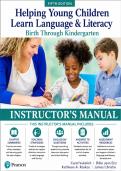
Instructor Manual: Helping Young Children Learn Language and
Literacy: Birth Through Kindergarten, 5th Edition
Authors: Carol Vukelich, Billie Enz, Kathleen Roskos, James Christie
ST
??
1. Foundations of Language and Literacy
UV
EK
2. Families' Role in Children's Literacy Learning
3. Educational Environments Beyond the Family
4. Language: The Foundation of Literacy Learning
GE
IA
5. Developing Oral Language Comprehension
6. Sharing Good Books with Young Children
?_
7. Teaching Early Reading
8. Teaching Early Writing
ED
9. Assessing the Foundations of Early Literacy Learning
_M AP
PR
A?
OV
VI
ED
U
ST
? ?
, Helping Young Children Learn Language and Literacy-5th Edition
About the Facilitator’s Guide:
Habits that teacher candidates develop in the teacher education programs impact the future students they
will soon teach. To model best practice, this facilitator’s guide incorporates key elements of organization,
lesson design, and classroom activities that support learning.
ST
?
Each chapter includes:
?
A summary of main ideas and guiding focus questions.
UV
Lesson plans for in-class discussion/processing activities, with extensions for out-of-class
EK
activities/assignments.
Handouts that may be used for in-class processing activities.
Slides that may be used in conjunction with the lecture and related classroom activities.
Specific questions that may be used to facilitate further class discussions, as journal topics, or
as an assessment tool.
GE
IA
Test bank questions that assess the main ideas of the chapter.
The facilitator’s guide is framed by three best practice principles:
?_
1. Opportunities for large groups, small groups, pairs, and individual students to work on activities
ED
or assignments. Guidelines for grouping strategies have been included in the guide.
2. Questioning strategies based on Bloom’s Taxonomy that model different types of questioning.
3. Activities based on instructional strategies that are most likely to improve student learning as
AP
discussed in the book Classroom Instruction That Works (Pickering, Marzano & Pollack, 2001).
These strategies are identified and briefly explained on the following pages.
_M
The key to success in teaching is knowing the students you teach. To assist you in getting to know the
teacher candidates, several team-building activities are provided in the following pages.
PR
The activities in this facilitator’s guide are intended as possible tools in creating a productive classroom
A?
experience. As an instructor for this course, you are encouraged to select learning experiences you deem
most important and relevant for the teacher candidates in your classroom and to modify and adjust these
activities as you feel appropriate to meet the unique needs of your learners.
OV
Throughout the facilitator’s guide, facilitators will be directed to use resources provided in the eText, for
VI
instance application activities or video clips. Additional questions and prompts have been provided to help
the facilitator use the etext resources to their best learning advantage.
ED
U
ST
??
4
, Helping Young Children Learn Language and Literacy-5th Edition
Meeting and Greeting - Posting class rosters will help teacher candidates find the right classroom. Name
tags will help you connect names and faces. But these first steps do not help get to “know” your students.
Getting to know the teacher candidates takes time and is not something that can be accomplished by the
end of the first day of class. However, you can speed up this process by providing opportunities for teacher
candidates to get to know each other and learn about you.
ST
Getting to Know the Instructor. The first thing most teacher candidates want to know is their teacher's
?
name. In addition to writing your name on the board, you will want to introduce yourself in the manner you
wish to be addressed; for example,
?
UV
"Good morning, I'm Mr. Black," or I’m Jim," or “Dr. Black."
EK
Adult students also appreciate knowing something about their instructor’s professional background. In most
cases, students have paid a significant tuition and want to know they are getting an expert. Briefly describing
your educational background and professional experience helps you to establish credibility with the teacher
candidates. Likewise, adult learners like to be able relate to their instructors on a more personal level. You
GE
IA
might wish to share something about your interests and hobbies.
Getting to Know Classmates. Teacher candidates also want to learn about their classmates. One way
to quickly break the ice is to have teacher candidates participate in a five-minute Scavenger Hunt, with the
?_
goal of determining who can complete the most entries within the allotted time.
ED
Scavenger Hunt - Find Someone Who: (Write his/her name in the blank)
AP
Lived in another state
_M
Speaks another language
Has more than two pets
PR
Has visited Cancun
Has more than three siblings
A?
Is wearing more than two rings
Can do a cartwheel
OV
Is named after a movie/TV star
VI
Plays a sport
Plays a musical instrument
ED
Wears the same size shoes that you wear
U
It is also important to be sensitive to the possibility that the teacher candidates might already know each
other, particularly if they are in a cohort program. If that is the case, it may be best to simply have students
ST
summarize key points from their most recent class together, either in a whole class or small group activity.
??
5
? ?
EK ED
GE OV
ED PR
AP
M
?_
?_ IA
IA UV
UV ST
ST
, TABLE OF CONTENTS
Instructor Manual: Helping Young Children Learn Language and
Literacy: Birth Through Kindergarten, 5th Edition
Authors: Carol Vukelich, Billie Enz, Kathleen Roskos, James Christie
ST
??
1. Foundations of Language and Literacy
UV
EK
2. Families' Role in Children's Literacy Learning
3. Educational Environments Beyond the Family
4. Language: The Foundation of Literacy Learning
GE
IA
5. Developing Oral Language Comprehension
6. Sharing Good Books with Young Children
?_
7. Teaching Early Reading
8. Teaching Early Writing
ED
9. Assessing the Foundations of Early Literacy Learning
_M AP
PR
A?
OV
VI
ED
U
ST
? ?
, Helping Young Children Learn Language and Literacy-5th Edition
About the Facilitator’s Guide:
Habits that teacher candidates develop in the teacher education programs impact the future students they
will soon teach. To model best practice, this facilitator’s guide incorporates key elements of organization,
lesson design, and classroom activities that support learning.
ST
?
Each chapter includes:
?
A summary of main ideas and guiding focus questions.
UV
Lesson plans for in-class discussion/processing activities, with extensions for out-of-class
EK
activities/assignments.
Handouts that may be used for in-class processing activities.
Slides that may be used in conjunction with the lecture and related classroom activities.
Specific questions that may be used to facilitate further class discussions, as journal topics, or
as an assessment tool.
GE
IA
Test bank questions that assess the main ideas of the chapter.
The facilitator’s guide is framed by three best practice principles:
?_
1. Opportunities for large groups, small groups, pairs, and individual students to work on activities
ED
or assignments. Guidelines for grouping strategies have been included in the guide.
2. Questioning strategies based on Bloom’s Taxonomy that model different types of questioning.
3. Activities based on instructional strategies that are most likely to improve student learning as
AP
discussed in the book Classroom Instruction That Works (Pickering, Marzano & Pollack, 2001).
These strategies are identified and briefly explained on the following pages.
_M
The key to success in teaching is knowing the students you teach. To assist you in getting to know the
teacher candidates, several team-building activities are provided in the following pages.
PR
The activities in this facilitator’s guide are intended as possible tools in creating a productive classroom
A?
experience. As an instructor for this course, you are encouraged to select learning experiences you deem
most important and relevant for the teacher candidates in your classroom and to modify and adjust these
activities as you feel appropriate to meet the unique needs of your learners.
OV
Throughout the facilitator’s guide, facilitators will be directed to use resources provided in the eText, for
VI
instance application activities or video clips. Additional questions and prompts have been provided to help
the facilitator use the etext resources to their best learning advantage.
ED
U
ST
??
4
, Helping Young Children Learn Language and Literacy-5th Edition
Meeting and Greeting - Posting class rosters will help teacher candidates find the right classroom. Name
tags will help you connect names and faces. But these first steps do not help get to “know” your students.
Getting to know the teacher candidates takes time and is not something that can be accomplished by the
end of the first day of class. However, you can speed up this process by providing opportunities for teacher
candidates to get to know each other and learn about you.
ST
Getting to Know the Instructor. The first thing most teacher candidates want to know is their teacher's
?
name. In addition to writing your name on the board, you will want to introduce yourself in the manner you
wish to be addressed; for example,
?
UV
"Good morning, I'm Mr. Black," or I’m Jim," or “Dr. Black."
EK
Adult students also appreciate knowing something about their instructor’s professional background. In most
cases, students have paid a significant tuition and want to know they are getting an expert. Briefly describing
your educational background and professional experience helps you to establish credibility with the teacher
candidates. Likewise, adult learners like to be able relate to their instructors on a more personal level. You
GE
IA
might wish to share something about your interests and hobbies.
Getting to Know Classmates. Teacher candidates also want to learn about their classmates. One way
to quickly break the ice is to have teacher candidates participate in a five-minute Scavenger Hunt, with the
?_
goal of determining who can complete the most entries within the allotted time.
ED
Scavenger Hunt - Find Someone Who: (Write his/her name in the blank)
AP
Lived in another state
_M
Speaks another language
Has more than two pets
PR
Has visited Cancun
Has more than three siblings
A?
Is wearing more than two rings
Can do a cartwheel
OV
Is named after a movie/TV star
VI
Plays a sport
Plays a musical instrument
ED
Wears the same size shoes that you wear
U
It is also important to be sensitive to the possibility that the teacher candidates might already know each
other, particularly if they are in a cohort program. If that is the case, it may be best to simply have students
ST
summarize key points from their most recent class together, either in a whole class or small group activity.
??
5

