.
TEST BANK;
x
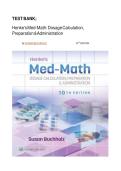
Henke's Med-Math: Dosage Calculation,
x x x
Preparation & Administration
x x
by SUSAN BUCHHOLZ
x x 10TH EDITION
x
, .
Table of Contents x x
Chapter 1, Arithmetic Needed for Dosage
x x x x x
Chapter 2, Metric and Household Systems of Measurement Chapter
x x x x x x x x
3, Drug Abbreviations, Labels, and Packaging
x x x x x x
Chapter 4, Calculation of Oral Medications—Solids and Liquids
x x x x x x x
Chapter 5, Liquids for Injection
x x x x x
Chapter 6, Calculation of Basic IV Drip Rates Chapter
x x x x x x x x
7, Special Types of IV Calculations
x x x x x x
Chapter 8, Dosage Problems for Infants and Children
x x x x x x x
Chapter 9, Information Basic to Administering Drugs
x x x x x x x
Chapter 10, Administration Procedures
x x x x
, .
Chapter 1, Arithmetic Needed for Dosagex x x x x
.
Format: Multiple Choicex x
x Chapter: 1 x
Client Needs: Physiological Integrity: Basic Care and comfort
x x x x x x x
x Cognitive Level: Apply x x
Difficulty: Moderate x .
Page and Header: 2, Dividing Whole Numbers; 3, Fractions
x x x x x x x x
x Integrated Process: Teaching/Learning x x
.
Objective: 1, 2 x x
1. A patient/client was instructed to drink 25 oz of water within 2 hours but was
x x x x x x x x x x x x x x
x only able to drink 15 oz. What portion of the water remained?
x x x x x x x x x x x
A) 2/5
B) 3/5 .
C) 2/25
D) 25/25
Ans: A .
Feedback: Subtract the quantity of water the client drank (15 oz) from the total
x x x x x x x x x x x x x
x available quantity (25 oz): 10 oz remain. To determine ta hb i reb . cpo om r/ t te is ot n of the water that
x x x x x x x x x x x x x x
remains, create a fraction by dividing 10 oz (remaining portion) by 25 oz (total
x x x x x x x x x x x x x x
portion). Therefore, 10 divided by 25 = 10/25. To reduce fractions, find the largest
x x x x x x x x x x x x x
.
number that can be divided evenly into the numerator and the denominator (5). Ten
x x x x x x x x x x x x x
x divided by 5 (10/5) = 2; 25/5 = 5. The fraction 10/25 can be reduced to its lowest
x x x x x x x x x x x x x x x x x
terms of 2/5. x x
.
Format: Multiple Choicex x
.
Chapter: 1 x
Client Needs: Physiological Integrity: Basic Care and Comfort
x x x x x x x
.
Cognitive Level: Apply x x
Difficulty: Moderate x
Page and Header: 2, Dividing Whole Numbers; 3, Fractiaobinrbs.
x x x x x x x x
.
Page
x1
, .
Integrated Process: Teaching/Learning x x
Objective: x 1, 2 x
2. A patient/client was prescribed 240 mL of Ensure by mouth and a supplement
x x x x x x x x x x x x
x but consumed only 100 mL. What portion of the Ensure remained?
x x x x x x x x x x
A) 5/12
.
B) 7/12
C) 100/240
D) 240/240 .
Ans: B
Feedback: Subtract the quantity of Ensure the client c o na sb i ur bm
x . c oe
md/ t e s(t 1 0 0 mL) from the
x x x x x x x x x x
total available quantity (240 mL): 140 mL remain. To determine the portion of the
x x x x x x x x x x x x x x
x Ensure that remains, create a fraction by dividing 140 mL (remaining portion) by 240
x x x x x x x x x x x x x
.
mL (total portion). Therefore, 140 divided by 240 = 7/12. To reduce fractions, find the
x x x x x x x x x x x x x x
largest number that can be divided evenly into the numerator and the denominator
x x x x x x x x x x x x
(20); 140 divided by 20 (140/20) = 7; 240/20 = 12. The fraction 140/240 can be
x x x x x x x x x x x x x x x
x reduced to its lowest terms of 7/12.
x x x x x x
.
Format: Multiple Choice x x
x Chapter: 1 x
Client Needs: Physiological Integrity: Basic Care and comfort
x x x x x x x
x Cognitive Level: Analyze x x
Difficulty: Difficult x .
Page and Header: 2, Multiplying Whole Numbers; 3, Fractions
x x x x x x x x
x Integrated Process: Communication and Documentation
x x x x
.
Objective: 1, 2 x x
1 1
3. A patient/client consumed 2
x x x
4 oz. of coffee, 2/3 oz. of ice cream, and 1
x x x x x x x x x
2 oz.
a bir b. com /te s t
of beef broth. What is the total number of ounces c o n s u m e d t h a t should be
x
x x x x x x x x x x x x
documented for the patient/client?
x x x x
A) 3 3/4 x .
B) 4 5/12 x
C) 4 2/3 x
.
D) 4 4/9 x
.
Page 2 x
TEST BANK;
x
Henke's Med-Math: Dosage Calculation,
x x x
Preparation & Administration
x x
by SUSAN BUCHHOLZ
x x 10TH EDITION
x
, .
Table of Contents x x
Chapter 1, Arithmetic Needed for Dosage
x x x x x
Chapter 2, Metric and Household Systems of Measurement Chapter
x x x x x x x x
3, Drug Abbreviations, Labels, and Packaging
x x x x x x
Chapter 4, Calculation of Oral Medications—Solids and Liquids
x x x x x x x
Chapter 5, Liquids for Injection
x x x x x
Chapter 6, Calculation of Basic IV Drip Rates Chapter
x x x x x x x x
7, Special Types of IV Calculations
x x x x x x
Chapter 8, Dosage Problems for Infants and Children
x x x x x x x
Chapter 9, Information Basic to Administering Drugs
x x x x x x x
Chapter 10, Administration Procedures
x x x x
, .
Chapter 1, Arithmetic Needed for Dosagex x x x x
.
Format: Multiple Choicex x
x Chapter: 1 x
Client Needs: Physiological Integrity: Basic Care and comfort
x x x x x x x
x Cognitive Level: Apply x x
Difficulty: Moderate x .
Page and Header: 2, Dividing Whole Numbers; 3, Fractions
x x x x x x x x
x Integrated Process: Teaching/Learning x x
.
Objective: 1, 2 x x
1. A patient/client was instructed to drink 25 oz of water within 2 hours but was
x x x x x x x x x x x x x x
x only able to drink 15 oz. What portion of the water remained?
x x x x x x x x x x x
A) 2/5
B) 3/5 .
C) 2/25
D) 25/25
Ans: A .
Feedback: Subtract the quantity of water the client drank (15 oz) from the total
x x x x x x x x x x x x x
x available quantity (25 oz): 10 oz remain. To determine ta hb i reb . cpo om r/ t te is ot n of the water that
x x x x x x x x x x x x x x
remains, create a fraction by dividing 10 oz (remaining portion) by 25 oz (total
x x x x x x x x x x x x x x
portion). Therefore, 10 divided by 25 = 10/25. To reduce fractions, find the largest
x x x x x x x x x x x x x
.
number that can be divided evenly into the numerator and the denominator (5). Ten
x x x x x x x x x x x x x
x divided by 5 (10/5) = 2; 25/5 = 5. The fraction 10/25 can be reduced to its lowest
x x x x x x x x x x x x x x x x x
terms of 2/5. x x
.
Format: Multiple Choicex x
.
Chapter: 1 x
Client Needs: Physiological Integrity: Basic Care and Comfort
x x x x x x x
.
Cognitive Level: Apply x x
Difficulty: Moderate x
Page and Header: 2, Dividing Whole Numbers; 3, Fractiaobinrbs.
x x x x x x x x
.
Page
x1
, .
Integrated Process: Teaching/Learning x x
Objective: x 1, 2 x
2. A patient/client was prescribed 240 mL of Ensure by mouth and a supplement
x x x x x x x x x x x x
x but consumed only 100 mL. What portion of the Ensure remained?
x x x x x x x x x x
A) 5/12
.
B) 7/12
C) 100/240
D) 240/240 .
Ans: B
Feedback: Subtract the quantity of Ensure the client c o na sb i ur bm
x . c oe
md/ t e s(t 1 0 0 mL) from the
x x x x x x x x x x
total available quantity (240 mL): 140 mL remain. To determine the portion of the
x x x x x x x x x x x x x x
x Ensure that remains, create a fraction by dividing 140 mL (remaining portion) by 240
x x x x x x x x x x x x x
.
mL (total portion). Therefore, 140 divided by 240 = 7/12. To reduce fractions, find the
x x x x x x x x x x x x x x
largest number that can be divided evenly into the numerator and the denominator
x x x x x x x x x x x x
(20); 140 divided by 20 (140/20) = 7; 240/20 = 12. The fraction 140/240 can be
x x x x x x x x x x x x x x x
x reduced to its lowest terms of 7/12.
x x x x x x
.
Format: Multiple Choice x x
x Chapter: 1 x
Client Needs: Physiological Integrity: Basic Care and comfort
x x x x x x x
x Cognitive Level: Analyze x x
Difficulty: Difficult x .
Page and Header: 2, Multiplying Whole Numbers; 3, Fractions
x x x x x x x x
x Integrated Process: Communication and Documentation
x x x x
.
Objective: 1, 2 x x
1 1
3. A patient/client consumed 2
x x x
4 oz. of coffee, 2/3 oz. of ice cream, and 1
x x x x x x x x x
2 oz.
a bir b. com /te s t
of beef broth. What is the total number of ounces c o n s u m e d t h a t should be
x
x x x x x x x x x x x x
documented for the patient/client?
x x x x
A) 3 3/4 x .
B) 4 5/12 x
C) 4 2/3 x
.
D) 4 4/9 x
.
Page 2 x