(1) Explain why the 1905 Immigration Act was introduced. (8 marks)
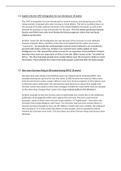
The 1905 Immigration Act was introduced for several reasons, one being because of the
rising numbers of people who were moving to Great Britain. This led to a political alarm as
the amount of foreign national criminals in the United Kingdom increased, as well as the
demand for parishes to help and provide for the poor. This was aimed specifically towards
Russian and Polish Jews who were fleeing the Russian pogroms where they had faced
religious persecution.
Another reason for the Immigration Act was because of the increase in racist attitudes
towards migrants. Many scientists at the time had implied that the white races had a
“superiority”, for example the anthropologist Gustave le Bon believed in an evolutionary
pyramid with whites at the top. Another man named Francis Galton talked of racial
intelligence too. This seemed the perfect excuse for an expansion of Great Britain’s Empire,
therefore they took over large parts of Africa in the late 1800s, known as the “Scramble for
Africa.” The idea that black people were racially inferior gave the excuse for whites to claim
the Empire. Many believed this meant that white people could look after the black people.
(2) How were Germans living in GB treated during WW1? (8 marks)
Germans that were living in Great Britain were not treated well at all during WW1. One
example backing this up was the fact that some 32,000 German and Austrian Aliens were
interned and sent to prison camps without a trial. Any German property in GB in places such
as factories were confiscated. The anti-German view became so severe that people had
German names were quick to have them changed, notably the royal family were an example
of this when they changed their names from Saxe Coburg Gotha to The Windsor’s.
Another example of how the German were treated badly was mainly due to the deliberate
publication of propaganda which were against the Germans. The press used several
examples, some of which were real and some fictitious, of “frightfulness” from when the
Germans had invaded Belgium and France. The Germans had burnt the ancient library in
Louvain and were thought to have cut off children’s hands. But more notably, the sinking of
the Lusitania in 1915 had caused the death of many people, only increasing the hatred
towards the Germans even more. This was taken out when German shops and houses were
attacked.
The 1905 Immigration Act was introduced for several reasons, one being because of the
rising numbers of people who were moving to Great Britain. This led to a political alarm as
the amount of foreign national criminals in the United Kingdom increased, as well as the
demand for parishes to help and provide for the poor. This was aimed specifically towards
Russian and Polish Jews who were fleeing the Russian pogroms where they had faced
religious persecution.
Another reason for the Immigration Act was because of the increase in racist attitudes
towards migrants. Many scientists at the time had implied that the white races had a
“superiority”, for example the anthropologist Gustave le Bon believed in an evolutionary
pyramid with whites at the top. Another man named Francis Galton talked of racial
intelligence too. This seemed the perfect excuse for an expansion of Great Britain’s Empire,
therefore they took over large parts of Africa in the late 1800s, known as the “Scramble for
Africa.” The idea that black people were racially inferior gave the excuse for whites to claim
the Empire. Many believed this meant that white people could look after the black people.
(2) How were Germans living in GB treated during WW1? (8 marks)
Germans that were living in Great Britain were not treated well at all during WW1. One
example backing this up was the fact that some 32,000 German and Austrian Aliens were
interned and sent to prison camps without a trial. Any German property in GB in places such
as factories were confiscated. The anti-German view became so severe that people had
German names were quick to have them changed, notably the royal family were an example
of this when they changed their names from Saxe Coburg Gotha to The Windsor’s.
Another example of how the German were treated badly was mainly due to the deliberate
publication of propaganda which were against the Germans. The press used several
examples, some of which were real and some fictitious, of “frightfulness” from when the
Germans had invaded Belgium and France. The Germans had burnt the ancient library in
Louvain and were thought to have cut off children’s hands. But more notably, the sinking of
the Lusitania in 1915 had caused the death of many people, only increasing the hatred
towards the Germans even more. This was taken out when German shops and houses were
attacked.