lOMoARcPSD|67691079
NIGHTINGALE COLLEGE
DIRECT-FOCUSED CARE: CONCEPT MAPPING ASSIGNMENT WORKSHEET
NURSING PROCESS TEMPLATE:
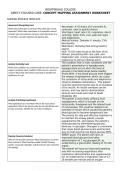
Assessment (Recognizing Cues)
Neurologic: A+O status of 0 (normally 4),
Which client information is relevant? What client data is most confusion, alert to painful stimuli.
important? Which client information is of immediate concern? Vital Signs: heart rate 112, respiratory rate 8
Consider signs and symptoms, lab work, client statements, H & (snoring), SpO2: 91%, cool, pale skin signs
P, and others. Consider subjective and objective data. with diaphoresis.
Medical History: Diabetes II, obesity, CVA,
Neuropathy.
Medication: Humalog (fast-acting Insulin),
aspirin.
H&P: 75 Y/O male found on the floor of his
kitchen, presenting with cool, pale, and
diaphoretic skin, snoring respirations and only
responsive to sternal rub/trap pinch.
The condition that is most consistent with the
Analysis (Analyzing Cues)
patient’s presentation is hypoglycemia.
Which client conditions are consistent with the cues? Do the cues Hypoglycemia occurs when the level of
support a particular client condition? What cues are a cause for glucose in the blood drops below healthy
concern? What other information would help to establish the
levels (NIH). A low blood glucose level triggers
significance of a cue?
the release of epinephrine, which can cause
the symptoms of tachycardia and diaphoresis
(America Diabetes Association). This patient
could be experiencing this due to an overdose
of his insulin. An insulin overdose can be
serious, and may lead to disorientation,
seizures and could even lead to death
(Diabetes UK).
The patient is most likely suffering from
Analysis (Prioritizing Hypotheses)
hypoglycemia, which is brought on the
What explanations are most likely? What is the most serious tachycardia, bradypnea and the altered level
explanation? What is the priority order for safe and effective care? of conciseness. This could be related to an
In order of priority, identify the top 3 client conditions.
overdose of insulin which caused the patient’s
blood glucose to become dangerously low.
The priority for safe and effective treatment is
to maintain the airway patent, provide
supplemental O2, and replace the patient’s
blood glucose by administering glucose,
dextrose, or glucagon. Glucagon is a hormone
that raises blood glucose levels and the best
way to treat severely low blood glucose (NIH).
SMART goals: The patient will have an
Planning (Generate Solutions)
improved blood glucose level after
What are the desirable outcomes? What interventions can achieve administration of 1 mg glucagon IM, as
these outcomes? What should be avoided? (SMART Planning- evidenced by a glucometer reading of 70-120
specific, measurable, attainable, realistic/relevant, time-restricted-
mg/dL.
Goal setting)
The patient will have an improved breathing
rate with no snoring respirations after
medication administration and supplemental
O2, as evidenced by a respiratory rate of 12-
18 breaths per minute and an oxygen
messages.downloaded_by
, lOMoARcPSD|67691079
saturation of 95%+ within 15 minutes.
The patient will regain a baseline level of
consciousness after the administration of
appropriate medications as evidenced by an
A+O status of 4 (Person, time, place, and
situation) within 15 minutes.
The patient will be placed in high fowlers
Implementation (Take actions)
position to ensure his airway is patent and 1
How should the intervention or combination of interventions be mg glucagon IM will be administered for his
performed, requested, communicated, taught, etc.? What are the hypoglycemia, and IV Dextrose (Diabetes UK).
priority interventions? (Mark with asterisk)
The patient will be monitored to ensure that
his blood sugar does not trend in a downward
direction.
When the patient was found in his home, he
Evaluation (Evaluating Outcomes)
accidentally administered a second dose of his
What signs point to improving/declining/unchanged status? fast-acting insulin. The nurse recognized this
What interventions were effective? Are there other interventions overdose and the resulting severe
that could be more effective? Did the client’s care outlook or
hypoglycemia. The nurse must now assess if
status improve?
the patient can reliably administer his insulin
and track his blood glucose levels. If the
patient cannot continue to self-administer his
insulin and/or keep adequate track of blood
glucose readings, the nurse should contact
the patient’s support system (with the
patient’s permission) to assist him with his
medication.
Using the teach back methos would be
beneficial in this situation as the nurse would
ensure that the patient knows how to avoid
this emergency in the future.
Client Information (SBAR, H&P)
S: 75-year-old male was found on his kitchen floor Main Concept
with severe hypoglycemia.
Page 2 of 6
B: The patient was alert to painful stimuli, had
cool, pale, and diaphoretic skin signs, was messages.downloaded_by
NIGHTINGALE COLLEGE
DIRECT-FOCUSED CARE: CONCEPT MAPPING ASSIGNMENT WORKSHEET
NURSING PROCESS TEMPLATE:
Assessment (Recognizing Cues)
Neurologic: A+O status of 0 (normally 4),
Which client information is relevant? What client data is most confusion, alert to painful stimuli.
important? Which client information is of immediate concern? Vital Signs: heart rate 112, respiratory rate 8
Consider signs and symptoms, lab work, client statements, H & (snoring), SpO2: 91%, cool, pale skin signs
P, and others. Consider subjective and objective data. with diaphoresis.
Medical History: Diabetes II, obesity, CVA,
Neuropathy.
Medication: Humalog (fast-acting Insulin),
aspirin.
H&P: 75 Y/O male found on the floor of his
kitchen, presenting with cool, pale, and
diaphoretic skin, snoring respirations and only
responsive to sternal rub/trap pinch.
The condition that is most consistent with the
Analysis (Analyzing Cues)
patient’s presentation is hypoglycemia.
Which client conditions are consistent with the cues? Do the cues Hypoglycemia occurs when the level of
support a particular client condition? What cues are a cause for glucose in the blood drops below healthy
concern? What other information would help to establish the
levels (NIH). A low blood glucose level triggers
significance of a cue?
the release of epinephrine, which can cause
the symptoms of tachycardia and diaphoresis
(America Diabetes Association). This patient
could be experiencing this due to an overdose
of his insulin. An insulin overdose can be
serious, and may lead to disorientation,
seizures and could even lead to death
(Diabetes UK).
The patient is most likely suffering from
Analysis (Prioritizing Hypotheses)
hypoglycemia, which is brought on the
What explanations are most likely? What is the most serious tachycardia, bradypnea and the altered level
explanation? What is the priority order for safe and effective care? of conciseness. This could be related to an
In order of priority, identify the top 3 client conditions.
overdose of insulin which caused the patient’s
blood glucose to become dangerously low.
The priority for safe and effective treatment is
to maintain the airway patent, provide
supplemental O2, and replace the patient’s
blood glucose by administering glucose,
dextrose, or glucagon. Glucagon is a hormone
that raises blood glucose levels and the best
way to treat severely low blood glucose (NIH).
SMART goals: The patient will have an
Planning (Generate Solutions)
improved blood glucose level after
What are the desirable outcomes? What interventions can achieve administration of 1 mg glucagon IM, as
these outcomes? What should be avoided? (SMART Planning- evidenced by a glucometer reading of 70-120
specific, measurable, attainable, realistic/relevant, time-restricted-
mg/dL.
Goal setting)
The patient will have an improved breathing
rate with no snoring respirations after
medication administration and supplemental
O2, as evidenced by a respiratory rate of 12-
18 breaths per minute and an oxygen
messages.downloaded_by
, lOMoARcPSD|67691079
saturation of 95%+ within 15 minutes.
The patient will regain a baseline level of
consciousness after the administration of
appropriate medications as evidenced by an
A+O status of 4 (Person, time, place, and
situation) within 15 minutes.
The patient will be placed in high fowlers
Implementation (Take actions)
position to ensure his airway is patent and 1
How should the intervention or combination of interventions be mg glucagon IM will be administered for his
performed, requested, communicated, taught, etc.? What are the hypoglycemia, and IV Dextrose (Diabetes UK).
priority interventions? (Mark with asterisk)
The patient will be monitored to ensure that
his blood sugar does not trend in a downward
direction.
When the patient was found in his home, he
Evaluation (Evaluating Outcomes)
accidentally administered a second dose of his
What signs point to improving/declining/unchanged status? fast-acting insulin. The nurse recognized this
What interventions were effective? Are there other interventions overdose and the resulting severe
that could be more effective? Did the client’s care outlook or
hypoglycemia. The nurse must now assess if
status improve?
the patient can reliably administer his insulin
and track his blood glucose levels. If the
patient cannot continue to self-administer his
insulin and/or keep adequate track of blood
glucose readings, the nurse should contact
the patient’s support system (with the
patient’s permission) to assist him with his
medication.
Using the teach back methos would be
beneficial in this situation as the nurse would
ensure that the patient knows how to avoid
this emergency in the future.
Client Information (SBAR, H&P)
S: 75-year-old male was found on his kitchen floor Main Concept
with severe hypoglycemia.
Page 2 of 6
B: The patient was alert to painful stimuli, had
cool, pale, and diaphoretic skin signs, was messages.downloaded_by