

FRACTURES OF THE PATELLA
Patella is the largest sesamoid bone in the body. This is a common fracture. It may result from a
direct or an indirect force.
Mechanism of Injury
Direct trauma: This is due to dashboard injuries anddue to direct fall over the patella. They
usually cause comminuted fractures, and are thecommon causes.
Indirect trauma (Quadriceps contraction): Suddenforceful contraction of the quadriceps as in
sportsperson and athletes can cause patellar fractures. Herethe fracture is usually transverse and
sometimesavulsion fractures of the proximal or distal poles maybe seen.
Age: Common in 20-50 years age group.
Male: Female = 2: 1
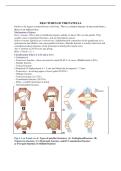
Classification (Figs 1A to D and a to b)
• Undisplaced:
– Transverse fracture—these account for nearly50-80 % of cases. (Middle-third ≅ 80%)
– Stellate fracture.
– Vertical fracture.
• Displaced: If displacement is > 3 mm and ifarticular incongruity > 2 mm:
– Transverse—involving upper or lower poles(50-85%).
– Oblique fracture.
– Vertical fracture (12-27%).
– Comminuted fracture (30-35%).
– Polar—could be proximal or distal.
– Osteochondral fractures.
Figs 1 A to D and a to b: Types of patellar fractures: (A) Undisplacedfracture, (B)
Transverse fracture, (C) Distal pole fracture, and(D) Comminuted fracture
a) Two-part fracture, b) Stellate fracture
Patella is the largest sesamoid bone in the body. This is a common fracture. It may result from a
direct or an indirect force.
Mechanism of Injury
Direct trauma: This is due to dashboard injuries anddue to direct fall over the patella. They
usually cause comminuted fractures, and are thecommon causes.
Indirect trauma (Quadriceps contraction): Suddenforceful contraction of the quadriceps as in
sportsperson and athletes can cause patellar fractures. Herethe fracture is usually transverse and
sometimesavulsion fractures of the proximal or distal poles maybe seen.
Age: Common in 20-50 years age group.
Male: Female = 2: 1
Classification (Figs 1A to D and a to b)
• Undisplaced:
– Transverse fracture—these account for nearly50-80 % of cases. (Middle-third ≅ 80%)
– Stellate fracture.
– Vertical fracture.
• Displaced: If displacement is > 3 mm and ifarticular incongruity > 2 mm:
– Transverse—involving upper or lower poles(50-85%).
– Oblique fracture.
– Vertical fracture (12-27%).
– Comminuted fracture (30-35%).
– Polar—could be proximal or distal.
– Osteochondral fractures.
Figs 1 A to D and a to b: Types of patellar fractures: (A) Undisplacedfracture, (B)
Transverse fracture, (C) Distal pole fracture, and(D) Comminuted fracture
a) Two-part fracture, b) Stellate fracture

