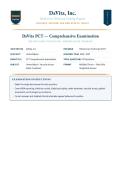
D DaVita, Inc.
MAXE · TCP
★ ★
DaVita Patient Care Technician Training Program
EST. 1999
PROVIDER, PARTNER, AND EMPLOYER OF CHOICE
DaVita PCT — Comprehensive Examination
PAT I E N T C A R E T E C H N I C I A N · H E M O D I A LYS I S T RA I N I N G
INSTITUTION DaVita, Inc. PROGRAM Patient Care Technician (PCT)
SPECIALTY Hemodialysis ACADEMIC YEAR
EXAM TITLE PCT Comprehensive Examination TOTAL QUESTIONS 85 Questions
SUBJECT Hemodialysis · Vascular Access · FORMAT Multiple Choice — Select the
Water Treatment Single Best Answer
EXAMINATION INSTRUCTIONS
▸ Select the single best answer for each question.
▸ Covers REM reporting, infection control, dialysis principles, water treatment, vascular access, patient
assessment, and emergency procedures.
▸ Correct answers and detailed clinical rationales appear below each question.
, HEMODIALYSIS PATIENT CARE TECHNICIAN —
Questions 1 – 85
COMPREHENSIVE
1. What does REM stand for and what is it used to submit?
A. Routine Equipment Maintenance — equipment repair requests only
B. Risk Event Management — unsafe conditions, near misses, and adverse events
C. Renal Evaluation Method — patient lab results
D. Regulatory Event Monitoring — CMS survey findings only
CORRECT ANSWER B — Risk Event Management — unsafe conditions, near misses, and adverse
events
RATIONALE REM (Risk Event Management) is the reporting system for documenting unsafe
conditions, near misses, and adverse events. It is a critical safety tool for
identifying and mitigating risks before patient harm occurs.
2. Sterile means:
A. Disinfected but may contain spores
B. Free of all living microorganisms and spores
C. Visibly clean but not disinfected
D. Treated with bleach solution only
CORRECT ANSWER B — Free of all living microorganisms and spores
RATIONALE Sterile means the complete absence of all living microorganisms and spores. This
is achieved through methods like autoclaving. Clean means disinfected but not
sterile.
,3. Clean means:
A. Free of all microorganisms including spores
B. Not sterile, but disinfected — such as a clean dialysis chair
C. Visibly soiled but wiped down
D. Never been used before
CORRECT ANSWER B — Not sterile, but disinfected — such as a clean dialysis chair
RATIONALE Clean items are disinfected but not sterile. A clean dialysis chair has been
disinfected but is not free of all microorganisms. This is appropriate for
environmental surfaces.
4. Contaminated means:
A. Visibly dirty with blood
B. A sterile or clean item that has come in contact with a non-sterile object
C. An item that has been autoclaved
D. An item that is brand new
CORRECT ANSWER B — A sterile or clean item that has come in contact with a non-sterile
object
RATIONALE Contamination occurs when a sterile or clean item touches a non-sterile surface
or object. This breaks the sterile field and the item must be discarded or re-
sterilized.
5. Dirty means:
A. Neither sterile nor clean, but visibly contaminated
B. Recently disinfected
C. Ready for patient use
D. Sterile but expired
CORRECT ANSWER A — Neither sterile nor clean, but visibly contaminated
RATIONALE Dirty items are visibly soiled and have not been cleaned or disinfected. They pose
an infection risk and must be cleaned before use or properly disposed of.
, 6. Alcohol-based hand rubs must contain what percentage of alcohol?
A. 30–50%
B. 50–70%
C. 60–95% ethyl alcohol, isopropyl alcohol, or combination
D. 100%
CORRECT ANSWER C — 60–95% ethyl alcohol, isopropyl alcohol, or combination
RATIONALE Per CDC guidelines, alcohol-based hand rubs must contain 60–95% alcohol to be
effective against microorganisms. Lower concentrations are not adequately
antimicrobial.
7. How long should you wash your hands for?
A. 10 seconds
B. 15 seconds
C. 20 seconds
D. 60 seconds
CORRECT ANSWER C — 20 seconds
RATIONALE Handwashing should last at least 20 seconds with soap and water, using friction
to mechanically remove microorganisms. This is the CDC-recommended
minimum duration.
8. PPE includes what items?
A. Stethoscope and blood pressure cuff only
B. Gloves, gowns, masks, and protective eye gear
C. Shoe covers only
D. Lab coat and name badge
CORRECT ANSWER B — Gloves, gowns, masks, and protective eye gear
RATIONALE Personal Protective Equipment includes gloves, gowns, masks, and protective
eyewear. These create barriers against blood, body fluids, and infectious agents
during patient care.
MAXE · TCP
★ ★
DaVita Patient Care Technician Training Program
EST. 1999
PROVIDER, PARTNER, AND EMPLOYER OF CHOICE
DaVita PCT — Comprehensive Examination
PAT I E N T C A R E T E C H N I C I A N · H E M O D I A LYS I S T RA I N I N G
INSTITUTION DaVita, Inc. PROGRAM Patient Care Technician (PCT)
SPECIALTY Hemodialysis ACADEMIC YEAR
EXAM TITLE PCT Comprehensive Examination TOTAL QUESTIONS 85 Questions
SUBJECT Hemodialysis · Vascular Access · FORMAT Multiple Choice — Select the
Water Treatment Single Best Answer
EXAMINATION INSTRUCTIONS
▸ Select the single best answer for each question.
▸ Covers REM reporting, infection control, dialysis principles, water treatment, vascular access, patient
assessment, and emergency procedures.
▸ Correct answers and detailed clinical rationales appear below each question.
, HEMODIALYSIS PATIENT CARE TECHNICIAN —
Questions 1 – 85
COMPREHENSIVE
1. What does REM stand for and what is it used to submit?
A. Routine Equipment Maintenance — equipment repair requests only
B. Risk Event Management — unsafe conditions, near misses, and adverse events
C. Renal Evaluation Method — patient lab results
D. Regulatory Event Monitoring — CMS survey findings only
CORRECT ANSWER B — Risk Event Management — unsafe conditions, near misses, and adverse
events
RATIONALE REM (Risk Event Management) is the reporting system for documenting unsafe
conditions, near misses, and adverse events. It is a critical safety tool for
identifying and mitigating risks before patient harm occurs.
2. Sterile means:
A. Disinfected but may contain spores
B. Free of all living microorganisms and spores
C. Visibly clean but not disinfected
D. Treated with bleach solution only
CORRECT ANSWER B — Free of all living microorganisms and spores
RATIONALE Sterile means the complete absence of all living microorganisms and spores. This
is achieved through methods like autoclaving. Clean means disinfected but not
sterile.
,3. Clean means:
A. Free of all microorganisms including spores
B. Not sterile, but disinfected — such as a clean dialysis chair
C. Visibly soiled but wiped down
D. Never been used before
CORRECT ANSWER B — Not sterile, but disinfected — such as a clean dialysis chair
RATIONALE Clean items are disinfected but not sterile. A clean dialysis chair has been
disinfected but is not free of all microorganisms. This is appropriate for
environmental surfaces.
4. Contaminated means:
A. Visibly dirty with blood
B. A sterile or clean item that has come in contact with a non-sterile object
C. An item that has been autoclaved
D. An item that is brand new
CORRECT ANSWER B — A sterile or clean item that has come in contact with a non-sterile
object
RATIONALE Contamination occurs when a sterile or clean item touches a non-sterile surface
or object. This breaks the sterile field and the item must be discarded or re-
sterilized.
5. Dirty means:
A. Neither sterile nor clean, but visibly contaminated
B. Recently disinfected
C. Ready for patient use
D. Sterile but expired
CORRECT ANSWER A — Neither sterile nor clean, but visibly contaminated
RATIONALE Dirty items are visibly soiled and have not been cleaned or disinfected. They pose
an infection risk and must be cleaned before use or properly disposed of.
, 6. Alcohol-based hand rubs must contain what percentage of alcohol?
A. 30–50%
B. 50–70%
C. 60–95% ethyl alcohol, isopropyl alcohol, or combination
D. 100%
CORRECT ANSWER C — 60–95% ethyl alcohol, isopropyl alcohol, or combination
RATIONALE Per CDC guidelines, alcohol-based hand rubs must contain 60–95% alcohol to be
effective against microorganisms. Lower concentrations are not adequately
antimicrobial.
7. How long should you wash your hands for?
A. 10 seconds
B. 15 seconds
C. 20 seconds
D. 60 seconds
CORRECT ANSWER C — 20 seconds
RATIONALE Handwashing should last at least 20 seconds with soap and water, using friction
to mechanically remove microorganisms. This is the CDC-recommended
minimum duration.
8. PPE includes what items?
A. Stethoscope and blood pressure cuff only
B. Gloves, gowns, masks, and protective eye gear
C. Shoe covers only
D. Lab coat and name badge
CORRECT ANSWER B — Gloves, gowns, masks, and protective eye gear
RATIONALE Personal Protective Equipment includes gloves, gowns, masks, and protective
eyewear. These create barriers against blood, body fluids, and infectious agents
during patient care.