

DANB
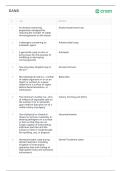
# Term Definition
1 An alcohol-containing Alcohol-based hand rub
preparation designed for
reducing the number of viable
microorganisms on the hands.
2 A detergent containing an Antimicrobial soap
antiseptic agent.
3 A germicide used on skin or Antiseptic
living tissue for the purpose of
inhibiting or destroying
microorganisms
4 how long does droplets stay in At least 24 hours
the air?
5 Microbiological load (i.e., number Bioburden
of viable organisms in or on an
object or surface) or organic
material on a surface or object
before decontamination, or
sterilization.
6 The minimum number (i.e., tens Colony- forming unit (CFU)
of millions) of separable cells on
the surface of or in semisolid
agar medium that give rise to a
visible colony of progeny.
7 Use of physical or chemical Decontamination
means to remove, inactivate, or
destroy pathogens on a surface
or item so that they are no
longer capable of transmitting
infectious particles and the
surface or item is rendered safe
for handling, use, or disposal.
8 Nonsterile water used during Dental Treatment water
dental treatment, including
irrigation of nonsurgical
operative sites and cooling of
high-speed rotary and ultrasonic
instruments.
,DANB
# Term Definition
9 A chemical agent used on Disinfectant
inanimate objects (e.g., floors,
walls, or sinks) to destroy
virtually all recognized
pathogenic microorganisms, but
not necessarily all microbial
forms
10 Destruction of pathogenic and Disinfection
other kinds of microorganisms
by physical or chemical means.
11 Particles <5 µm in diameter Droplet nuclei
formed by dehydration of
airborne droplets containing
microorganisms that can remain
suspended in the air for long
periods of time.
12 Small particles of moisture (e.g., Droplets
spatter) generated when a
person coughs or sneezes, or
when water is converted to a fine
mist by an aerator or shower
head.
13 The lipopolysaccharide of Endotoxin
gram-negative bacteria, the toxic
character of which resides in the
lipid protein.
14 An agent that destroys Germicide
microorganisms, especially
pathogenic organisms.
15 General term that applies to Hand Hygiene
handwashing, antiseptic
handwash, antiseptic hand rub,
or surgical hand antisepsis.
16 Any infection associated with a Health-care-associated infection
medical or surgical intervention.
17 Product used for prophylaxis Hepatitis B immune globulin (HBIG)
against HBV infection.
, DANB
# Term Definition
18 Serologic marker on the surface Hepatitis B surface antigen (HBsAg)
of HBV detected in high levels
during acute or chronic hepatitis.
19 Secreted product of the Hepatitis B e antigen (HBeAg)
nucleocapsid gene of HBV found
in serum during acute and
chronic HBV infection.
20 Protective antibody against Hepatitis B surface antibody (anti-HBs)
HBsAg. Presence in the blood can
indicate past infection with, and
immunity to, HBV, or immune
response from hepatitis B
vaccine.
21 Those bacteria requiring an Heterotrophic Bacteria
organic carbon source for growth
(i.e., deriving energy and carbon
from organic compounds).
22 Disinfection process that High-level disinfection
inactivates vegetative bacteria,
mycobacteria, fungi, and viruses
but not necessarily high numbers
of bacterial spores.
23 Germicide registered by EPA for Hospital disinfectant
use on inanimate objects in
hospitals, clinics, dental offices,
and other medical-related
facilities. Efficacy is
demonstrated against
Salmonella choleraesuis,
Staphylococcus aureus, and
Pseudomonas aeruginosa.
24 Induced inadvertently by HCP, Latrogenic
medical (including dental)
treatment, or diagnostic
procedures. Used particularly in
reference to an infectious
disease or other complication of
treatment.
# Term Definition
1 An alcohol-containing Alcohol-based hand rub
preparation designed for
reducing the number of viable
microorganisms on the hands.
2 A detergent containing an Antimicrobial soap
antiseptic agent.
3 A germicide used on skin or Antiseptic
living tissue for the purpose of
inhibiting or destroying
microorganisms
4 how long does droplets stay in At least 24 hours
the air?
5 Microbiological load (i.e., number Bioburden
of viable organisms in or on an
object or surface) or organic
material on a surface or object
before decontamination, or
sterilization.
6 The minimum number (i.e., tens Colony- forming unit (CFU)
of millions) of separable cells on
the surface of or in semisolid
agar medium that give rise to a
visible colony of progeny.
7 Use of physical or chemical Decontamination
means to remove, inactivate, or
destroy pathogens on a surface
or item so that they are no
longer capable of transmitting
infectious particles and the
surface or item is rendered safe
for handling, use, or disposal.
8 Nonsterile water used during Dental Treatment water
dental treatment, including
irrigation of nonsurgical
operative sites and cooling of
high-speed rotary and ultrasonic
instruments.
,DANB
# Term Definition
9 A chemical agent used on Disinfectant
inanimate objects (e.g., floors,
walls, or sinks) to destroy
virtually all recognized
pathogenic microorganisms, but
not necessarily all microbial
forms
10 Destruction of pathogenic and Disinfection
other kinds of microorganisms
by physical or chemical means.
11 Particles <5 µm in diameter Droplet nuclei
formed by dehydration of
airborne droplets containing
microorganisms that can remain
suspended in the air for long
periods of time.
12 Small particles of moisture (e.g., Droplets
spatter) generated when a
person coughs or sneezes, or
when water is converted to a fine
mist by an aerator or shower
head.
13 The lipopolysaccharide of Endotoxin
gram-negative bacteria, the toxic
character of which resides in the
lipid protein.
14 An agent that destroys Germicide
microorganisms, especially
pathogenic organisms.
15 General term that applies to Hand Hygiene
handwashing, antiseptic
handwash, antiseptic hand rub,
or surgical hand antisepsis.
16 Any infection associated with a Health-care-associated infection
medical or surgical intervention.
17 Product used for prophylaxis Hepatitis B immune globulin (HBIG)
against HBV infection.
, DANB
# Term Definition
18 Serologic marker on the surface Hepatitis B surface antigen (HBsAg)
of HBV detected in high levels
during acute or chronic hepatitis.
19 Secreted product of the Hepatitis B e antigen (HBeAg)
nucleocapsid gene of HBV found
in serum during acute and
chronic HBV infection.
20 Protective antibody against Hepatitis B surface antibody (anti-HBs)
HBsAg. Presence in the blood can
indicate past infection with, and
immunity to, HBV, or immune
response from hepatitis B
vaccine.
21 Those bacteria requiring an Heterotrophic Bacteria
organic carbon source for growth
(i.e., deriving energy and carbon
from organic compounds).
22 Disinfection process that High-level disinfection
inactivates vegetative bacteria,
mycobacteria, fungi, and viruses
but not necessarily high numbers
of bacterial spores.
23 Germicide registered by EPA for Hospital disinfectant
use on inanimate objects in
hospitals, clinics, dental offices,
and other medical-related
facilities. Efficacy is
demonstrated against
Salmonella choleraesuis,
Staphylococcus aureus, and
Pseudomonas aeruginosa.
24 Induced inadvertently by HCP, Latrogenic
medical (including dental)
treatment, or diagnostic
procedures. Used particularly in
reference to an infectious
disease or other complication of
treatment.

