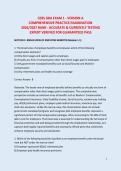
CEBS GBA EXAM 1 - VERSION A
COMPREHENSIVE PRACTICE EXAMINATION
2026/2027 BANK - ACCURATE & CURRENTLY TESTING
EXPERT VERIFIED FOR GUARANTEED PASS
SECTION 1: BROAD VIEW OF EMPLOYEE BENEFITS (Module 1.1)
1. The broad view of employee benefits encompasses which of the following
compensation elements?
A) Only direct wages and salaries paid to employees
B) Virtually any form of compensation other than direct wages paid to employees
C) Only government-mandated benefits such as Social Security and Workers'
Compensation
D) Only retirement plans and health insurance coverage
Correct Answer: B
Rationale: The broad view of employee benefits defines benefits as virtually any form of
compensation other than direct wages paid to employees. This comprehensive
perspective includes an extensive array of benefits such as Workers' Compensation,
Unemployment Insurance, State Disability Income, Social Security, vacation pay, holiday
pay, 401(k)/retirement plans, employer-paid medical insurance, severance pay, and
child care assistance. Unlike the narrow view, this interpretation does not exclude
government-mandated programs and recognizes that employee benefits represent a
significant portion of total compensation packages, often accounting for 30-40% of total
labor costs for employers. The broad view is essential for understanding the full scope of
financial protection and well-being provided through the employment relationship, as it
captures both legally required benefits and voluntarily offered perks that collectively
enhance employee security and satisfaction.
2. Which of the following would be classified as an employee benefit under the broad
view but NOT under the narrow view?
A) Employer-sponsored 401(k) retirement plan
B) Employer-paid health insurance premiums
1
,C) Social Security contributions paid by the employer
D) Paid vacation days
Correct Answer: C
Rationale: Under the broad view, Social Security contributions are considered employee
benefits because they represent compensation other than direct wages. However,
under the narrow view, Social Security is explicitly excluded because it is a government-
mandated program that is not voluntarily sponsored or initiated by the employer. The
narrow view strictly limits benefits to those that arise from the employment relationship
and are not underwritten or paid directly by the government. This distinction is critical
for benefits professionals because it affects how they analyze total compensation costs,
benchmark against competitors, and determine which benefits are subject to collective
bargaining versus those that are statutorily required regardless of employer discretion.
3. According to the broad view of employee benefits, which of the following is
considered a benefit?
A) Base hourly wage
B) Annual salary
C) Overtime pay
D) Severance pay
Correct Answer: D
Rationale: Severance pay is classified as an employee benefit under the broad view
because it is a form of compensation provided to employees that is not part of their
direct wages or regular salary. Severance pay is typically offered upon termination of
employment and serves as a financial bridge for employees transitioning to new
opportunities. Under the broad view, benefits are defined as virtually any compensation
other than direct wages, which includes termination-related payments. In contrast, base
hourly wages, annual salaries, and overtime pay are all considered direct wages because
they represent compensation for time worked and are paid on a regular, ongoing basis
as part of the employment contract, making them ineligible for classification as benefits
under either the broad or narrow view.
2
, 4. The broad view of employee benefits would include all of the following EXCEPT:
A) Unemployment insurance
B) Employer share of medical insurance
C) Regular weekly paycheck
D) Child care assistance provided by employer
Correct Answer: C
Rationale: A regular weekly paycheck represents direct wages paid to employees for
their work and is therefore excluded from the definition of employee benefits under
both the broad and narrow views. The broad view specifically defines benefits as
compensation other than direct wages, making the regular paycheck the only item in
this list that does not qualify as a benefit. Unemployment insurance, employer-paid
medical insurance, and child care assistance all fall within the broad definition because
they provide value to employees without being part of their direct cash compensation.
Understanding this distinction is fundamental for benefits professionals because it helps
them accurately calculate total compensation packages and communicate the full value
of employment to current and prospective employees.
5. Which statement best describes the key difference between the broad and narrow
views of employee benefits?
A) The broad view only includes benefits required by law, while the narrow view
includes all voluntary benefits
B) The broad view includes government-mandated benefits, while the narrow view
excludes them
C) The broad view focuses only on retirement plans, while the narrow view focuses on
health benefits
D) The broad view excludes direct wages, while the narrow view includes direct wages
as benefits
Correct Answer: B
Rationale: The fundamental distinction between the broad and narrow views lies in their
treatment of government-mandated benefits. The broad view includes all forms of
compensation other than direct wages, regardless of whether they are legally required
3
COMPREHENSIVE PRACTICE EXAMINATION
2026/2027 BANK - ACCURATE & CURRENTLY TESTING
EXPERT VERIFIED FOR GUARANTEED PASS
SECTION 1: BROAD VIEW OF EMPLOYEE BENEFITS (Module 1.1)
1. The broad view of employee benefits encompasses which of the following
compensation elements?
A) Only direct wages and salaries paid to employees
B) Virtually any form of compensation other than direct wages paid to employees
C) Only government-mandated benefits such as Social Security and Workers'
Compensation
D) Only retirement plans and health insurance coverage
Correct Answer: B
Rationale: The broad view of employee benefits defines benefits as virtually any form of
compensation other than direct wages paid to employees. This comprehensive
perspective includes an extensive array of benefits such as Workers' Compensation,
Unemployment Insurance, State Disability Income, Social Security, vacation pay, holiday
pay, 401(k)/retirement plans, employer-paid medical insurance, severance pay, and
child care assistance. Unlike the narrow view, this interpretation does not exclude
government-mandated programs and recognizes that employee benefits represent a
significant portion of total compensation packages, often accounting for 30-40% of total
labor costs for employers. The broad view is essential for understanding the full scope of
financial protection and well-being provided through the employment relationship, as it
captures both legally required benefits and voluntarily offered perks that collectively
enhance employee security and satisfaction.
2. Which of the following would be classified as an employee benefit under the broad
view but NOT under the narrow view?
A) Employer-sponsored 401(k) retirement plan
B) Employer-paid health insurance premiums
1
,C) Social Security contributions paid by the employer
D) Paid vacation days
Correct Answer: C
Rationale: Under the broad view, Social Security contributions are considered employee
benefits because they represent compensation other than direct wages. However,
under the narrow view, Social Security is explicitly excluded because it is a government-
mandated program that is not voluntarily sponsored or initiated by the employer. The
narrow view strictly limits benefits to those that arise from the employment relationship
and are not underwritten or paid directly by the government. This distinction is critical
for benefits professionals because it affects how they analyze total compensation costs,
benchmark against competitors, and determine which benefits are subject to collective
bargaining versus those that are statutorily required regardless of employer discretion.
3. According to the broad view of employee benefits, which of the following is
considered a benefit?
A) Base hourly wage
B) Annual salary
C) Overtime pay
D) Severance pay
Correct Answer: D
Rationale: Severance pay is classified as an employee benefit under the broad view
because it is a form of compensation provided to employees that is not part of their
direct wages or regular salary. Severance pay is typically offered upon termination of
employment and serves as a financial bridge for employees transitioning to new
opportunities. Under the broad view, benefits are defined as virtually any compensation
other than direct wages, which includes termination-related payments. In contrast, base
hourly wages, annual salaries, and overtime pay are all considered direct wages because
they represent compensation for time worked and are paid on a regular, ongoing basis
as part of the employment contract, making them ineligible for classification as benefits
under either the broad or narrow view.
2
, 4. The broad view of employee benefits would include all of the following EXCEPT:
A) Unemployment insurance
B) Employer share of medical insurance
C) Regular weekly paycheck
D) Child care assistance provided by employer
Correct Answer: C
Rationale: A regular weekly paycheck represents direct wages paid to employees for
their work and is therefore excluded from the definition of employee benefits under
both the broad and narrow views. The broad view specifically defines benefits as
compensation other than direct wages, making the regular paycheck the only item in
this list that does not qualify as a benefit. Unemployment insurance, employer-paid
medical insurance, and child care assistance all fall within the broad definition because
they provide value to employees without being part of their direct cash compensation.
Understanding this distinction is fundamental for benefits professionals because it helps
them accurately calculate total compensation packages and communicate the full value
of employment to current and prospective employees.
5. Which statement best describes the key difference between the broad and narrow
views of employee benefits?
A) The broad view only includes benefits required by law, while the narrow view
includes all voluntary benefits
B) The broad view includes government-mandated benefits, while the narrow view
excludes them
C) The broad view focuses only on retirement plans, while the narrow view focuses on
health benefits
D) The broad view excludes direct wages, while the narrow view includes direct wages
as benefits
Correct Answer: B
Rationale: The fundamental distinction between the broad and narrow views lies in their
treatment of government-mandated benefits. The broad view includes all forms of
compensation other than direct wages, regardless of whether they are legally required
3