

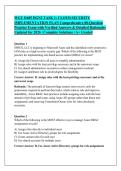
WGU D485 DGN2 TASK 1: CLOUD SECURITY
IMPLEMENTATION PLAN Comprehensive 80-Question
Practice Exam with Verified Answers & Detailed Rationales
Updated for 2026 | Complete Solutions | A+ Graded
Question 1
SWBTL LLC is migrating to Microsoft Azure and has identified overly permissive
IAM roles as a high-severity security gap. Which of the following is the BEST
practice for implementing role-based access control (RBAC) in Azure?
A) Assign the Owner role to all users to simplify administration
B) Assign roles with the least privilege necessary and at the narrowest scope
C) Use shared administrative accounts to reduce management overhead
D) Assign Contributor role to all developers for flexibility
Correct Answer: B. Assign roles with the least privilege necessary and at the
narrowest scope
Rationale: The principle of least privilege ensures users receive only the
permissions required to perform their tasks, which reduces risk and improves
auditability. Azure RBAC best practices include assigning roles with the least
amount of privilege and scope, using Azure AD groups rather than direct user
assignments, and reserving Contributor/Owner roles for when absolutely
necessary.
Question 2
Which of the following is the MOST effective way to manage Azure RBAC
assignments at scale?
A) Assign roles directly to individual users
B) Use Azure Active Directory groups for role assignments
C) Create custom roles for each user
D) Use shared accounts for multiple users
Correct Answer: B. Use Azure Active Directory groups for role assignments
,Rationale: Azure AD groups are preferred over direct user assignments for role-
based access control. Group-based assignment simplifies management, improves
auditability, and ensures consistent permission application across users with
similar job functions.
Question 3
SWBTL LLC has identified that MFA is not enforced for administrators as a high-
severity gap. What is the recommended approach to enforce MFA for all
administrative accounts in Azure?
A) Enable MFA manually for each admin account
B) Use Conditional Access policies to require MFA for all admin accounts
C) Require users to change passwords monthly
D) Use security defaults only
Correct Answer: B. Use Conditional Access policies to require MFA for all
admin accounts
Rationale: Conditional Access policies in Microsoft Entra (formerly Azure AD)
dynamically control access to corporate resources based on user identity, location,
device status, and other conditions. Requiring MFA for all admin accounts (Global
admins, Exchange admins, SharePoint admins, etc.) is a critical security control.
Question 4
Which Azure service should be used to enforce MFA for all users, including
external guests accessing SWBTL LLC's cloud resources?
A) Azure Policy
B) Azure Security Center
C) Conditional Access
D) Azure Sentinel
Correct Answer: C. Conditional Access
Rationale: Conditional Access policies can require MFA for all users, including
admins and external identities (guests). Conditional Access provides granular
control over access conditions and is the recommended approach for enforcing
MFA across an organization's Azure environment.
,Question 5
What is the PRIMARY benefit of implementing Conditional Access policies in
"Report-Only" mode before enforcement?
A) It reduces the cost of Azure AD Premium licensing
B) It allows administrators to test policy impact without disrupting users
C) It automatically fixes security gaps
D) It replaces the need for MFA
Correct Answer: B. It allows administrators to test policy impact without
disrupting users
Rationale: Conditional Access policies can be tested in "Report-Only" mode to
see their impact before enforcing them. This allows administrators to validate
policy effectiveness and identify potential disruptions to legitimate workflows
before full implementation.
Question 6
Which of the following is a key component of Azure's identity and access
management framework?
A) Network Security Groups
B) Azure Role-Based Access Control (RBAC)
C) Azure Load Balancer
D) Azure Virtual Network
Correct Answer: B. Azure Role-Based Access Control (RBAC)
Rationale: Azure RBAC is a foundational component of Azure's identity and
access management framework. It manages administrative access to Azure
resources by granting users only the permissions required to perform their tasks.
Question 7
When planning an access control strategy in Azure, which principle should guide
all access assignments?
, A) Grant all users full access for simplicity
B) Grant users the least privilege to get their work done
C) Grant access based on seniority
D) Grant access based on department size
Correct Answer: B. Grant users the least privilege to get their work done
Rationale: The principle of least privilege ensures users receive only the
permissions required to perform their tasks. Avoid assigning broader roles at
broader scopes even if it initially seems more convenient.
Question 8
SWBTL LLC needs to ensure that only authorized personnel can access the Azure
portal. Which of the following should be implemented?
A) Disable all user accounts
B) Enforce MFA and use Conditional Access policies
C) Allow all network traffic
D) Use only shared accounts
Correct Answer: B. Enforce MFA and use Conditional Access policies
Rationale: Requiring MFA for Azure management applies specifically to access
attempts through tools like Azure CLI or the Azure portal. Conditional Access
policies provide the framework for enforcing these requirements dynamically.
Question 9
Which of the following is a best practice for managing Azure AD groups?
A) Create a single group for all users
B) Use groups based on job functions and responsibilities
C) Avoid using groups for role assignments
D) Delete all existing groups
Correct Answer: B. Use groups based on job functions and responsibilities
Rationale: Azure AD groups should be organized based on job functions and
responsibilities to simplify role assignments. This approach ensures that users with
IMPLEMENTATION PLAN Comprehensive 80-Question
Practice Exam with Verified Answers & Detailed Rationales
Updated for 2026 | Complete Solutions | A+ Graded
Question 1
SWBTL LLC is migrating to Microsoft Azure and has identified overly permissive
IAM roles as a high-severity security gap. Which of the following is the BEST
practice for implementing role-based access control (RBAC) in Azure?
A) Assign the Owner role to all users to simplify administration
B) Assign roles with the least privilege necessary and at the narrowest scope
C) Use shared administrative accounts to reduce management overhead
D) Assign Contributor role to all developers for flexibility
Correct Answer: B. Assign roles with the least privilege necessary and at the
narrowest scope
Rationale: The principle of least privilege ensures users receive only the
permissions required to perform their tasks, which reduces risk and improves
auditability. Azure RBAC best practices include assigning roles with the least
amount of privilege and scope, using Azure AD groups rather than direct user
assignments, and reserving Contributor/Owner roles for when absolutely
necessary.
Question 2
Which of the following is the MOST effective way to manage Azure RBAC
assignments at scale?
A) Assign roles directly to individual users
B) Use Azure Active Directory groups for role assignments
C) Create custom roles for each user
D) Use shared accounts for multiple users
Correct Answer: B. Use Azure Active Directory groups for role assignments
,Rationale: Azure AD groups are preferred over direct user assignments for role-
based access control. Group-based assignment simplifies management, improves
auditability, and ensures consistent permission application across users with
similar job functions.
Question 3
SWBTL LLC has identified that MFA is not enforced for administrators as a high-
severity gap. What is the recommended approach to enforce MFA for all
administrative accounts in Azure?
A) Enable MFA manually for each admin account
B) Use Conditional Access policies to require MFA for all admin accounts
C) Require users to change passwords monthly
D) Use security defaults only
Correct Answer: B. Use Conditional Access policies to require MFA for all
admin accounts
Rationale: Conditional Access policies in Microsoft Entra (formerly Azure AD)
dynamically control access to corporate resources based on user identity, location,
device status, and other conditions. Requiring MFA for all admin accounts (Global
admins, Exchange admins, SharePoint admins, etc.) is a critical security control.
Question 4
Which Azure service should be used to enforce MFA for all users, including
external guests accessing SWBTL LLC's cloud resources?
A) Azure Policy
B) Azure Security Center
C) Conditional Access
D) Azure Sentinel
Correct Answer: C. Conditional Access
Rationale: Conditional Access policies can require MFA for all users, including
admins and external identities (guests). Conditional Access provides granular
control over access conditions and is the recommended approach for enforcing
MFA across an organization's Azure environment.
,Question 5
What is the PRIMARY benefit of implementing Conditional Access policies in
"Report-Only" mode before enforcement?
A) It reduces the cost of Azure AD Premium licensing
B) It allows administrators to test policy impact without disrupting users
C) It automatically fixes security gaps
D) It replaces the need for MFA
Correct Answer: B. It allows administrators to test policy impact without
disrupting users
Rationale: Conditional Access policies can be tested in "Report-Only" mode to
see their impact before enforcing them. This allows administrators to validate
policy effectiveness and identify potential disruptions to legitimate workflows
before full implementation.
Question 6
Which of the following is a key component of Azure's identity and access
management framework?
A) Network Security Groups
B) Azure Role-Based Access Control (RBAC)
C) Azure Load Balancer
D) Azure Virtual Network
Correct Answer: B. Azure Role-Based Access Control (RBAC)
Rationale: Azure RBAC is a foundational component of Azure's identity and
access management framework. It manages administrative access to Azure
resources by granting users only the permissions required to perform their tasks.
Question 7
When planning an access control strategy in Azure, which principle should guide
all access assignments?
, A) Grant all users full access for simplicity
B) Grant users the least privilege to get their work done
C) Grant access based on seniority
D) Grant access based on department size
Correct Answer: B. Grant users the least privilege to get their work done
Rationale: The principle of least privilege ensures users receive only the
permissions required to perform their tasks. Avoid assigning broader roles at
broader scopes even if it initially seems more convenient.
Question 8
SWBTL LLC needs to ensure that only authorized personnel can access the Azure
portal. Which of the following should be implemented?
A) Disable all user accounts
B) Enforce MFA and use Conditional Access policies
C) Allow all network traffic
D) Use only shared accounts
Correct Answer: B. Enforce MFA and use Conditional Access policies
Rationale: Requiring MFA for Azure management applies specifically to access
attempts through tools like Azure CLI or the Azure portal. Conditional Access
policies provide the framework for enforcing these requirements dynamically.
Question 9
Which of the following is a best practice for managing Azure AD groups?
A) Create a single group for all users
B) Use groups based on job functions and responsibilities
C) Avoid using groups for role assignments
D) Delete all existing groups
Correct Answer: B. Use groups based on job functions and responsibilities
Rationale: Azure AD groups should be organized based on job functions and
responsibilities to simplify role assignments. This approach ensures that users with

