

Study Guide Introduction to Psychology 1
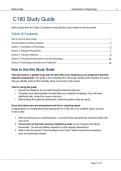
C180 Study Guide
Select a topic from the Table of Contents to skip directly to that location in this document.
Table of Contents
How to Use this Study Guide ................................................................................................................................................... 1
Coaching Report and Book Chapters ..................................................................................................................................... 2
Section 1: Foundations of Psychology .................................................................................................................................... 3
Section 2: Biological Perspectives ........................................................................................................................................... 7
Section 3: Theories of Memory ................................................................................................................................................ 9
Section 4: Personality Development and Social Psychology.............................................................................................12
Section 5: Psychological Disorders and Treatments.......................................................................................................... 13
How to Use this Study Guide
This document is a guided study plan to help refine your studying as you progress toward the
objective assessment. This guide is not a substitute for a thorough reading of the material; it is just to
help you identify areas to think critically about to succeed in this course.
Tips for using this guide:
• Answer the questions as you read through the learning resource.
• Complete each self-evaluation checklist after you complete the reading. If you still need
additional help, contact the course instructor.
• Before taking the objective assessment, review the guide to help you study.
If you have taken your pre-assessment and have a coaching report:
Congratulations on completing the pre-assessment for C180; this is an excellent step to success
in this course.
1. Start by looking at your coaching report—you will see the competencies and topics listed with
your score.
2. Focus more on the lower-scoring competency areas, but do not ignore the others.
Remember: You will see different questions on the objective assessment.
3. Refer to this document's "Coaching Report and Topics" table to locate the competency
topic and associated chapter.
Page 1 of 17
,Study Guide Introduction to Psychology 2
This is a sample coaching report. Refer to your personalized report to review your results.
Coaching Report and Topics
The following table lists the topics in the learning resource associated with course competencies.
Competency Topics
Evolution of
Psychology
Foundations of Psychology
Psychological
Research
The Human Brain
Biological Perspectives
Endocrine and Nervous System
Theories of Conditioning and Learning
Theories of Memory Models and Processes of Learning
Theories of Personality
Personality Development and Social Influences on Personality
Psychology
Social Cognition
Social Behavior
Common Psychological Disorders
Psychological Disorders and Types of Psychotherapy
Treatments
Biological Based Treatments
Page 2 of 17
messages.downloaded_by
, Study Guide Introduction to Psychology 3
SECTION 1: Foundations of Psychology
Evolution of Psychology
1. Define psychology using science, mind, and behavior. (Lesson 1 Introduction)
Scientific study of the mind and behavior
2. What are the three levels of analysis, along with their purpose? (Lessons 1.3, 1.4, 1.5)
Level of the group, level of the brain, level of the person
3. Match the term with the description of the type of evolution. (Lessons 2.1, 2.2, 2.3, 2.4, 2.5,
2.6, 2.9)
According to the learning resource, there are different philosophies regarding the key principles
of Psychology. Review the school of thought in the first column and describe each school listed
in the table below.
School of Explain the School of Thought Theorists’ Names
Thought
Humanism Thought that assumes people have positive values, Abraham Maslow/Carl Rogers
free will, and deep inner creativity. 1954
(respect and positive regard)
Gestalt Considering behavior as a whole, not individual Max Wertheimer
parts. (how do you see the shape of a marching 1912
band and not every specific person)
Structuralism Using the mind to discover the mind and the rules Wilhelm Wundt
for combining them. 1879
Father of psychology
Functionalism Studies why emotions, feelings, and actions occur William James
and how they adapt. 1890
Principles of Psychology
Behaviorism How a specific stimulus evokes a response. John Watson/B. F skinner
1913/1938
Psychodynamic How interactions affect behavior. Sigmund Freud
(holding in emotions causes them to pile up and 1927
eventually come out)
Now, looking back at the table above, match each foundational theorist to the appropriate school of thought:
Page 3 of 17
C180 Study Guide
Select a topic from the Table of Contents to skip directly to that location in this document.
Table of Contents
How to Use this Study Guide ................................................................................................................................................... 1
Coaching Report and Book Chapters ..................................................................................................................................... 2
Section 1: Foundations of Psychology .................................................................................................................................... 3
Section 2: Biological Perspectives ........................................................................................................................................... 7
Section 3: Theories of Memory ................................................................................................................................................ 9
Section 4: Personality Development and Social Psychology.............................................................................................12
Section 5: Psychological Disorders and Treatments.......................................................................................................... 13
How to Use this Study Guide
This document is a guided study plan to help refine your studying as you progress toward the
objective assessment. This guide is not a substitute for a thorough reading of the material; it is just to
help you identify areas to think critically about to succeed in this course.
Tips for using this guide:
• Answer the questions as you read through the learning resource.
• Complete each self-evaluation checklist after you complete the reading. If you still need
additional help, contact the course instructor.
• Before taking the objective assessment, review the guide to help you study.
If you have taken your pre-assessment and have a coaching report:
Congratulations on completing the pre-assessment for C180; this is an excellent step to success
in this course.
1. Start by looking at your coaching report—you will see the competencies and topics listed with
your score.
2. Focus more on the lower-scoring competency areas, but do not ignore the others.
Remember: You will see different questions on the objective assessment.
3. Refer to this document's "Coaching Report and Topics" table to locate the competency
topic and associated chapter.
Page 1 of 17
,Study Guide Introduction to Psychology 2
This is a sample coaching report. Refer to your personalized report to review your results.
Coaching Report and Topics
The following table lists the topics in the learning resource associated with course competencies.
Competency Topics
Evolution of
Psychology
Foundations of Psychology
Psychological
Research
The Human Brain
Biological Perspectives
Endocrine and Nervous System
Theories of Conditioning and Learning
Theories of Memory Models and Processes of Learning
Theories of Personality
Personality Development and Social Influences on Personality
Psychology
Social Cognition
Social Behavior
Common Psychological Disorders
Psychological Disorders and Types of Psychotherapy
Treatments
Biological Based Treatments
Page 2 of 17
messages.downloaded_by
, Study Guide Introduction to Psychology 3
SECTION 1: Foundations of Psychology
Evolution of Psychology
1. Define psychology using science, mind, and behavior. (Lesson 1 Introduction)
Scientific study of the mind and behavior
2. What are the three levels of analysis, along with their purpose? (Lessons 1.3, 1.4, 1.5)
Level of the group, level of the brain, level of the person
3. Match the term with the description of the type of evolution. (Lessons 2.1, 2.2, 2.3, 2.4, 2.5,
2.6, 2.9)
According to the learning resource, there are different philosophies regarding the key principles
of Psychology. Review the school of thought in the first column and describe each school listed
in the table below.
School of Explain the School of Thought Theorists’ Names
Thought
Humanism Thought that assumes people have positive values, Abraham Maslow/Carl Rogers
free will, and deep inner creativity. 1954
(respect and positive regard)
Gestalt Considering behavior as a whole, not individual Max Wertheimer
parts. (how do you see the shape of a marching 1912
band and not every specific person)
Structuralism Using the mind to discover the mind and the rules Wilhelm Wundt
for combining them. 1879
Father of psychology
Functionalism Studies why emotions, feelings, and actions occur William James
and how they adapt. 1890
Principles of Psychology
Behaviorism How a specific stimulus evokes a response. John Watson/B. F skinner
1913/1938
Psychodynamic How interactions affect behavior. Sigmund Freud
(holding in emotions causes them to pile up and 1927
eventually come out)
Now, looking back at the table above, match each foundational theorist to the appropriate school of thought:
Page 3 of 17

