

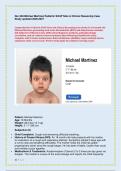
Nur 602-Michael Martinez Pediatric SOAP Note & Clinical Reasoning Case
Study updated 2026-2027
Comprehensive Pediatric SOAP Note and Clinical Reasoning Case Study for 18-month-old
Michael Martinez presenting with Acute Bronchiolitis (RSV) and dehydration. Includes
full Subjective/Objective data, differential diagnosis synthesis, pathophysiology
correlation, and an evidence-based treatment plan following Chamberlain rules.
Complete with 24-hour maintenance fluid calculations (Holliday-Segar method) and an
outpatient clinic rescue track. Perfect study guide for pediatric nursing exams
Patient: Michael Martinez
Age: 18 Months
Weight: 28.0 lbs (12.7 kg)
Height: 2' 11" (89 cm)
Subjective (S)
• Chief Complaint: Cough and worsening difficulty breathing.
• History of Present Illness (HPI): An 18-month-old male presents with his mother
for evaluation of a cough and respiratory distress. Symptoms started 5 days ago with
a runny nose and breathing difficulties. The mother notes the child has gotten
progressively sicker since the cough began. He has been irritable, fussier than usual,
and exhibits a poor appetite.
• Medications & Treatments: Acetaminophen (Tylenol) 2 to 3 times per day given via
dropper. The mother is unsure of the exact dosage and reports the child frequently
1|Page
, spits the medication out. No cool-mist humidifiers or other interventions have been
used.
• Risk Factors: Attends daycare 3 days per week.
Objective (O)
• Vital Signs: Temp: 102.0°F (38.9°C) (axillary/tympanic), HR: 110 bpm, RR: 40
breaths/min (tachypnea), SpO₂: 92% on room air (hypoxia).
• General: Irritable, fussy, but responsive; appears moderately ill and mildly
dehydrated.
• HEENT: Bilateral nasal turbinates boggy and gray with thick, tenacious yellow nasal
drainage. Mild pharyngeal erythema; no tonsillar exudates. Left submandibular
lymphadenopathy present.
• Respiratory: Increased work of breathing noted with nasal flaring and intercostal
retractions. Auscultation reveals diffuse bilateral expiratory wheezing and scattered
fine crackles at the lung bases.
• Integumentary: Warm, dry skin; mild skin tenting present, indicating mild-to-
moderate dehydration.
Assessment (A)
1. Acute Bronchiolitis due to Respiratory Syncytial Virus (RSV) (ICD-10: J21.0) –
Primary Diagnosis. Backed by age, 5-day viral prodrome progressing to lower airway
involvement, tachypnea, hypoxia, wheezing, and retractions.
2. Community-Acquired Pneumonia (ICD-10: J18.9) – Differential. Evidenced by
persistent high fever, productive-appearing yellow secretions, focal basal crackles,
and hypoxia.
3. Reactive Airway Disease (ICD-10: J45.909) – Differential. Supported by expiratory
wheezing and respiratory distress, though unconfirmed at this age.
4. Dehydration secondary to tachypnea and poor oral intake (ICD-10: E86.0) –
Secondary Diagnosis. Supported by skin tenting and poor fluid retention.
Plan (P)
• Disposition: Direct admission to the pediatric inpatient unit or short-stay observation
unit due to hypoxia (SpO₂ 92%) and increased work of breathing.
• Respiratory Support: Continuous humidified supplemental O₂ via nasal cannula to
titrate and maintain SpO₂ > 94%. Frequent gentle nasal saline drops and bulb
suctioning.
• Fluid Management: Initiate peripheral IV fluids (D5 ½ NS at a maintenance rate of
~45 mL/hr) to correct dehydration and bypass aspiration risk from tachypnea.
• Diagnostics: Order rapid RSV PCR and Influenza A/B nasal swab. Order a 2-view
Chest X-ray (CBR) to rule out focal bacterial consolidations.
• Pharmacology:
o Acetaminophen oral suspension 160 mg / 5 mL: Administer 190 mg (6 mL) PO/PR
every 4–6 hours as needed for fever/distress (dosed at 15 mg/kg for 12.7 kg).
o Hold routine bronchodilators or antibiotics unless chest X-ray or viral panels indicate
otherwise.
• Education: Complete face-to-face counseling with mother on weight-based syringe
dosing tools (avoiding household spoons) prior to eventual discharge.
2|Page
Study updated 2026-2027
Comprehensive Pediatric SOAP Note and Clinical Reasoning Case Study for 18-month-old
Michael Martinez presenting with Acute Bronchiolitis (RSV) and dehydration. Includes
full Subjective/Objective data, differential diagnosis synthesis, pathophysiology
correlation, and an evidence-based treatment plan following Chamberlain rules.
Complete with 24-hour maintenance fluid calculations (Holliday-Segar method) and an
outpatient clinic rescue track. Perfect study guide for pediatric nursing exams
Patient: Michael Martinez
Age: 18 Months
Weight: 28.0 lbs (12.7 kg)
Height: 2' 11" (89 cm)
Subjective (S)
• Chief Complaint: Cough and worsening difficulty breathing.
• History of Present Illness (HPI): An 18-month-old male presents with his mother
for evaluation of a cough and respiratory distress. Symptoms started 5 days ago with
a runny nose and breathing difficulties. The mother notes the child has gotten
progressively sicker since the cough began. He has been irritable, fussier than usual,
and exhibits a poor appetite.
• Medications & Treatments: Acetaminophen (Tylenol) 2 to 3 times per day given via
dropper. The mother is unsure of the exact dosage and reports the child frequently
1|Page
, spits the medication out. No cool-mist humidifiers or other interventions have been
used.
• Risk Factors: Attends daycare 3 days per week.
Objective (O)
• Vital Signs: Temp: 102.0°F (38.9°C) (axillary/tympanic), HR: 110 bpm, RR: 40
breaths/min (tachypnea), SpO₂: 92% on room air (hypoxia).
• General: Irritable, fussy, but responsive; appears moderately ill and mildly
dehydrated.
• HEENT: Bilateral nasal turbinates boggy and gray with thick, tenacious yellow nasal
drainage. Mild pharyngeal erythema; no tonsillar exudates. Left submandibular
lymphadenopathy present.
• Respiratory: Increased work of breathing noted with nasal flaring and intercostal
retractions. Auscultation reveals diffuse bilateral expiratory wheezing and scattered
fine crackles at the lung bases.
• Integumentary: Warm, dry skin; mild skin tenting present, indicating mild-to-
moderate dehydration.
Assessment (A)
1. Acute Bronchiolitis due to Respiratory Syncytial Virus (RSV) (ICD-10: J21.0) –
Primary Diagnosis. Backed by age, 5-day viral prodrome progressing to lower airway
involvement, tachypnea, hypoxia, wheezing, and retractions.
2. Community-Acquired Pneumonia (ICD-10: J18.9) – Differential. Evidenced by
persistent high fever, productive-appearing yellow secretions, focal basal crackles,
and hypoxia.
3. Reactive Airway Disease (ICD-10: J45.909) – Differential. Supported by expiratory
wheezing and respiratory distress, though unconfirmed at this age.
4. Dehydration secondary to tachypnea and poor oral intake (ICD-10: E86.0) –
Secondary Diagnosis. Supported by skin tenting and poor fluid retention.
Plan (P)
• Disposition: Direct admission to the pediatric inpatient unit or short-stay observation
unit due to hypoxia (SpO₂ 92%) and increased work of breathing.
• Respiratory Support: Continuous humidified supplemental O₂ via nasal cannula to
titrate and maintain SpO₂ > 94%. Frequent gentle nasal saline drops and bulb
suctioning.
• Fluid Management: Initiate peripheral IV fluids (D5 ½ NS at a maintenance rate of
~45 mL/hr) to correct dehydration and bypass aspiration risk from tachypnea.
• Diagnostics: Order rapid RSV PCR and Influenza A/B nasal swab. Order a 2-view
Chest X-ray (CBR) to rule out focal bacterial consolidations.
• Pharmacology:
o Acetaminophen oral suspension 160 mg / 5 mL: Administer 190 mg (6 mL) PO/PR
every 4–6 hours as needed for fever/distress (dosed at 15 mg/kg for 12.7 kg).
o Hold routine bronchodilators or antibiotics unless chest X-ray or viral panels indicate
otherwise.
• Education: Complete face-to-face counseling with mother on weight-based syringe
dosing tools (avoiding household spoons) prior to eventual discharge.
2|Page

