,Elevator Mechanic Certification and NEIEP
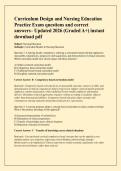
Practice Exam questions and correct
answers– Updated 2026 (Graded A+) instant
download pdf
Subject: Elevator Mechanics and Elevator Systems
Subtopic: Safety Procedures and Workplace Practices
Question 1: An elevator mechanic is preparing to service a traction elevator located in a high-rise
building. Before beginning work inside the hoistway, which action is MOST critical to ensure
worker safety?
A) Lubricate the guide rails immediately
B) Apply lockout/tagout procedures to all energy sources
C) Test the car alarm system
D) Inspect the lobby call stations
Correct Answer: B - Apply lockout/tagout procedures to all energy sources
Rationale: Lockout/tagout procedures isolate electrical and mechanical energy sources,
preventing unexpected equipment movement or energization. Lubrication and inspections may be
necessary later but do not address immediate worker safety. Alarm systems and call stations do
not protect technicians working within hazardous areas.
Question 2: During maintenance, a mechanic discovers that a safety device has been
intentionally bypassed by a previous technician. What is the MOST appropriate action?
A) Continue the repair to save time
B) Document the condition and restore the safety device before operation
C) Ignore the bypass if the elevator appears functional
D) Disconnect the controller permanently
Correct Answer: B - Document the condition and restore the safety device before operation
Rationale: Safety devices are essential protective systems. Restoring the device and documenting
the issue ensures compliance, safety, and accountability. Ignoring or bypassing safety devices
creates substantial hazards.
,Question 3: The primary purpose of an elevator governor is to:
A) Increase car speed
B) Control machine room ventilation
C) Detect overspeed conditions and activate safety mechanisms
D) Reduce motor voltage
Correct Answer: C - Detect overspeed conditions and activate safety mechanisms
Rationale: The governor monitors elevator speed and activates safeties if excessive speed
occurs. It is a critical protection component in traction elevator systems.
Question 4: A mechanic observes uneven wear on guide shoes. This condition most likely
indicates:
A) Improper guide rail alignment
B) Excessive machine room temperature
C) Insufficient car lighting
D) Controller software failure
Correct Answer: A - Improper guide rail alignment
Rationale: Uneven guide shoe wear frequently results from rail misalignment or improper
adjustment. Environmental conditions and lighting are unrelated causes.
Question 5: Which factor MOST influences safe work within an elevator hoistway?
A) Decorative cab finishes
B) Adequate communication and hazard awareness
C) Passenger traffic volume
D) Lobby lighting conditions
Correct Answer: B - Adequate communication and hazard awareness
Rationale: Hoistway work presents significant hazards involving moving equipment, electrical
systems, and confined spaces. Effective communication and hazard recognition are essential
safety practices.
Subtopic: Electrical Systems and Troubleshooting
, Question 6: When troubleshooting an elevator control circuit, the MOST effective initial
approach is to:
A) Replace all relays immediately
B) Follow the electrical schematic systematically
C) Disconnect all safety circuits
D) Reset the controller repeatedly
Correct Answer: B - Follow the electrical schematic systematically
Rationale: Electrical schematics provide the logical sequence of operation and allow technicians
to isolate faults efficiently. Random replacement of components increases costs and may create
additional problems.
Question 7: A blown fuse generally indicates:
A) Proper circuit operation
B) Excessive current or circuit fault conditions
C) Insufficient lubrication
D) Normal controller operation
Correct Answer: B - Excessive current or circuit fault conditions
Rationale: Fuses protect circuits by opening during overcurrent conditions. Investigating the
cause is essential before replacement.
Question 8: Which instrument is MOST appropriate for verifying electrical voltage in an elevator
control circuit?
A) Pressure gauge
B) Torque wrench
C) Multimeter
D) Alignment gauge
Correct Answer: C - Multimeter
Rationale: Multimeters measure voltage, current, and resistance, making them essential
diagnostic tools for electrical troubleshooting.
Question 9: Intermittent electrical faults are particularly challenging because they:
Practice Exam questions and correct
answers– Updated 2026 (Graded A+) instant
download pdf
Subject: Elevator Mechanics and Elevator Systems
Subtopic: Safety Procedures and Workplace Practices
Question 1: An elevator mechanic is preparing to service a traction elevator located in a high-rise
building. Before beginning work inside the hoistway, which action is MOST critical to ensure
worker safety?
A) Lubricate the guide rails immediately
B) Apply lockout/tagout procedures to all energy sources
C) Test the car alarm system
D) Inspect the lobby call stations
Correct Answer: B - Apply lockout/tagout procedures to all energy sources
Rationale: Lockout/tagout procedures isolate electrical and mechanical energy sources,
preventing unexpected equipment movement or energization. Lubrication and inspections may be
necessary later but do not address immediate worker safety. Alarm systems and call stations do
not protect technicians working within hazardous areas.
Question 2: During maintenance, a mechanic discovers that a safety device has been
intentionally bypassed by a previous technician. What is the MOST appropriate action?
A) Continue the repair to save time
B) Document the condition and restore the safety device before operation
C) Ignore the bypass if the elevator appears functional
D) Disconnect the controller permanently
Correct Answer: B - Document the condition and restore the safety device before operation
Rationale: Safety devices are essential protective systems. Restoring the device and documenting
the issue ensures compliance, safety, and accountability. Ignoring or bypassing safety devices
creates substantial hazards.
,Question 3: The primary purpose of an elevator governor is to:
A) Increase car speed
B) Control machine room ventilation
C) Detect overspeed conditions and activate safety mechanisms
D) Reduce motor voltage
Correct Answer: C - Detect overspeed conditions and activate safety mechanisms
Rationale: The governor monitors elevator speed and activates safeties if excessive speed
occurs. It is a critical protection component in traction elevator systems.
Question 4: A mechanic observes uneven wear on guide shoes. This condition most likely
indicates:
A) Improper guide rail alignment
B) Excessive machine room temperature
C) Insufficient car lighting
D) Controller software failure
Correct Answer: A - Improper guide rail alignment
Rationale: Uneven guide shoe wear frequently results from rail misalignment or improper
adjustment. Environmental conditions and lighting are unrelated causes.
Question 5: Which factor MOST influences safe work within an elevator hoistway?
A) Decorative cab finishes
B) Adequate communication and hazard awareness
C) Passenger traffic volume
D) Lobby lighting conditions
Correct Answer: B - Adequate communication and hazard awareness
Rationale: Hoistway work presents significant hazards involving moving equipment, electrical
systems, and confined spaces. Effective communication and hazard recognition are essential
safety practices.
Subtopic: Electrical Systems and Troubleshooting
, Question 6: When troubleshooting an elevator control circuit, the MOST effective initial
approach is to:
A) Replace all relays immediately
B) Follow the electrical schematic systematically
C) Disconnect all safety circuits
D) Reset the controller repeatedly
Correct Answer: B - Follow the electrical schematic systematically
Rationale: Electrical schematics provide the logical sequence of operation and allow technicians
to isolate faults efficiently. Random replacement of components increases costs and may create
additional problems.
Question 7: A blown fuse generally indicates:
A) Proper circuit operation
B) Excessive current or circuit fault conditions
C) Insufficient lubrication
D) Normal controller operation
Correct Answer: B - Excessive current or circuit fault conditions
Rationale: Fuses protect circuits by opening during overcurrent conditions. Investigating the
cause is essential before replacement.
Question 8: Which instrument is MOST appropriate for verifying electrical voltage in an elevator
control circuit?
A) Pressure gauge
B) Torque wrench
C) Multimeter
D) Alignment gauge
Correct Answer: C - Multimeter
Rationale: Multimeters measure voltage, current, and resistance, making them essential
diagnostic tools for electrical troubleshooting.
Question 9: Intermittent electrical faults are particularly challenging because they: