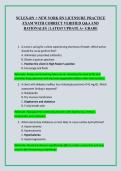
NCLEX-RN + NEW YORK RN LICENSURE PRACTICE
EXAM WITH CORRECT VERIFIED Q&A AND
RATIONALES | LATEST UPDATE A+ GRADE
1. A nurse is caring for a client experiencing shortness of breath. Which action
should the nurse perform first?
A. Administer prescribed antibiotics
B. Obtain a sputum specimen
C. Position the client in High Fowler's position
D. Encourage oral fluids
Rationale: Airway and breathing take priority. Elevating the head of the bed
promotes lung expansion and improves oxygenation before other interventions.
2. A client with diabetes mellitus has a blood glucose level of 42 mg/dL. Which
assessment finding is expected?
A. Bradycardia
B. Dry mucous membranes
C. Diaphoresis and shakiness
D. Fruity breath odor
Rationale: Hypoglycemia commonly presents with diaphoresis, tremors,
tachycardia, and confusion.
3. Which electrolyte imbalance is most likely to cause cardiac dysrhythmias?
A. Hypernatremia
B. Hypercalcemia
C. Hyperkalemia
D. Hypermagnesemia
Rationale: Elevated potassium significantly affects cardiac conduction and may
result in life-threatening arrhythmias.
, 4. A nurse is teaching infection prevention. Which intervention best prevents
transmission of infection?
A. Wearing gloves for every task
B. Performing hand hygiene before and after patient contact
C. Wearing a surgical mask continuously
D. Cleaning equipment weekly
Rationale: Hand hygiene is the single most effective measure to prevent
healthcare-associated infections.
5. Which client should the nurse assess first?
A. Client with chronic back pain requesting medication
B. Client awaiting discharge instructions
C. Client with chest pain rated 9/10
D. Client requesting assistance to the bathroom
Rationale: Chest pain may indicate myocardial infarction and requires immediate
assessment.
6. Which finding indicates effective chest compressions during CPR?
A. Fixed pupils
B. Palpable carotid pulse during compressions
C. Increased urine output
D. Normal blood pressure
Rationale: A palpable pulse during compressions indicates adequate circulation.
7. A postoperative client reports calf pain. What is the nurse's priority action?
A. Massage the calf
B. Apply warm compresses
C. Notify the healthcare provider immediately
D. Encourage ambulation
Rationale: Calf pain may indicate deep vein thrombosis; massage could dislodge a
clot.
EXAM WITH CORRECT VERIFIED Q&A AND
RATIONALES | LATEST UPDATE A+ GRADE
1. A nurse is caring for a client experiencing shortness of breath. Which action
should the nurse perform first?
A. Administer prescribed antibiotics
B. Obtain a sputum specimen
C. Position the client in High Fowler's position
D. Encourage oral fluids
Rationale: Airway and breathing take priority. Elevating the head of the bed
promotes lung expansion and improves oxygenation before other interventions.
2. A client with diabetes mellitus has a blood glucose level of 42 mg/dL. Which
assessment finding is expected?
A. Bradycardia
B. Dry mucous membranes
C. Diaphoresis and shakiness
D. Fruity breath odor
Rationale: Hypoglycemia commonly presents with diaphoresis, tremors,
tachycardia, and confusion.
3. Which electrolyte imbalance is most likely to cause cardiac dysrhythmias?
A. Hypernatremia
B. Hypercalcemia
C. Hyperkalemia
D. Hypermagnesemia
Rationale: Elevated potassium significantly affects cardiac conduction and may
result in life-threatening arrhythmias.
, 4. A nurse is teaching infection prevention. Which intervention best prevents
transmission of infection?
A. Wearing gloves for every task
B. Performing hand hygiene before and after patient contact
C. Wearing a surgical mask continuously
D. Cleaning equipment weekly
Rationale: Hand hygiene is the single most effective measure to prevent
healthcare-associated infections.
5. Which client should the nurse assess first?
A. Client with chronic back pain requesting medication
B. Client awaiting discharge instructions
C. Client with chest pain rated 9/10
D. Client requesting assistance to the bathroom
Rationale: Chest pain may indicate myocardial infarction and requires immediate
assessment.
6. Which finding indicates effective chest compressions during CPR?
A. Fixed pupils
B. Palpable carotid pulse during compressions
C. Increased urine output
D. Normal blood pressure
Rationale: A palpable pulse during compressions indicates adequate circulation.
7. A postoperative client reports calf pain. What is the nurse's priority action?
A. Massage the calf
B. Apply warm compresses
C. Notify the healthcare provider immediately
D. Encourage ambulation
Rationale: Calf pain may indicate deep vein thrombosis; massage could dislodge a
clot.