

chapter 30: promoting bowel elimination
Exam Questions and Answers with Verified
Solutions | Latest Updated 2026
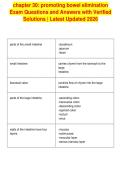
parts of the small intestine -duodenum
-jejunum
-ileum
small intestine carries chyme from the stomach to the
large
intestine
ileocecal valve controls flow of chyme into the large
intestine
parts of the large intestine -ascending colon
-transverse colon
-descending colon
-sigmoid colon
-rectum
-anus
walls of the intestine have four -mucosa
layers -submucosa
-muscular layer
-serous (serosa) layer
,layers of the walls of the intestine these layers give support and function to
purposes the
digestive, absorption, and peristaltic
activity of the
bowel.
bowel sounds indicate the health state of these tissue layers and
are an
important assessment of a patients bowel
health
and and overall well-being
small intestine function -processes chyme into a more liquid state
-adds bile from the liver to help break
down fats
-villi on the small intestine walls absorbs
nutrients
large intestine function -absorbs water, sodium, chlorides
-waste material stored until expelled
can an individual live without a yes, because the large intestine basically
large serves as
intestine? a storage device for stool.
patients without large intestines ileostomies
have
peristalsis moves chyme and gas through the
intestines
(causing bowel sounds)
, normal transit time in intestine is 18-72 hours
Feces Intestinal waste material
feces is stored in the sigmoid gastrocolic reflex initiates defecation
colon
until
defecation is under voluntary control and uses the
valsalva
manuever
the slower transport allows reabsorption of minerals, electrolytes, and
water
the pH continues to become more alkaline to neutralize the
acid waste
left by the digestive bacteria
the mucus secreted in the large sticky and allows the feces to form a solid
bowel is mass
effects of aging on the intestinal -atrophy of the villi
tract -decreased abdorption of fats, vitamin B12
-decrease in motility
-bowel habits should not change in the
normal
healthy individual
Exam Questions and Answers with Verified
Solutions | Latest Updated 2026
parts of the small intestine -duodenum
-jejunum
-ileum
small intestine carries chyme from the stomach to the
large
intestine
ileocecal valve controls flow of chyme into the large
intestine
parts of the large intestine -ascending colon
-transverse colon
-descending colon
-sigmoid colon
-rectum
-anus
walls of the intestine have four -mucosa
layers -submucosa
-muscular layer
-serous (serosa) layer
,layers of the walls of the intestine these layers give support and function to
purposes the
digestive, absorption, and peristaltic
activity of the
bowel.
bowel sounds indicate the health state of these tissue layers and
are an
important assessment of a patients bowel
health
and and overall well-being
small intestine function -processes chyme into a more liquid state
-adds bile from the liver to help break
down fats
-villi on the small intestine walls absorbs
nutrients
large intestine function -absorbs water, sodium, chlorides
-waste material stored until expelled
can an individual live without a yes, because the large intestine basically
large serves as
intestine? a storage device for stool.
patients without large intestines ileostomies
have
peristalsis moves chyme and gas through the
intestines
(causing bowel sounds)
, normal transit time in intestine is 18-72 hours
Feces Intestinal waste material
feces is stored in the sigmoid gastrocolic reflex initiates defecation
colon
until
defecation is under voluntary control and uses the
valsalva
manuever
the slower transport allows reabsorption of minerals, electrolytes, and
water
the pH continues to become more alkaline to neutralize the
acid waste
left by the digestive bacteria
the mucus secreted in the large sticky and allows the feces to form a solid
bowel is mass
effects of aging on the intestinal -atrophy of the villi
tract -decreased abdorption of fats, vitamin B12
-decrease in motility
-bowel habits should not change in the
normal
healthy individual

